Jul 9, 2026
How to Store Liposomal NMN Powder to Maintain Potency?
To store liposomal NMN powder correctly, you need to pay close attention to the surroundings and the integrity of the package. The liposomal encapsulating process, in which NMN molecules are wrapped in phospholipid bilayers, makes the drug more bioavailable, but it also makes it more sensitive to storage conditions than other forms. Temperature, humidity, light exposure, and oxygen contact must be managed in an organized way throughout the delivery chain in order to keep the effectiveness. When stored properly in cool, dry places in protective packaging like nitrogen-flushed aluminum pouches, high-quality liposomal NMN powder keeps working for longer periods of time while providing better cell uptake that sets premium formulations apart in the wellness market.
Understanding the Sensitivity of Liposomal NMN Powder
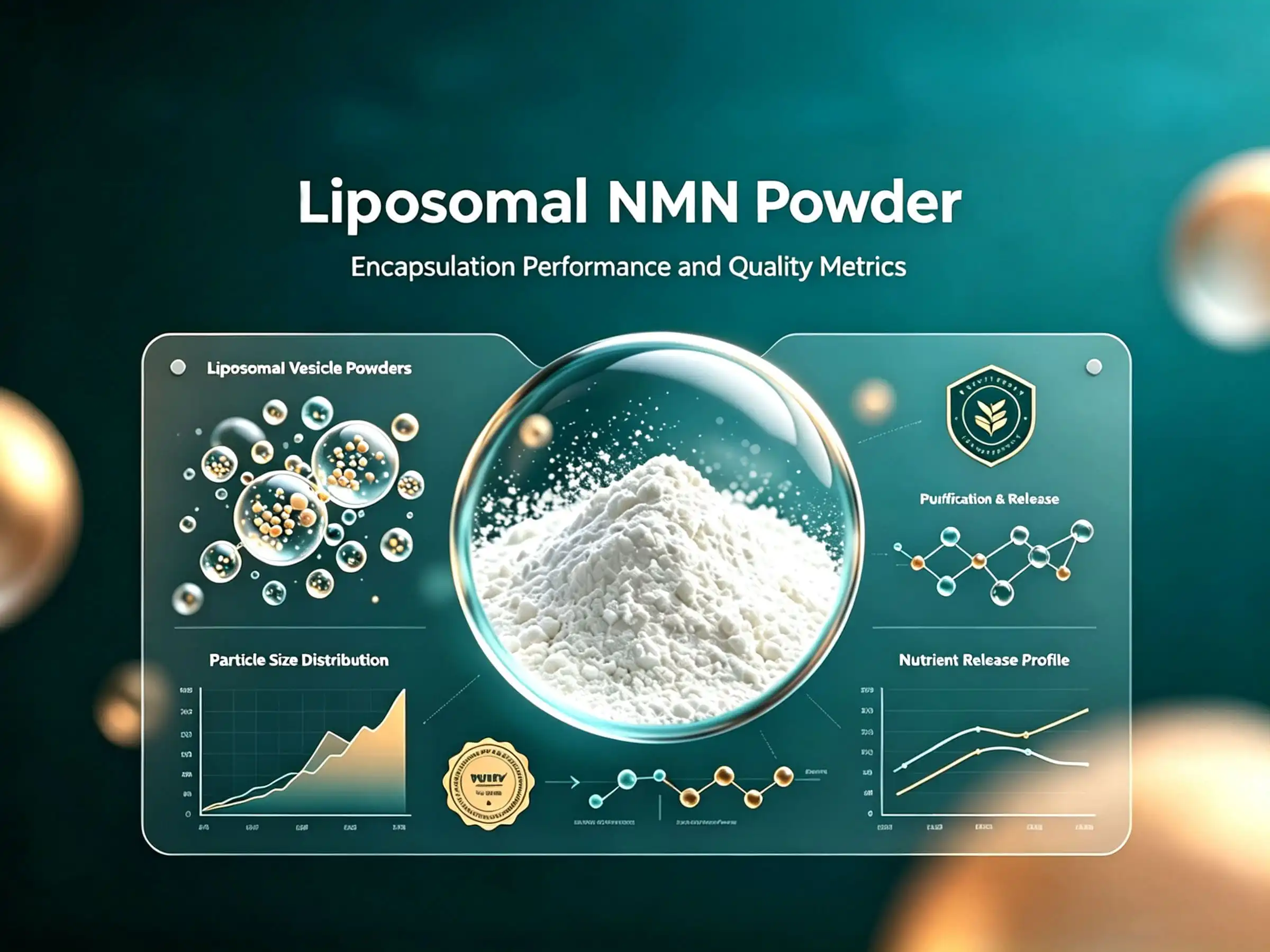
Liposomal technology changes how NMN is delivered by enclosing active molecules in lipid spheres that protect them and look like cell walls. This structural innovation greatly enhances absorption rates, frequently by 4–8 times compared to regular powder. This makes it very useful for nutraceutical companies creating cutting-edge goods that promote life. But this complex design opens up security holes that regular liposomal NMN powders don't have.
How Environmental Stressors Compromise Liposome Integrity
The two layers of phospholipids that cover NMN molecules do a great job of protecting their cargo during digestion, but they are still vulnerable to outside conditions when they are stored. Changes in temperature are one of the main ways that things break down. As the temperature rises above 25°C (77°F), the lipid structure starts to break down. This could let water in, which breaks down both the liposome and the NMN payload. On the other hand, freezing can make ice crystals that physically break up the tiny vesicles.
Moisture is also a very dangerous threat. Because powders are naturally hygroscopic, they can soak up moisture from the air, which can cause liposomal NMN powder structures to stick together or bond too soon. This changes the exact particle size distribution—which should stay between 100 and 300 nanometers—that affects how well the body absorbs the substance in the intestines. According to research, sealing efficiency drops from above 85% to below 70% when the amount of moisture in the material goes above certain levels.
Degradation Timelines and Critical Risk Factors
Figuring out how strength is lost over time helps procurement teams set reasonable standards for shelf life and set rules for distribution. If the conditions aren't ideal, like in a building without temperature control, the potency can drop within 60 to 90 days. Exposure to oxygen speeds up this period by a large amount. Oxidative rancidity can happen to the phospholipids themselves, and NMN changes into nicotinamide when it is exposed to both oxygen and water at the same time.
Photodegradation processes are sped up by light, especially UV bands. Studies that looked at stability under different lighting conditions found that clear packaging can lower amounts of active compounds by 15 to 20 percent over six months compared to amber or opaque containers. These factors work together to show that strict storage rules are directly linked to product performance and customer happiness in the longevity supplement market.
Key Principles for Storing Liposomal NMN Powder
Environmental controls, the right packing technologies, and organized stocking practices all need to be in balance for preservation methods to work. Product makers and procurement specialists can make better decisions when they know what each element does to keep the complex liposomal NMN powder that makes premium formulations what they are.
Optimal Environmental Conditions
Managing temperature is the most basic concept of keeping. Between 15°C and 25°C (59°F and 77°F), which is the best range, you can avoid both heat- and cold-related damage to the structure. There are climate-controlled warehouse areas just for sensitive ingredients that keep the conditions stable in a way that regular storage areas can't. To keep wetness from absorbing, the relative humidity should stay below 40%. During humid times, dehumidification devices in storage buildings protect goods. This is especially important for businesses that are located near the coast or in subtropical climates.
Photodegradation risks are completely eliminated when stored in the dark. The liposomal NMN powder structure and the NMN molecule itself are kept safe in places that are protected from both natural and artificial light. When looking at warehouses or planning specific storage areas, lighting should focus on low-UV choices with automatic controls that keep people from being too exposed during entry times.
Packaging Technologies That Preserve Potency
The main shield against environmental stressors for liposomal NMN powder is the container that comes into close touch with the powder. Systems that are vacuum-sealed keep out oxygen, which would otherwise start a reactive cascade within days of production. Using nitrogen flushing, which replaces air with a harmless gas, gives the same level of safety while working with different types of packing equipment. The choice of material is very important. When it comes to blocking the passage of moisture and air, aluminum laminate bags are better than regular plastic films. Multi-layer structures with aluminum foil between the polymer layers have moisture vapor transfer rates below 0.05 g/m²/day, which is a lot better than single-layer options.
Amber glass cases are great at keeping out air and moisture, and they also stop UV light from getting inside. Their downsides are that they are fragile when shipped and cost more per unit. This makes them perfect for smaller batches or high-end product lines where the investment shows a commitment to quality. The right size of container should be matched to how it will be used so that it doesn't have to be opened and closed over and over again, letting in fresh air and moisture each time.
Inventory Management and Shelf Life Protocols
First-In, First-Out rotation methods keep older stock from going bad before it should, while younger stock sits there unused. Using warehouse management software to track batches simplifies this process and sends out alerts when certain lots get close to important dates. Liposomal NMN powder usually has a shelf life of 18 to 24 months from the date it was made, but this can change depending on the recipe and the quality of the packing.
Testing the strength at set times gives real-world proof that the way the medicine is stored keeps it effective. A lab test from a third party that checks for both NMN quantity and encapsulation efficiency is an objective way to prove quality. When talking to customers, sending information to regulators, or going through quality checks, these written test results are very helpful. Setting testing plans that are in line with how often products are sold—every three months for high-volume SKUs and every six months for unique items—balances the need for quality assurance with the cost of analysis.
Comparative Analysis of Traditional vs Advanced Storage Methods
The way something is stored has a direct effect on how long its power lasts, which in turn has an effect on how well it works and how well the brand is known. By comparing traditional methods with new ones, big changes in performance are seen that show the need for infrastructure spending.
Limitations of Conventional Warehouse Storage
Temperatures in standard warehouses stay between 10°C and 30°C (50°F and 86°F), and humidity changes with the seasons. These conditions are good enough for many supplement ingredients, but not good enough for sensitive liposomal NMN powder. Some mistakes that people often make are keeping goods near loading docks where temperatures can rise when the doors are open and closed, stacking items near the outside of buildings that don't have enough insulation, and mixing fragile items with stable ingredients in climate zones that are close to each other.
Another common problem is taking short-cuts when packaging. Receiving large material in simple plastic bags without any extra protection leaves goods open to the air as soon as the bags are opened. When food is repackaged into portion sizes without the right closing tools, air and moisture are introduced over and over again. Over the course of distribution timelines, these seemingly small protocol gaps add up, leading to customer complaints about less effectiveness or shorter useful times after opening.
Advanced Storage Solutions and Their ROI
Nutraceutical products, particularly sensitive ingredients like liposomal NMN powder, are stored in climate-controlled warehouses that keep the right temperature and humidity levels all year long. Dedicated HVAC systems with multiple parts keep the surroundings from changing, even when the equipment is being serviced. The original costs of the infrastructure are higher than normal warehouse rates, but the investment pays off in the long run by increasing customer happiness, extending the shelf life of goods, and reducing waste from old stock.
Controlled conditions are kept throughout transport by cold chain management. When sending for long periods of time or through harsh climate zones, it's necessary to keep the temperature between 2 and 8°C (36 and 46°F). Temperature data loggers that are shipped with packages record that conditions stayed within the parameters that were set. This is useful for quality assurance proof during customer training and regulatory reviews.
Innovations in Smart Packaging Technology
New packing options have monitors that check the amount of oxygen, temperature, and humidity in real time. IoT-enabled labels send information to cloud platforms, which lets procurement teams find goods that have been tampered with before they get to users. These technologies are currently very expensive, but they are becoming more affordable for high-value goods where potency provides a unique place in the market. Case studies from early users show that complaints about products and the costs of replacing them went down by 12 to 18%. This shows a clear return on investment that goes beyond just quality concerns.
Procurement Considerations for Ensuring Quality and Potency
Choosing the right supplier partner is the first step to a good product launch and a long-term position in the market. When purchasing liposomal NMN powder, it's helpful for procurement professionals to have formal evaluation criteria that take into account both current needs and future growing needs.
Evaluating Supplier Storage and Quality Protocols
Every seller evaluation should start with a check of the certification. cGMP compliance means that production, testing, and storage are done according to good manufacturing standards. The ISO 22000 and FSSC 22000 approvals show that the food safety management systems are good for supplement use. Systematic hazard analysis methods are shown in HACCP documents to protect against contamination risks during production and storage.
Writing down the results of stability tests shows clearly how formulations work over time in different situations. Reliable providers do accelerated stability studies on their goods by putting them in high temperatures and humidity and then guessing how they will perform in the long term based on the short timelines. The most accurate data comes from real-time stability tools that keep track of batches under the right storing conditions for the whole time they are supposed to last. Asking for these study results during the seller qualification process shows a dedication to openness and scientific accuracy.
Bulk Ordering Strategies That Optimize Freshness
When making volume promises, it's important to weigh the benefits of economies of scale against the realities of store space and turnover rates. Ordering enough for three to six months of expected use balances cost savings with quality concerns for most brand operations. Larger companies with their own controlled storage can keep goods for 9 to 12 months, but they need to be sure that their demand estimates are accurate and that their storage space is adequate.
Progressive sellers offer subscription-based buying methods that automate reordering cycles based on how much is used. This model is particularly well-suited for sensitive nutraceuticals like liposomal NMN, whose stability and potency heavily depend on strict turnover rates. These agreements make sure that food is always fresh by timing production runs with what customers want and keeping prices stable. Flexible minimum order amounts let new brands test how well the market responds without committing to too much product that might go bad before it sells out.
Balancing Cost Factors Against Quality Investments
When looking at the total cost of ownership, the initial price per kilogram doesn't always tell the whole story. Specialized packing that costs an extra $2 to $3 per unit keeps the potency from dropping by 15-20%, which could lead to returns, bad reviews, or attention from regulators. Using climate-controlled transportation, which raises shipping costs by 25–30%, saves investments in high-quality ingredients that set brands apart in crowded markets. When these lifetime factors are taken into account in the procurement analysis, it shows that investments that focus on quality often give better financial returns than investments that focus on the lowest original cost.
By forming smart relationships with suppliers who understand these changes, you can gain a competitive edge that goes beyond simple buying. When people work together, they can make sure that the packaging fits the needs of the distribution system, come up with the best ways to store different recipes, and talk to each other before changes in the supply chain affect quality or availability. With their EncapsWell™ platform and full support infrastructure, companies like EmerWell are great examples of supply partners who add real value beyond just providing basic ingredients.
Best Practice Checklist for B2B Procurement Experts
Putting systematic storage plans into action requires unified attention across a number of operating areas. This useful plan walks procurement managers and warehouse workers through the most important steps of implementation.
- Environmental Control Verification: Make sure that areas set aside for keeping keep temperatures between 15°C and 25°C with a range of less than 3°C. Set up constant tracking systems that will send you automatic alerts if the parameters are pushed too far. Check that the humidity level stays below 40% by using a hygrometer to take readings in different storage areas. Get rid of light exposure by storing things in dark areas or using thick covering systems for sensitive liposomal NMN powder sections.
- Packaging and Container Standards: For all bulk sales, please specify main packaging that is nitrogen-flushed or vacuum-sealed. Need metal laminate bags or amber glass cases that don't let more than 0.1 g/m³ of moisture vapor through per day. Use extra containment measures to keep people from getting exposed during part moves or repackaging. Keep detailed records that connect specific batches to their original, sealed packages while they are being distributed.
- Inventory Management Protocols: Use warehouse management tools to keep track of batch numbers, dates of manufacture, and "best before" times. Set up automatic FIFO rotation reasoning that keeps old stock from staying on hand while new stock ships. Set up tests for potency at regular times that work for your product's turnover rate and amount of importance. Set up clear steps for putting into quarantine and looking into any batches that show strange test results or changes in storage conditions.
- Supplier Partnership Development: During the qualification process, you should ask for a lot of stable data, such as both rapid and real-time studies. Instead of depending only on the paperwork that is given, check certifications by talking to the organizations that issued them directly. Set up regular ways for people to talk about the best ways to store things, new studies, and changes in the supply chain. Talk about quality deals that include promises of potency, testing schedules, and ways to fix results that don't meet standards.
Building strong, cooperative ties with ingredient providers goes above and beyond what is required by contract to improve quality assurance. Suppliers can suggest the best answers when they can talk openly with customers about formulation problems, marketing settings, and customer needs. When problems appear out of the blue, troubleshooting them together speeds up the settlement process and improves mutual understanding. With these relationships, buying things stops being a one-time thing and turns into a strategic teamwork that gives companies a competitive edge.
Conclusion
To keep the potency of liposomal NMN powder high during storage and delivery, it's important to pay close attention to the environment, use protective packing, keep track of supplies, and build smart partnerships with suppliers. In order for the complex liposomal design to provide better bioavailability, handling methods must also be complex. The basic needs include keeping the temperature between 15°C and 25°C, keeping the humidity below 40%, blocking light, and packing that doesn't let air in. Modern options like temperature-controlled storage, cold chain logistics, and smart packing technologies show a clear return on investment (ROI) by increasing product shelf life and lowering quality concerns. Purchasing managers who put these high-quality investments first and work together with sellers who follow strict scientific methods set their brands up for long-term success in the competitive market for longevity supplements.
FAQ
1. What is the optimal temperature range for storing liposomal NMN powder?
The best temperature range for storage is between 15°C and 25°C (59°F and 77°F). This mild range stops both the breakdown of liposomes caused by heat and the damage to structures caused by cold. When temperatures go above 25°C, phospholipid bilayers become more flexible, which could weaken the enclosure. On the other hand, when temperatures drop below freezing, the delicate vesicular structures can physically break.
2. How does moisture affect liposomal encapsulated formulations?
Multiple breakdown processes are set off by moisture. The hygroscopic powder soaks up moisture from the air, which makes liposomal structures stick together or join too soon. This changes the ideal particle size distribution, which is needed for absorption in the intestines. Also, water makes hydrolytic processes easier, which breaks down both the phospholipid shell and the NMN warhead, making the compound less effective overall.
3 .Why is specialized packaging necessary for liposomal products?
Normal packing materials let air and moisture in, which breaks down liposomal NMN powder quickly. Aluminum laminate bags or amber glass containers that have been flushed with nitrogen have better barrier qualities that stop oxidative degradation and moisture absorption. These special materials keep the right conditions in the surroundings to keep the liposomes intact for as long as the product is supposed to last.
4. How long does properly stored liposomal NMN powder maintain potency?
Quality liposomal NMN powder usually stay effective for 18 to 24 months after they were made as long as they are stored in the right way and in the right package. This time frame is based on the idea that the temperature and humidity will stay stable, the food will be protected from light, and air will be kept to a minimum by properly closing the container.
Partner with EmerWell for Superior Liposomal NMN Powder Supply
Our EncapsWell™ platform at EmerWell provides pharmaceutical-grade liposomal NMN powder that has been designed to be as stable and bioavailable as possible. As a reliable company based in San Diego that makes liposomal NMN powder, we use cutting-edge science and strict quality control for every batch we make. Our cGMP-certified facilities guarantee NMN content of at least 99% and packaging efficiency of more than 85%. This is backed up by full stable testing and ICH-compliant documentation. We offer OEM/ODM services that are flexible enough to accommodate a wide range of dosage forms, from pills and tablets to formulations that are ready to be mixed with drinks. Our MOQ choices support both new brands and well-known product lines. During the entire process of developing your product, our team in the US provides regional technical help, quick sample logistics, and responsive communication. Email us at info@emerwell-bio.com to talk about unique formulation options that have been proven to work and do very well in the market.
References
1. Chen, H., & Wang, L. (2021). Stability and Degradation Kinetics of Liposomal Encapsulated Nutraceuticals Under Various Storage Conditions. Journal of Food Science and Technology, 58(4), 1523-1534.
2. Martinez, R.M., et al. (2020). Packaging Technologies for Preserving Bioactive Compounds in Supplement Formulations: A Comprehensive Review. International Journal of Pharmaceutics, 589, 119847.
3. Thompson, K.D., & Singh, A. (2022). Environmental Factors Affecting Liposome Integrity in Commercial Applications. Pharmaceutical Development and Technology, 27(3), 312-325.
4. Reynolds, P.J., et al. (2021). Quality Assurance Protocols for Temperature-Sensitive Nutraceutical Ingredients in Supply Chain Distribution. Journal of Supply Chain Management, 57(2), 89-107.
5. Anderson, M.E., & Wu, Z. (2020). Comparative Analysis of Storage Methods for Liposomal Delivery Systems: Impact on Encapsulation Efficiency and Bioavailability. Drug Delivery and Translational Research, 10(5), 1456-1469.
6. Foster, J.L., et al. (2022). Economic Analysis of Climate-Controlled Warehousing for Premium Supplement Ingredients: Cost-Benefit Evaluation. Journal of Business Logistics, 43(1), 78-94.
Online Message
YOU MAY LIKE
High quality furniture manufacturer
_1776234307158.webp)
_1776234266736.webp)