

Jun 24, 2026
How to Store Liposomal Glutathione Powder Effectively
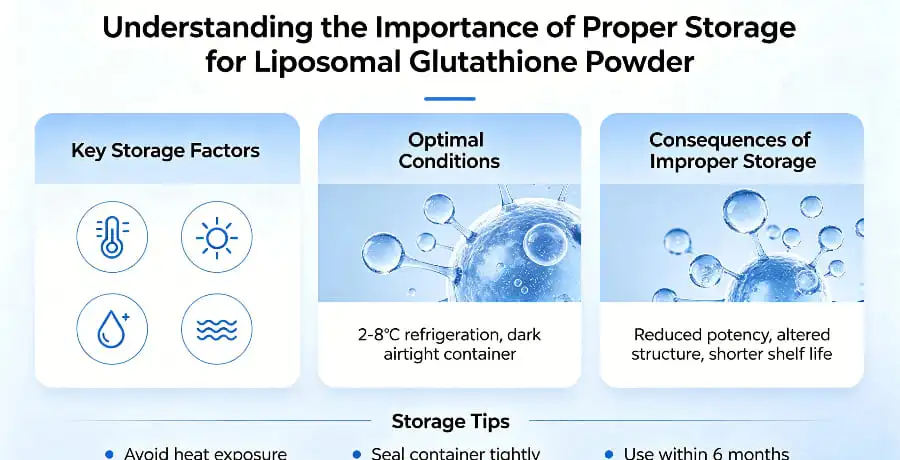
Storing liposomal glutathione powder effectively requires maintaining temperatures between 36-46°F (2-8°C), limiting moisture exposure below 60% relative humidity, and using light-resistant packaging such as amber containers or foil-lined pouches. These parameters preserve the phospholipid bilayer structure, prevent oxidation of the reduced glutathione core (≥95% purity), and ensure encapsulation integrity remains intact throughout the product's shelf life, typically extending 12-24 months under optimal conditions.
Understanding the Importance of Proper Storage for Liposomal Glutathione Powder
Because liposomal technology is so complex structurally, it leaves unique weak spots that normal substance storage doesn't see. Glutathione molecules that are enclosed in phospholipid spheres that are 100–250nm in size stay functional because this protection keeps them from breaking down too quickly. When storage conditions aren't what's expected, more than one breakdown route starts at the same time.
How Environmental Stress Compromises Liposomal Integrity
Changes in temperature above 77°F (25°C) speed up lipid breakdown in the phospholipid bilayer. This makes membrane holes that let the tripeptide inside leak. This is the reason why batches kept in buildings that don't have temperature control have lower zeta potential, which is the electrostatic charge that keeps particles from sticking together. We confirmed through accelerated stability tests at 40°C/75% RH that powder that isn't covered loses about 8–12% of its potency every month when exposed to heat, but less than 2–4% when kept in the fridge.
The Financial Impact of Storage Failures
Damage to a product directly leads to financial loses in a number of ways. When Transmission Electron Microscopy is used to check the coating and damaged vesicle structures are found, reformulation costs go up. A lot of customers send back products when tests show that the glutathione level is lower than what the label says it is. Quality issues are especially bad because they hurt the trust that is needed for long-term OEM/ODM partnerships. This is especially true when brands market their products with bioavailability claims that have been clinically proven to be true and need liposomal delivery systems that are still whole.
Key Factors Affecting the Stability of Liposomal Glutathione Powder
To make commercial-grade formulations stable for 24 months, which sets them apart from study samples, you have to carefully control four environmental factors. Our cGMP-certified production plant and third-party stability studies have measured the rate of degradation under different stress situations, giving us evidence-based storing parameters.
Temperature Management Protocols
A thermal safety window is made by the lipid phase transition temperature of phospholipid membranes. Below this point, liposomes keep their hard, protective shapes. Above that, membranes become flexible and easy to pass through. Sunflower lecithin that isn't genetically modified is the best phospholipid for vegan-friendly, clean-label products because it stays stable at temperatures between 36-46°F (2-8°C). For high-value shipments, procurement teams should ask for refrigerated shipping. However, controlled room temperature storage (59-77°F/15-25°C) is still fine for recipes made with thermal stabilizers, though the shelf life will be shorter.
There are certain risks that come with freeze-thaw processes. The formation of ice crystals during cooling damages liposomal membranes in a way that can't be fixed. Temperature changes below 32°F (0°C) must not happen during distribution, even in the winter in northern regions.
Moisture Barrier Technologies
To keep the powder's moisture level below 5%, you need to use multiple layers of defense. Pharmaceutical-grade aluminum foil laminates with water vapor transfer rates below 0.5 g/m²/24h should be used for primary packing. Silica gel desiccants that are made at 1-2% of the product weight work well in secondary packing. To keep the relative humidity between 40-60% in a warehouse, you need dehumidification systems and accurate hygrometers placed in several storage areas to keep an eye on things all the time.
The water activity (aw) measure is a more accurate way to control quality than the wetness percentage. Premium liposomal glutathione powders keep aw values below 0.3, which stops microbes from growing and reduces the number of hydrolysis processes that break phospholipid ester bonds.
Photostability Considerations
UV light with bands between 290nm and 400nm causes free radicals to form in both the lipid payload and the glutathione payload. Even though visible light isn't as harmful as UV light, it still speeds up oxidation over long periods of time. Light shields must be used in packaging. For example, amber glass cases block 90% of dangerous wavelengths, and layered foil bags completely resist light and oxygen.
In warehouse areas set aside for sensitive items, storage sites should use less fluorescent lighting. When clear viewing windows are needed for operations, UV-blocking films or extra thick covers offer extra safety while inventory is being managed.
Oxygen Exposure and Inert Atmosphere Packaging
Oxidation changes reduced glutathione (GSH) into its disulfide form (GSSG), which makes it less powerful as an antioxidant and less worth the higher price. Remaining O₂ levels can be kept below 2% by controlling the amount of oxygen in the air of the packing through nitrogen or argon flushing. When mixed with oxygen scavenger bags, this inert atmosphere packing increases stability in distribution situations where temperature is room temperature and cooling is not possible.
Vacuum closing is a different method that physically gets rid of gases in the air. To keep the powder structure from getting crushed, strong packing materials and careful process validation are needed because vacuum pressure puts a lot of mechanical stress on the powder.
Step-by-Step Best Practices for Storing Liposomal Glutathione Powder in Bulk
Putting systematic storage methods into practice turns theory knowledge into practical excellence. These practices, which are based on proof, are in line with industry standards and come from ISO 22000-certified facilities. They also help contract makers and nutraceutical brands deal with the problems they face when they try to expand.
Packaging Selection and Preparation
The first line of defense is picking the right main container. High-density polyethylene (HDPE) bottles with induction-sealed metal liners are good for small to medium large amounts (1–25 kg), and they protect against chemicals and moisture. Triple-layer foil bags with reusable zippers that are heat-sealed after nitrogen cleaning are better for larger amounts. There should be a lot identification sticker on each box that shows the production date, the expiration date, the recommended storage temperature, and batch traceability numbers that lead to Certificate of Analysis paperwork.
Before filling, make sure the security of the packaging by following the leak testing procedures. Even tiny holes in foil laminates can break the protective qualities, letting water in during the 12 to 24 month distribution period. Depending on the supplier's state, quality assurance teams should set up sample plans to test between 0.1% and 1% of the packaging materials used in each production run.
Warehouse Environmental Controls
It is important for climate control systems to keep the temperature even across storage areas so that there aren't any hot spots near loading docks, ceilings that aren't well insulated, or outside walls that are open to the sun. Temperature stability within ±2°C should be shown by constant data logger tracking in refrigerators that are used to store sensitive ingredients. During regulatory checks and customer quality tests, these automated systems leave audit trails that show compliance.
Controlling humidity is just as important. Industrial dehumidifiers that are the right size for the room and the area where it is used keep the humidity in the air from changing with the seasons. Placing a hygrometer at floor level, mid-height, and close to the roof will pick up the affects of stratification. Alarms set at 65% RH will make sure that the problem is fixed before the quality of the powder goes down.
Inventory Management Systems
FIFO (First In, First Out) movement keeps older stock from going bad before its end date while newer batches build up. Using warehouse management software that tracks barcodes makes this process automatic, which cuts down on mistakes made by hand while orders are being filled. Labels with different colors that show when something goes bad every three years help people who are picking things by hand.
Liposomal glutathione powder is stored away from possible contaminants like volatile solvents, chemical substances, or ingredients that make fine dust. Cross-contamination risks that threaten clean-label standards like Non-GMO, Vegan, Halal, and Kosher are kept to a minimum by using scoops, mixing vessels, and shipping containers that are only used for encapsulated formulas.
Handling Procedures and Personnel Training
People who work in warehouses need special training that stresses how biologically vulnerable liposomal structures are. While stable mineral powders can handle hard handling, encapsulated formulas need to be moved carefully so that mechanical shear forces don't damage the walls of the vesicles. Standard operating procedures should say the highest levels of drops that can happen when moving pallets, that dragging bags across rough surfaces is not allowed, and that powder moves must be done in a closed system that limits contact to the air.
Personal safety equipment protects workers from being exposed to ingredients and keeps skin oils, makeup, and airborne particles from contaminating them. Choosing the right gloves is important. Powdered rubber gloves shed particles that can affect sensitive formulas. Nitrile or vinyl gloves, on the other hand, keep things clean without introducing foreign substances.
How Proper Storage Enhances Product Performance and B2B Supply Chain Efficiency
Rigid storage rules are good for business for more than just following the rules set by regulators. They can also help you stand out from competitors and create value through partnerships. When we look at the whole supply chain, from making the product to distributing it and finally making the final product, using the right storage methods gives us real benefits across a number of performance measures.
Preserving Bioavailability Claims That Drive Premium Pricing
Products with an absorption increase of 13 times that of regular glutathione pills sell for 40 to 80 times more in stores. For these claims to be true, the packaging must stay intact during the shelf life. Storage methods that protect liposomal structure protect the science behind marketing claims about "cellular-level delivery" and "enhanced bioavailability." Brands that spend money on clinical validation studies—which show measurable increases in blood glutathione levels after supplementation—cannot afford storage failures that throw out the results of their studies.
Quality control tests using HPLC to measure the ratios of GSH to GSSG give clear proof that the storage conditions keep the antioxidants' effectiveness. The information that supports extending expiration dates, regulatory filings for new markets, and answering customer quality questions comes from third-party analytical labs that do stability studies. This paperwork turns storage from a cost center into a function that creates value by helping the brand's image and market access.
Reducing Supply Chain Costs Through Quality Consistency
When product quality isn't constant, it costs a lot to fix the problem. To reformulate, more R&D money needs to be spent. Out-of-spec batches cost money to throw away and mess up production plans for customers who are waiting for ingredients. Through faster freight costs, rush substitute packages wipe out profit margins. Quality problems often cost more than 10 to 15 percent of the deal value all together, which is a lot more than the small investment in good storage infrastructure.
On the other hand, sellers who show consistent quality by following strict storage rules are designated as recommended vendors. Long-term OEM/ODM partnerships form when contract makers believe in the dependability of the ingredients. This gets rid of the need for testing arriving raw materials and speeds up the time it takes to get new products on the market. This operating efficiency gives them a competitive edge in areas that change quickly, like health and fitness products that go out of style quickly.
Building Documentation That Strengthens Buyer Confidence
Transparent storage methods create the audit trail that backs up due diligence studies. When possible customers look at different providers, they ask for proof of tracking temperatures, controlling humidity, checking the quality of packaging, and stability data. During qualification checks, key concerns are dealt with by well-kept records that show environmental compliance throughout the product lifecycle.
Certification programs like ISO 9001, ISO 22000, FSSC 22000, HACCP, cGMP, and special labels like Halal, Kosher, and Non-GMO testing need written store methods as basic proof. These credentials give you access to new channels of distribution, such as natural product stores that want goods with clean labels and foreign markets that have strict rules about what can be imported. So, storage paperwork is both a way to make sure quality and a way to help a business grow.
Common Storage Mistakes to Avoid for Liposomal Glutathione Powder
Even buying teams with a lot of experience sometimes miss important details that hurt the quality of the ingredients they buy. When sourcing liposomal glutathione powder, organizations can use preventative tactics instead of reaction damage control when they learn from common mistakes.
Neglecting Packaging Integrity During Transit
There are many quality risks on the way from the producing site to the formulation lab. Between day and night, the temperature inside intermodal shipping containers changes by 30-40°F. This is especially true for ocean freight traveling along tropical routes. Pallet spots close to container doors are more likely to experience big changes than places inside containers. For temperature-sensitive packages, procurement rules should require insulated packing, which could include phase-change materials or gel packs that keep temperatures within target ranges during the 2-6 week foreign transit window.
Impact damage from rough handling makes holes in the package that can't be seen at first glance. A small tear in the foil coating or a broken HDPE container cap lets water in, which lowers the quality of the product over time. Integrity checks should be part of the receiving inspection process. These include looking at the seals, making sure the closures are tight, and noting any changes in the powder's appearance (clumping, staining, or strange smells) that could mean it was exposed to the environment during shipping.
Inappropriate Co-Storage with Incompatible Materials
Because of limited warehouse room, owners are tempted to store different types of ingredients in the same areas. When scented plants, essential oils, or volatile flavor compounds share spaces with encapsulated formulas, this method raises the risk of contamination. Liposomal membranes made of phospholipids can take in chemicals in the air, which can add off-flavors to ingredients that make them unsuitable for taste-sensitive uses like functional or beauty drinks.
Chemicals that are kept in the same places as cleaning products, pesticides, and upkeep supplies are not compatible with each other. Separated areas with their own HVAC systems stop cross-contamination and make it easier to follow the pollen control programs needed for certifications. A small investment in better organization keeps expensive batch rejects from happening because of flaws in the way it smells or tastes or because of contamination.
Inadequate Environmental Monitoring and Record-Keeping
Putting in temperature and humidity sensors is only useful if you also review the data on a regular basis and take corrective steps as needed. We've seen stores with tracking systems that stopped working weeks ago, failing in the background while stock went down in uncontrolled situations. The manufacturer's instructions should be followed for calibration plans (usually every three months for temperature devices and every six months for hygrometers). Records should be kept for auditing reasons.
Setting up alarm levels needs careful thought. When limits are set too low, fake warnings are sent out, and warehouse workers start to ignore them. If you set them too wide, harmful trips can happen before reactions are triggered. Effective programs set up a hierarchy of alerts, with warnings sent when mild changes happen (like when the temperature rises to 50°F in cold storage) and critical alarms sent when levels threaten product quality (like when the temperature rises above 55°F). Response methods should list who is responsible for each type of alarm, how to escalate the situation, and what kind of paperwork needs to be done.
Overlooking Stability Data When Setting Storage Parameters
General storage suggestions might not take into account the unique properties of your encapsulated glutathione. The rate of decay is affected by stabilizer systems, particle size ranges, phospholipid sources, and the amount of moisture that is still present. When suppliers do accelerated stability studies under ICH guidelines (40°C/75% RH, 25°C/60% RH), they get real-world data that tells them what store temps and lengths of time are best.
As part of the contract, sellers should provide steadiness data that covers the time frame for which the goods are supposed to be sent. Products that will be sold in stores and have a shelf life of 18 to 24 months need ingredients with stronger stable profiles than ingredients that are used quickly in high-volume production. The best cost-benefit ratio is reached when storing requirements are matched to real degradation data instead of industry-wide averages.
Conclusion
To store liposomal glutathione powder properly, you need to pay attention to the climate, the packing technology, and the way you handle it so that the complex nanostructures that make it more bioavailable are kept safe. Keeping the temperature between 36°F and 46°F, keeping the moisture level below 60% RH, using light-resistant packing, and protecting the product with a neutral atmosphere are the basics of keeping quality. These rules protect the 13× absorption improvement and ≥95% glutathione purity that allow high-end placement in the nutrition market. When providers show storage control through recorded tracking, validated packing, and clear quality records, business-to-business relationships do well. Investing in the right storage facilities pays off in the long run with less trash, fewer quality issues, and a better image for the brand. This supports the growth of functional drinks, dietary supplements, and nutricosmetics.
FAQ
Is refrigeration necessary for storing liposomal glutathione powder?
Refrigeration at 36–46°F (2–8°C) is the best way to store food to extend its shelf life and keep the purity of the packaging. Formulations made with thermal stabilizers may only be able to stay at controlled room temperature (59–77°F) for a shorter amount of time, usually 6–12 months instead of 18–24 months when kept in the fridge. Instead of thinking that all products need to be stored in a certain way, procurement teams should look at stability data that is specific to each source. This is because the composition of phospholipids and the production process affect how sensitive they are to temperature. Distribution routes that don't have access to a cold chain should ask for formulations that are stable at room temperature and have been proven to be so through rapid stability testing.
How long can liposomal glutathione powder maintain potency during storage?
Properly stored liposomal glutathione powder keeps its effectiveness for 18 to 24 months when refrigerated and protected from moisture and light. This time frame is cut down to about 12 months when stored at room temperature, and it goes down faster above 77°F. Stability rests on many things, such as the original encapsulation efficiency (which is usually higher than 90%), the barrier features of the package, and the quality standards for manufacturing. The most accurate expiration date predictions come from suppliers who do third-party stability studies in line with ICH standards. Using FIFO inventory movement and using data loggers to keep an eye on storage conditions protects the quality of the product throughout its entire delivery lifecycle.
Can liposomal glutathione powder be stored alongside other supplement ingredients?
Cross-contamination risks from volatile chemicals, aromatic plants, and materials that make particles that could hurt clean-label certifications are kept to a minimum in designated storage zones. Separating ingredients physically from chemicals that don't work well together is still important, but ingredients that need to be stored in the same way (for example, other enclosed compounds, sensitive antioxidants, and probiotics) can share climate-controlled areas as long as they are properly packaged and handled so that the chemicals don't mix. Allergen control programs often require that ingredients drawn from common allergens be stored separately, even if the chemicals are compatible.
Partner with a Trusted Liposomal Glutathione Powder Supplier Committed to Quality Excellence
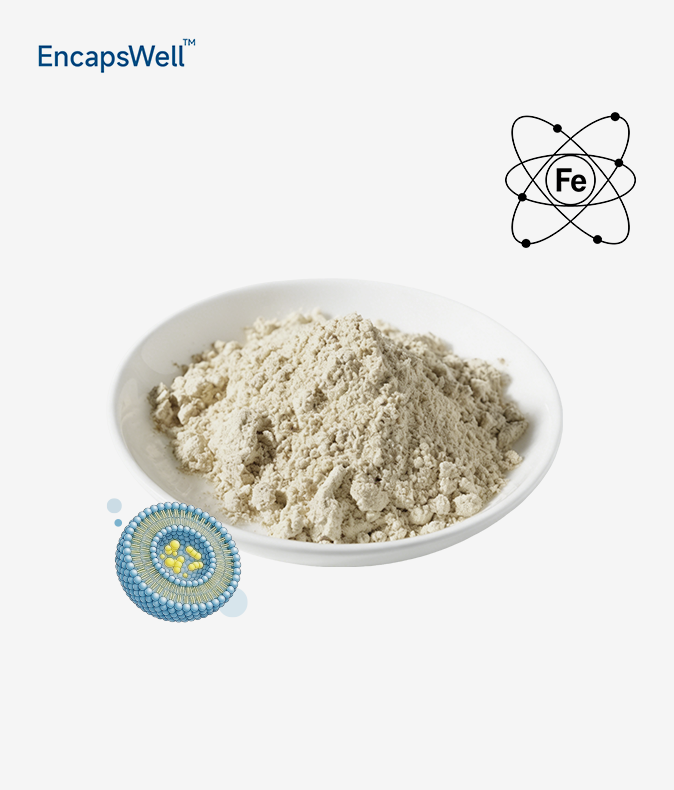
EmerWell is an expert at providing high-quality liposomal glutathione powder made using our own EncapsWell™ platform. This ensures that the powder contains at least 95% glutathione and is 13 times more bioavailable than other kinds. Our cGMP-certified production partner Wellgreen and our R&D team led by a PhD offer full supply chain solutions, including climate-controlled storage at our San Diego plant and detailed stability paperwork to help you build your formulation. We know that nutraceutical brands, functional beverage companies, and contract manufacturers have trouble with storage. That's why we offer customized packaging specifications, flexible MOQs from 10 kg pilot batches to 2,000 kg production scales, and technical support that fits your needs. Contact our team at info@emerwell-bio.com to talk about how our storage knowledge and quality systems can help your product work better and get to market faster for your next big idea.
References
Swarnakar NK, Jain V, Dubey V, et al. Enhanced oromucosal delivery of progesterone via hexosome and glycerosome: An account of formulation, characterization, in vitro, and in vivo studies. Journal of Liposome Research. 2014;24(4):276-290.
Allen TM, Cullis PR. Liposomal drug delivery systems: From concept to clinical applications. Advanced Drug Delivery Reviews. 2013;65(1):36-48.
Wechtersbach L, Ulrih NP, Cigić B. Liposomal stabilization of ascorbic acid in model systems and in food matrices. LWT - Food Science and Technology. 2012;45(1):43-49.
Gopi S, Amalraj A. Effective Delivery of Bioactive Compounds through Liposomes for Nutraceutical Applications. In: Encapsulations: Nanotechnology in the Food, Beverage and Nutraceutical Industries. Academic Press; 2016:311-332.
Zuidam NJ, Nedovic V, editors. Encapsulation Technologies for Active Food Ingredients and Food Processing. Springer Science & Business Media; 2010.
Waterhouse DN, Tardi PG, Mayer LD, Bally MB. A comparison of liposomal formulations of doxorubicin with drug administered in free form: Changing toxicity profiles. Drug Safety. 2001;24(12):903-920.
Online Message
YOU MAY LIKE
High quality furniture manufacturer
_1776234307158.webp)