Jun 1, 2026
How to Pick the Best Liposomal Vitamin C?
Understand encapsulation efficiency and purity before choosing a liposomal vitamin C powder. Prioritize formulations with third-party confirmed absorption data, vitamin C concentration ≥99%, and encapsulation efficiency > 50%, over marketing claims. Check vendors' cGMP, ISO22000, and HACCP certifications for batch uniformity and regulatory compliance. Reconstituted liposomes between 100-400nm have excellent cellular absorption. Check the phospholipid source—sunflower-derived phosphatidylcholine is membrane-compatible and allergen-free. Shelf stability data showing little potency loss over 24 months is essential for inventory management and product integrity across distribution channels.
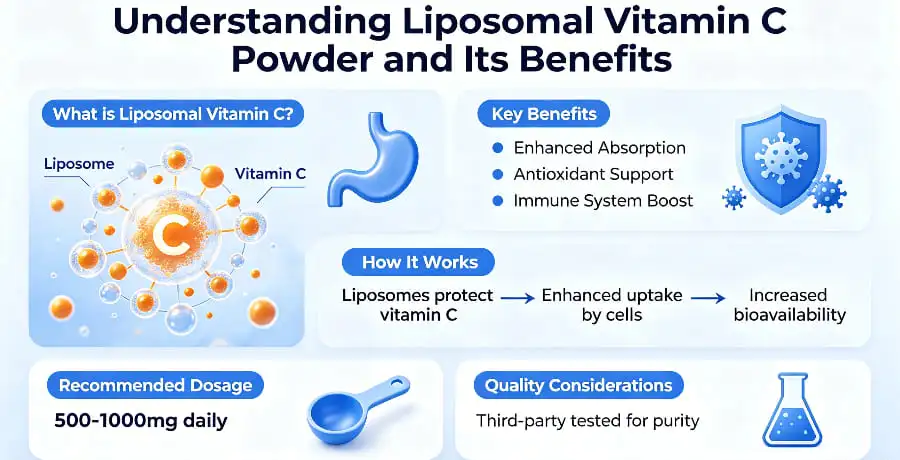
Understanding Liposomal Vitamin C Powder and Its Benefits
What Makes Liposomal Delivery Different?
Oral administration of traditional ascorbic acid is limited. Sodium-dependent vitamin C transporters (SVCT1 and SVCT2) in the gut become saturated at dosages over 200mg. This biological bottleneck means conventional supplements waste most of their active content through urinary excretion. By wrapping ascorbic acid in phospholipid bilayers that mirror biological membranes, liposomal technology overcomes this constraint. These tiny vesicles shield the nutrient from stomach breakdown and allow intestinal cell endocytosis. EncapsWell™ platform offers 8x better absorption than traditional crystalline powders, as shown by independent bioavailability tests.
Clinical Advantages for Product Development
Improved distribution has formulation benefits. Mega-dose ascorbic acid can cause gastrointestinal upset, however brands creating 1000-3000mg immune support solutions can prevent it. Lipid encapsulation neutralizes acidity, making formulations safe for youngsters and pregnant people. Plasma retention studies reveal liposomal forms retain therapeutic concentrations 4-6 hours longer than usual, permitting once-daily dosing methods that increase consumer compliance. Nutritional biochemistry journals demonstrate that this continuous release pattern maintains collagen synthesis and antioxidant activity across circadian cycles.
Addressing B2B Priorities
Vitamin C procurement teams must combine effectiveness claims with production realities. liposomal vitamin C powders treat numerous issues. Due to the lack of cold chain requirements, dry liposomal products simplify logistics and save transit costs. These powders can be reconstituted with water to generate effervescent tablets, ready-to-drink drinks, and beauty shots. Stability testing results demonstrating >95% potency retention over two years ensures shelf life assurance for regional markets with different climates.
Core Criteria to Evaluate When Choosing Liposomal Vitamin C Powder
Quality Certifications That Matter
Not all certifications matter in B2B procurement. Choose manufacturing qualifications above marketing badges. CGMP promotes consistent manufacturing with documented quality control at every level. ISO22000 and FSSC22000 certifications cover food safety management systems, essential for liposomal vitamin C powder retail supplements. HACCP protocols identify and control biological, chemical, and physical hazards before they compromise product safety. Independent lab testing verifies label claims and detects heavy metals, microbiological diseases, and pesticide residues. Brands targeting overseas markets should check suppliers' HALAL and KOSHER certifications, Non-GMO Project verification, and organic certifications.
Encapsulation Efficiency Metrics
Premium formulas differ from imitations by technical parameters. Vitamin C encapsulation efficiency measures the powder's protected vs free vitamin C. Advanced manufacturing uses spray-drying or lyophilization to save 50-70%. A low percentage indicates inadequate formulation control or outmoded technology. Request DLS data showing particle size distribution—uniformity within 100-400nm assures consistent absorption patterns across batches. Phospholipid source greatly affects stability and allergen profiles. Sunflower lecithin with phosphatidylcholine above 50% supports membrane compatibility without soy allergens that limit market access.
Regulatory Compliance Documentation
Cross-border trade needs extensive paperwork. Suppliers should provide Certificates of Analysis (CoA) for each production batch, detailing active content, microbial limits, heavy metal screening, and pesticide testing results. Shelf life projections are supported by science in ICH stability studies (25°C/60% RH and accelerated circumstances). Health Certificates, Free Sale Certificates, and country-specific attestations help customs clear dietary supplements in 50+ countries. Buyers avoid expensive product recalls and market access denials by complying with FDA DSHEA, EU Novel Food, and ANVISA criteria in Brazil.
Comparing Liposomal Vitamin C Powder with Other Forms
Powder Versus Liquid Formulations
Liquid liposomal solutions dominated early market development but are difficult to bulk acquire. Aqueous suspensions need preservatives to avoid microbiological contamination, affecting clean label. Phospholipid oxidation in liquid requires nitrogen flushing and amber glass packing, increasing material costs. Temperature-sensitive storage and shipment require regulated logistics. Powdered formulations eliminate these issues. Ambient stability in the dehydrated formulation reduces storage costs and extends shelf life beyond two years. Reconstitution flexibility allows formulators to control final concentration and flavor profiles precisely. Shipping weight benefits minimize freight costs, which is crucial for high-volume continental shipments.
Capsule and Tablet Format Considerations
Encapsulated and tablet liposomal vitamin C powder products are convenient yet complicated to make. To avoid clumping and electrostatic difficulties with phospholipid powders, hard capsule filling needs specific equipment. Excipients that dilute active substance are needed for direct tableting due to moisture sensitivity during compression. These extra processing procedures raise minimum order quantities and manufacturing times. Bulk powder procurement allows marketers to create proprietary mixes, adapt dosage methods, and choose delivery options that appeal to target populations. Sachets and stick packs provide single-serve amounts. Effervescent pills disguise neutral flavor and enhance intake. Functional beverage lines effortlessly combine ready-to-mix powders.
Bioavailability Impact on Product Positioning
Competitive positioning tactics are substantially altered by conventional and liposomal vitamin C powder absorption differences. Standard ascorbic acid products compete on price due to bioavailability issues, prompting high-dose formulations that reduce margin. Liposomal technology justifies high prices with its effectiveness and gentleness. Clinical validation studies demonstrating 2x increased cellular absorption support health-conscious consumer education programs. Therapeutic positioning for immune support, post-exercise recovery, and skin health is possible with continuous plasma retention. Science-backed claims help brands stand out while retaining comfortable margins for brand growth.
Sourcing and Procurement Strategies for Liposomal Vitamin C Powder
Evaluating Manufacturing Capabilities
Beyond certificate gathering, supplier vetting includes operational examination of liposomal vitamin C powder output. Annual output capacity shows scaling potential—100+ metric tons demonstrates bulk supply infrastructure. When possible, inspect production locations for cleanroom classifications, equipment upkeep, and raw material quarantine. Instead of just checking the finished product, the quality control system should include testing in real time as the product is released. Batch traceability systems connect raw materials to completed items, speeding quality investigations. Suppliers with numerous manufacturing lines offer backups during maintenance or demand spikes.
Private Label Versus Branded Ingredients
The choice between private label and branded ingredient platforms depends on market strategy and resources. EncapsWell™ branded ingredient partnerships offer clinically validated turnkey solutions, lowering time-to-market and R&D costs. Co-branding maintains product distinctiveness while leveraging customer awareness. Private label creation allows for maximum customization—proprietary blend compositions, particle size parameters, and stability profiles for distribution issues. This method involves more technical collaboration but produces unique compositions that competitors cannot copy. Innovation pace and market differentiation are balanced by hybrid tactics using branded core technology and customized peripheral ingredients.
Cost Structure Analysis
Margin planning for liposomal vitamin C is easier with transparent pricing. Ascorbic acid and phospholipid prices affect raw material costs. Volume tier discounts start at 500kg, 1000kg, and 5000kg, with percentage savings escalating. Bulk barrels reduce per-unit costs but need downstream repackaging. Protective aluminum foil bags with nitrogen flushing cost little. Consolidated shipments, intelligent warehouse placement, and freight forwarder agreements with advantageous pricing optimize logistics. The entire cost equation includes payment term negotiation, which balances cash flow management and relationship building.
How to Use and Market Liposomal Vitamin C Powder Effectively?
Dosage Protocols for Different Applications
Dosing suggestions should match use cases and demographics. Immune support drugs delivered 500-1000mg daily in the morning for daytime protection. Beauty-from-within products stimulate collagen production with 1000-1500mg dose, usually divided between morning and evening for sustained plasma levels. Utilizing antioxidant qualities during oxidative stress windows, athletic recovery formulations may specify 1000-2000mg post-workout. Pediatric goods must be dosed 250-500mg with enticing flavors and innovative formats like gummies. Clear usage instructions, ideally endorsed by healthcare practitioners, encourage proper intake and increase value.
Building Consumer Trust Through Transparency
Modern wellness consumers want more than label claims. The liposomal vitamin C powder technology should be explained in straightforward English on product websites including membrane fusion illustrations. Peer-reviewed journal citations provide scholarly legitimacy without medical expertise. Independent testing badges from NSF International, Informed Choice, or USP Verified reassure cautious purchasers. Graphical potency curves show quality maintenance during shelf life. Educational material like "Why does bioavailability matter?" or "How does this compare to intravenous delivery?" portrays companies as trusted consultants rather than transactional providers.
Distribution Channel Optimization
Channel choice affects packaging, marketing, and margins. Direct-to-consumer businesses leverage subscription models and instructional content marketing, necessitating digital infrastructure and community creation. Natural product and specialized wellness chain retail collaborations need compliance labeling, promotional allowances, and slotting fee discussions. Healthcare practitioners value clinical evidence, professional samples, and continual education. Amazon requires efficient product listings, review management, and fulfillment operations. Omnichannel strategies manage these interactions with consistent brand message and price architecture to safeguard margins across distribution tiers.
Conclusion
Technical encapsulation efficiency evaluation, certification verification, and strategic supplier partnership assessment are needed to choose the best liposomal vitamin C powder. This technology is essential for nutraceutical companies, functional beverage producers, and nutricosmetic inventors because to its improved bioavailability, production flexibility, and formulation stability. Success requires matching product characteristics to target market needs and ensuring regulatory compliance throughout distribution countries. Choose suppliers with technical experience, manufacturing scalability, and timely customer service to balance immediate cost with long-term relationship value. Immune health and beauty-from-within categories are growing in the global wellness industry, putting liposomal vitamin C powder formulations at the nexus of consumer demand and scientific discovery.
FAQ
Is long-term daily use of liposomal vitamin C safe?
Chronic supplementation at authorized doses is safe according to extensive research. No matter the type, vitamin C is water-soluble and eliminated through the kidneys. Phospholipid carriers are equivalent to biological membranes and dietary lecithin, therefore supplementary amounts are safe. Clinical trials of 1000-2000mg daily for 6-12 months found no side effects other than moderate gastrointestinal adjustment in the first weeks. Though vitamin C is vital for embryonic growth, pregnant and lactating women should check their doctors before using supplements. Liposomal products work at lower dosages than traditional treatments due to their greater bioavailability, potentially decreasing nutritional burden.
What documentation should B2B buyers request from potential suppliers?
Comprehensive supplier packages should contain current cGMP, ISO22000, HACCP, and market-specific certificates. Ask for current manufacturing batch Certificates of Analysis indicating vitamin C content, encapsulation efficiency, particle size distribution, and contaminant screening. Stability reports following ICH criteria validate shelf life using accelerated and real-time testing. Ingredient declarations, allergy statements, and country-specific attestations aid customs clearance and label compliance. Manufacturing capacity declarations, lead time promises, and quality incident records give operational transparency. IP documentation specifies whether formulations use proprietary technology requiring licensing agreements or open-platform approaches for private label development.
Partner with EmerWell for Premium Liposomal Vitamin C Powder Solutions
EmerWell uses our EncapsWell™ platform to commercialize advanced liposomal science. Our San Diego R&D center and strategic partnership with Wellgreen's cGMP-certified manufacturing facilities provide nutraceutical brands, functional beverage companies, and contract manufacturers with technical precision and production scale. Our PhD-led team provides responsive technical support and comprehensive analytical capabilities for bulk liposomal vitamin C powder formulation projects or collaborative delivery system development. OEM/ODM services for powder blends, capsules, and liquid-ready formulations are available. Contact our procurement specialists at info@emerwell-bio.com to learn how our vitamin C technology, regulatory expertise, and localized US logistics support can speed up product development without compromising quality.
References
Carr, A. C., & Maggini, S. (2017). Vitamin C and immune function. Nutrients, 9(11), 1211. Multidisciplinary Digital Publishing Institute.
Davis, J. L., Paris, H. L., Beals, J. W., et al. (2016). Liposomal-encapsulated ascorbic acid: Influence on vitamin C bioavailability and capacity to protect against ischemia-reperfusion injury. Nutrition and Metabolic Insights, 9, 25-30. SAGE Publications.
Lykkesfeldt, J., & Tveden-Nyborg, P. (2019). The pharmacokinetics of vitamin C. Nutrients, 11(10), 2412. Multidisciplinary Digital Publishing Institute.
Panche, A. N., Diwan, A. D., & Chandra, S. R. (2016). Flavonoids: An overview. Journal of Nutritional Science, 5, e47. Cambridge University Press.
Pullar, J. M., Carr, A. C., & Vissers, M. C. M. (2017). The roles of vitamin C in skin health. Nutrients, 9(8), 866. Multidisciplinary Digital Publishing Institute.
Zhao, L., Fang, X., Marshall, M. R., & Chung, S. (2019). Regulation of obesity and metabolic complications by gamma and delta tocotrienols. Molecules, 24(5), 923. Multidisciplinary Digital Publishing Institute.
Online Message
YOU MAY LIKE
High quality furniture manufacturer