Sep 16, 2026
How to Incorporate Liposomal Omega-3 Powder into Functional Beverage Formulations
Incorporating liposomal omega-3 powder into functional beverage formulations requires attention to dispersibility, pH compatibility, processing temperature, and dosage precision. Unlike standard fish oil powders, liposomal omega-3 powder uses phospholipid bilayer encapsulation to protect EPA and DHA during blending and shelf storage. This guide is designed for product developers, procurement managers, R&D teams, and OEM clients who want practical, science-backed direction for building high-performance omega-3 beverages that consumers actually trust and enjoy.
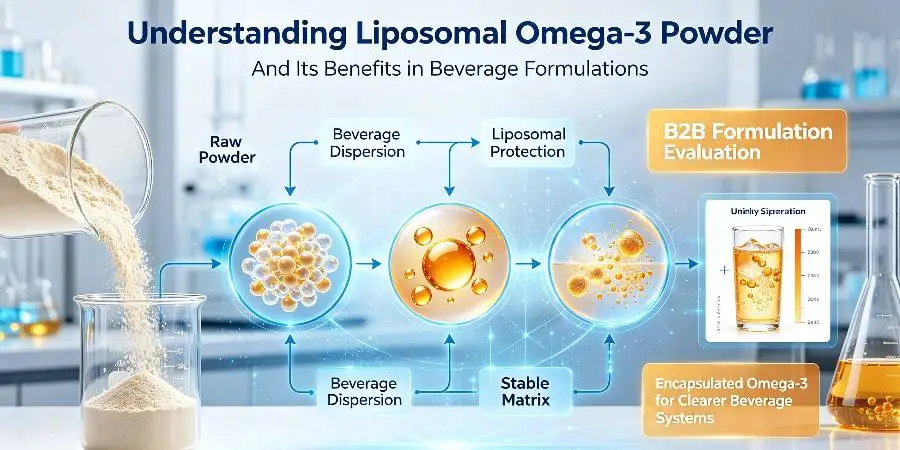
Understanding Liposomal Omega-3 Powder and Its Benefits in Beverage Formulations
Learning about liposomal omega-3 powder and how it can help beverage formulas.
What Makes Liposomal Encapsulation Different?
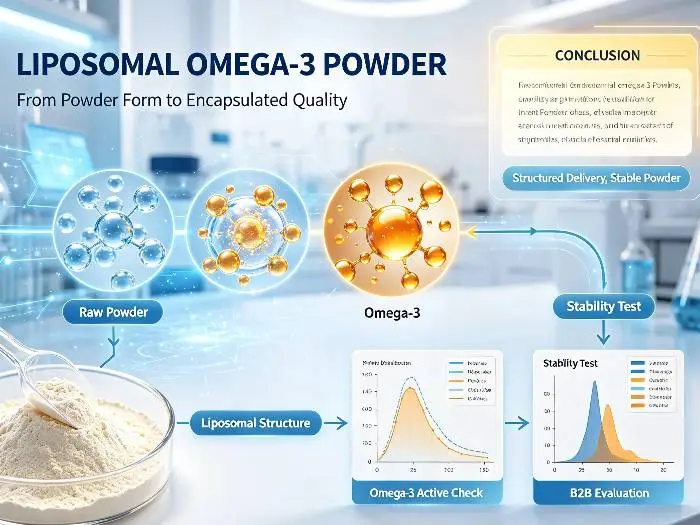
Traditional omega-3 ingredients break down quickly, have a bad taste, and don't mix well with water. This is completely different with liposomal release. EPA and DHA are protected from oxidation, wetness, and heat by phospholipid bilayers that act like natural cell walls. This makes it much easier for cells to take in the fatty acids. A study in the journal Prostaglandins, Leukotrienes, and Essential Fatty Acids shows that omega-3s bound to phospholipids are significantly better at being absorbed than omega-3s bound to triglycerides.
Core Health Benefits That Drive Market Demand
The health story behind EPA and DHA is very interesting for brands that want to reach people who care about their health. Because of these main useful benefits, omega-3 actives are a top choice for new drink recipes:
- Cardiovascular support: EPA and DHA work together to help keep lipids in check and the circulation system working well, which is good news for the growing number of people who care about their heart health.
- Cognitive and brain health: DHA is a molecular part of neural membranes, which is good for brain health and cognition. Getting enough every day helps people of all ages with their memory, focus, and brain health.
- Anti-inflammatory activity: The phospholipid matrix sends omega-3 molecules straight to cells, which helps with joint health and overall health without chemical influence.
- Eye and vision maintenance: DHA builds up in retinal tissue, which makes regular intake especially important for older people and people who spend a lot of time in front of a screen.
These advantages can be immediately translated into unique product claims for beverage brands, opening up important marketing possibilities in the categories of sports nutrition, family wellness, and elite health drinks.
Challenges and Solutions in Incorporating Liposomal Omega-3 Powder into Beverages
When working with regular omega-3 ingredients, problems like oil separation, going bad, having a fishy aftertaste, and dosage not being consistent keep happening. Most normal fish oil powders have a peroxide value above 5 meq/kg when they are first made, and they break down even more when they are processed for drinks. The problem is made worse by unstable pH and interactions with other ingredients in drinks.
These problems can be fixed at the molecular level by liposome packaging. The phospholipid shell protects against oxidation, keeps the oily core separate from the water-based base, and allows for stable suspension without the need for gums or emulsifiers. EmerWell's liposomal omega-3 powder, which is made using their own EncapsWell™ platform, has a peroxide value below 2 meq/kg, which is a lot lower than other powders.
For formulation teams navigating beverage matrices, a few principles matter consistently:
- pH management: For best liposomal stability, keep the pH of the drink between 4.0 and 7.0. Over time, highly acidic environments below pH 3.5 can make bilayer stability worse.
- Temperature control: During mixing, keep the blend below 60°C. Liposomal structures can handle some heat, but being exposed to it for a long time may make sealing less effective.
- Base compatibility: The water-dispersible formula works well in dairy, plant-based, and water-based beverage systems without the need for extra emulsifiers.
Step-by-Step Guide to Formulating Functional Beverages with Liposomal Omega-3 Powder
From idea to commercial launch, there's more to it than just picking out an ingredient. The steps below show a useful order for people who are making drinks with liposomal omega-3 powder actives:
From Supplier Selection to Scale-Up
Step 1 – Supplier qualification: Choose a seller and make sure that the company has cGMP, ISO 22000, and HACCP standards. Check the COA file for bacteria (Total Plate Count < 1,000 cfu/g), heavy metals (Pb < 0.5 ppm), and peroxide value. Suppliers who can do their own analyses and keep records of tracking lower regulatory risk by a large amount.
Step 2 – Dosage determination: Standard recipes use EPA concentrations of 5% and DHA concentrations of 10% (which can go up to 25%). Match the dose to the GRAS status, the label's claims, and the type of person you want to buy it. A usual goal for daily health drinks is to have 500 mg to 1,000 mg of combined EPA and DHA per dose.
Step 3 – Blending protocol: Follow the instructions for blending by mixing the powder with a small amount of cold or room-temperature water before adding it to the whole drink base. EmerWell's formula creates a stable suspension in cold liquids so that oil doesn't separate. This makes it suitable for RTD drinks that can be served at room temperature or in the fridge.
Step 4 – Quality control and stability testing: Check for quality and stability by doing rapid stability studies over 3 months at 40°C/75% RH. At each period, check the peroxide number, particle size, and sensory character. These data points back up claims about shelf life and meet the needs of retailers and regulators.
Comparing Liposomal Omega-3 Powder to Other Omega-3 Forms for Beverage Application
Choosing the Right Delivery Format
Before deciding on a beverage recipe, procurement workers often look at a number of omega-3 forms. The following comparison is based on actual formulation issues, not marketing stories.
Standard triglyceride fish oil powder oxidizes quickly and needs to be mixed with other ingredients to make it taste good in drinks. Stratification problems and shorter product shelf life are caused by liquid fish oil. Capsule formats can't be used with any kind of liquid beverage system. Krill oil powder has naturally occurring phospholipids and astaxanthin, but the cost of the raw materials is higher, and the product's sustainability can vary depending on where it comes from.
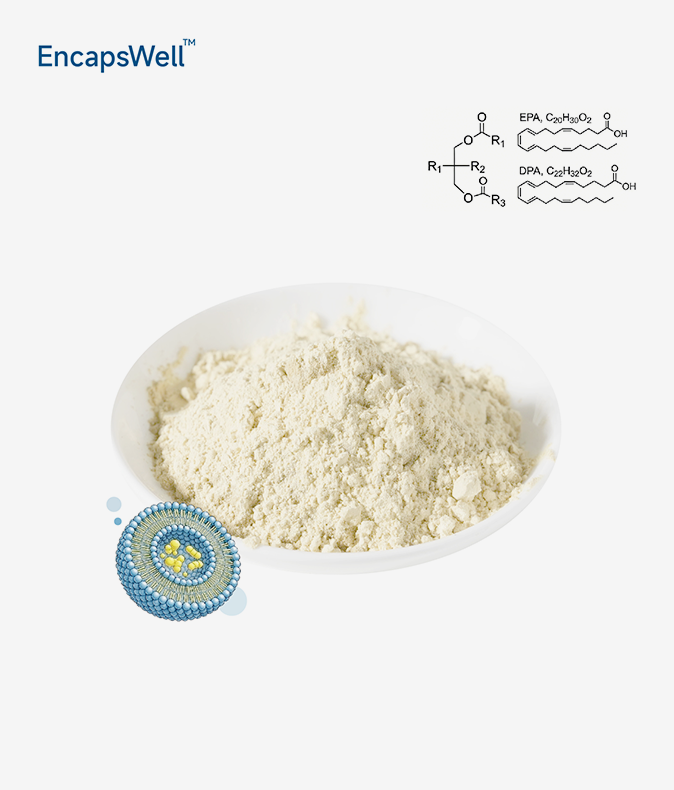
Liposomal omega-3 powder has the absorption benefit of phospholipid-bound fatty acids and comes in a clean powder form that works well with beverage production lines. The free-flowing, off-white to light yellow color mixes without changing the color of the drink much. Full micro-encapsulation masks the taste and gets rid of fishy smells, which is a common issue with other forms.
Procurement Considerations for Bulk Buying of Liposomal Omega-3 Powder
In the United States, there are a number of different companies that make liposomal omega-3 powder. These range from large companies that make a lot of different things to small companies that only make certain ingredients. For brands that care about precise encapsulation and regulation paperwork, price per kilogram isn't the only thing that matters.
What to Evaluate Before Committing to a Supplier
Certification depth is important. In North America, the Middle East, and Asia Pacific, market access is based on Kosher and Halal status, as well as ISO 9001:2015, ISO 22000, and HACCP compliance. Suppliers who have been checked against the Infant Nutrition Standards add an extra layer of safety trustworthiness that buyers and store managers who care about health like.
Flexibility in the minimum order quantity is important for both new brands and OEM clients who manage multiple SKUs. When suppliers offer flexible MOQ structures, teams can test a formula at the pilot scale level before committing to full production numbers. Along with the detailed paperwork package, you should look at wait times, how close the warehouse is, and trial logistics.
Conclusion
One of the most technically challenging things that can be done in the vitamin beverage business right now is making functional drinks with liposomal omega-3 actives. The phospholipid encapsulation method solves the main issues that have historically made it hard to incorporate omega-3s: oxidation, poor dispersibility, and off-notes; it also provides absorption data that backs up meaningful label claims. A verified, well-documented liposomal omega-3 powder supplier is the best way for procurement teams and product developers of all sizes to get a stable product that is ready for the market.
FAQ
Is liposomal omega-3 powder safe for daily beverage consumption?
Yes. If you buy liposomal omega-3 powder from a qualified producer and follow the recommended dosage, it is safe to use every day. EmerWell's formula has been certified as cGMP, ISO 22000, HACCP, Kosher, and Halal, and it also meets Infant Nutrition Standards. This means that it is safe for a wide range of consumers, from kids to older people.
How does absorption compare to standard omega-3 supplements?
When compared to regular triglyceride forms, phospholipid-encapsulated omega-3s are much more bioavailable. Researchers have found that phospholipid bilayers and intestine cell membranes are structurally compatible, which leads to up to three times better absorption.
Can it be used in carbonated or acidic beverages?
When the pH level is between 4.0 and 7.0, the liposomal omega-3 powder works best. Mildly acidic drinks, like flavored waters, and lightly carbonated drinks usually go well together. Formulations that are very acidic (below pH 3.5) may need extra stability tests to make sure the bilayer stays intact over the shelf life that was planned.
What concentrations are available for beverage formulation?
The usual amounts are 10% DHA and 5% EPA, but the range goes up to 25% total omega-3 content. OEM clients can ask for custom concentration goals that are in line with the label and dosage requirements they have.
Partner with EmerWell for Scalable Liposomal Omega-3 Powder Supply
EmerWell, which is based in San Diego, California, helps U.S. brands at every stage of the formulation process. It does this by combining local warehousing and fast sample logistics with R&D knowledge led by PhDs. The EncapsWell™ platform is what we offer as a reliable liposomal omega-3 powder manufacturer. It has a peroxide value below 2 meq/kg, a proven encapsulation efficiency above 85%, and all the certification paperwork that is ready to be sent to the government. You can email our team at info@emerwell-bio.com or go to emerwelllabs.com to get samples and talk about your needs for custom formulations.
References
1. Schuchardt, J. P., & Hahn, A. (2013). Bioavailability of long-chain omega-3 fatty acids. Prostaglandins, Leukotrienes and Essential Fatty Acids, 89(1), 1–8.
2. Mozaffarian, D., & Wu, J. H. Y. (2011). Omega-3 fatty acids and cardiovascular disease. Journal of the American College of Cardiology, 58(20), 2047–2067.
3. Yurko-Mauro, K., Alexander, D. D., & Van Elswyk, M. E. (2015). Docosahexaenoic acid and adult memory: A systematic review and meta-analysis. PLOS ONE, 10(3), e0120391.
4. Cansell, M., & Nacka, F. (2003). Marine lipid-based liposomes increase in vivo FA bioavailability. Lipids, 38(5), 551–559.
5. Wichmann, G., & Eder, K. (2020). Oxidative stability of omega-3 fatty acid encapsulates: Effects of processing conditions and encapsulation matrix. Food Research International, 136, 109497.
6. EFSA Panel on Dietetic Products, Nutrition and Allergies. (2012). Scientific opinion on the tolerable upper intake level of eicosapentaenoic acid (EPA), docosahexaenoic acid (DHA) and docosapentaenoic acid (DPA). EFSA Journal, 10(7), 2815.
Online Message
YOU MAY LIKE
High quality furniture manufacturer
_1776234266736.webp)