Jun 11, 2026
How to Choose & Find the Best Resveratrol Powder
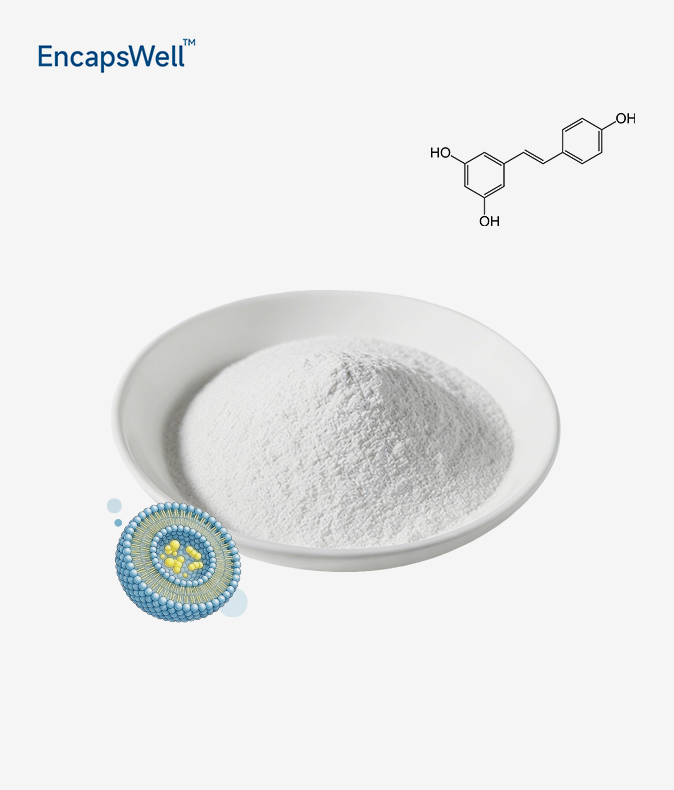
It takes more than reading ingredient labels to choose the right resveratrol powder for your supplement recipe. What is the biggest problem? Traditional resveratrol is extremely bad at being absorbed—studies show that less than 1% makes it to the systemic circulation. This is where liposomal resveratrol powder makes a difference. Trans-resveratrol is protected within phospholipid bilayers and turned into a solid powder. This way, improved formulas avoid liver breakdown and provide up to 14 times greater bioavailability. Whether you're making vitamins for longer life, functional drinks, or nutricosmetics, the success of your product will depend on whether you use a cGMP-manufactured powder that has been scientifically proven to work well as an encapsulant.
Understanding Liposomal Resveratrol Powder
Resveratrol is known as a strong antioxidant that helps the heart, supports good aging through processes like SIRT1 activation, and protects the skin from environmental stressors. However, regular resveratrol pills have a major flaw: they are not bioavailable at all because they break down quickly in Phase II metabolism and don't mix well with water.
What Makes Liposomal Delivery Different?
Through phospholipid packaging, liposome technology gets around these problems with uptake. When resveratrol molecules are covered by a lipid membrane, usually made from non-GMO sunflower or soy lecithin, they are protected from oxidative damage and breakdown by stomach acid. The lipid structure looks like cell walls, which lets the payload pass through M-cells in the intestine and into the lymphatic system. This way, it avoids the first step of liver metabolism that breaks down regular resveratrol.
Once the liposome solution is enclosed, it is freeze-dried or sprayed dry with carriers such as cyclodextrin or maltodextrin. This makes a steady, smooth powder that mixes easily with water to make a milky nano-emulsion. This is very different from raw resveratrol, which forms clumps and precipitates.
Science-Backed Performance Advantages
Research demonstrates that liposomal encapsulation can increase resveratrol absorption by 14 times compared to standard powders. This huge improvement comes from three things: protecting cells from UV light and oxidation, which change active trans-resveratrol to the less effective cis-isomer; protecting cells from low gut pH; and improving membrane permeability for direct cell uptake. Liposomes that have been reconstituted usually have a Polydispersity Index below 0.3 and are between 100nm and 300nm in size. This makes sure that they are regular, which is important for delivering drugs to cells consistently.
In addition to uptake, liposomal powders help with problems in composition. They work well in pills, tablets, and drinks because they don't have the bitter or chalky taste of raw polyphenols. This means that you don't need as many sweets or masking agents.
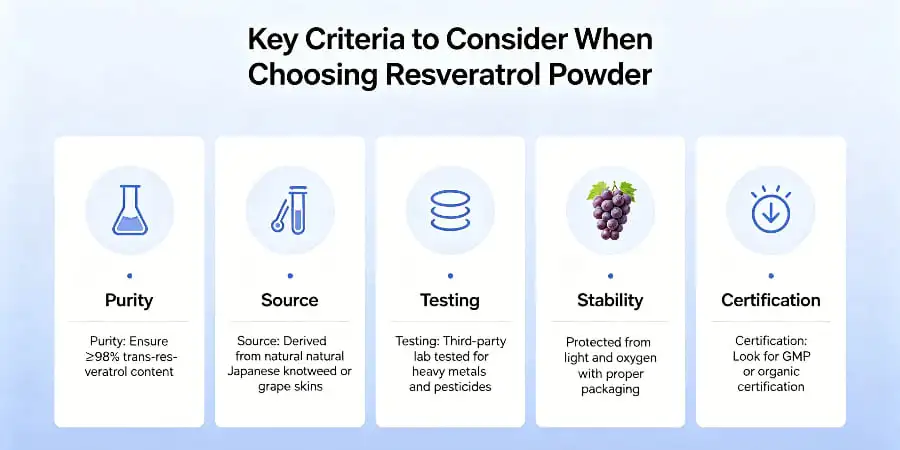
Key Criteria to Consider When Choosing Resveratrol Powder
To make decisions about what to buy, you need to know the technical details that set premium items apart from cheap ones. The purity of the raw materials, the way they are made, and the paperwork all show if a provider can help you reach your product development goals.
Purity and Encapsulation Efficiency
It all starts with where the resveratrol comes from. Look for goods that are defined to contain at least 98% trans-resveratrol, which is the bioactive isomer. It's also important that the molecules are encapsulated efficiently. Premium formulations get EE percentages above 85–90%, which means that most of the active molecules are inside the lipid bilayer instead of moving around loosely in the carrier matrix.
Ask sources for liposomal resveratrol powder details on how the particle sizes are spread out. A D50 value between 100 and 300nm means the particle is the right size for cells to take in. Readings of zeta potentials between -20mV and -40mV show strong electrostatic repulsion that keeps the particles from sticking together during storage, which has a direct effect on how long the product will last.
Stability and Shelf-Life Validation
Light, heat, and air all break down resveratrol very quickly. Suppliers should give ICH-approved stable data that shows the drug's effectiveness has been kept for 36 months under normal store conditions. Assays should be done on both the amount of resveratrol that is still present and the physical properties of the sample, such as its stability in particle size and wetness levels.
To make sure they work consistently in a variety of product forms, water-dispersible powders made for use in beverages need to be tested for stability in a wider range of pH levels and temperatures.
Certifications and Clean-Label Compliance
The world market for nutraceuticals needs a lot of paperwork. For example, ISO9001 is needed for quality control systems, cGMP is needed for good production practices, and ISO22000 or FSSC22000 is needed for food safety. Products that are meant for certain groups of people need to be certified as HALAL, KOSHER, NOP organic, or EOS.
Because of the move toward clean labels, many brands have to make sure their products are non-GMO and vegan. Make sure that the formulas don't include common allergens, man-made ingredients, or organic solvents that go against what people expect from natural goods. Third-party lab reports and allergen testing are examples of proof that these claims are true. This saves your brand's image and speeds up regulatory approvals.
Dosage Forms and Formulation Flexibility
Think about how the powder will fit into the way you want to give it. Can the provider provide material that works best for pills, hard capsules, soft gels, or liquid-ready formulations? Some companies sell pre-mixed mixtures of resveratrol and chemicals that work well together, such as NMN, quercetin, or collagen peptides. This makes the growth process go more quickly.
Different providers have very different minimum order amounts. For pilot runs, new brands need partners with flexible MOQs, while established makers need bulk price tiers that balance low costs with supply chain stability. Often, these tiers start at around 500 kg per month.
Comparing Market Options and Brands
There are three types of companies that sell resveratrol: standard extract manufacturers, specialized liposomal technology companies, and integrated contract manufacturers that offer private label services. Knowing these differences can help you match the skills of your suppliers with the way your business works.
Delivery System Comparisons
Standard resveratrol pills, tablets, and trans-resveratrol products are the most popular on the market because they are cheaper, but they are not very bioavailable. For uses where cost is important and absorption improvement isn't the main benefit, these choices are good.
Liposomal resveratrol powders are more expensive, but their better success data supports this. They work best in three situations: high-bioavailability supplements for longer life, where brands can stand out by having better Cmax and AUC pharmacokinetic profiles; functional drinks that need ingredients that mix with water without changing the taste; and nutricosmetic formulations that focus on the benefits of oral supplementation for the skin.
There is a higher chance of absorption with liquid resveratrol, but it is more difficult to store and ship because it needs to be kept cold. When it comes to performance, powdered liposomal types are a good compromise. They can be stored at room temperature and have longer stability windows.
OEM and Private Label Capabilities
Contract makers that offer OEM/ODM services help brands that don't have their own R&D departments get their products to market faster. Check to see how customizable a possible partner is: can they change the particle size, the excipients, or the unique blends? What is their minimum time frame for developing a formulation?
In global markets, supply chain stability is becoming more and more important. Suppliers who use two different buying methods, like resveratrol sources from both the EU and the US, reduce the effects of global problems and lack of raw materials. Blockchain-based batch traceability tools give brands that care about quality and legal audits the openness they need.
Pricing and Procurement Logistics
The cost of liposomal resveratrol powder is usually based on how hard it is to make. Prices range from mid-range to high-end, depending on how well the powder is encapsulated, licenses, and service levels. Ask for specific cost details that separate the costs of raw materials, processing, testing, and different packaging choices.
When you buy something from another country, things like wait times, shipping prices, and import paperwork become more complicated. Suppliers that store and ship samples in the US, especially those that work out of places like San Diego, can cut shipping times by a large amount and make the initial evaluation process easier. If you buy regulatory dossiers that have already been put together for the FDA, the EU Novel Food framework, and the ASEAN GMP framework, you can get into the market 40% faster than if you put together the paperwork yourself.
How to Evaluate and Verify Quality?
Quality security tells you which sources you can trust and which ones are just making claims. Putting in place strict verification procedures will protect your business and make sure that the product works as advertised.
Essential Testing Protocols
A Certificate of Analysis (COA) from a third-party lab that has been approved should be sent with every batch. The resveratrol content must be shown on the COAs through HPLC analysis, heavy metal screening (for example, lead, cadmium, mercury, and arsenic), microbial pollution tests (for example, yeast/mold, coliforms, pathogens, and total plate count), and pesticide residue analysis.
For liposomal goods in particular, ask for information on how well they are encapsulated, how the particles are distributed, and how fast they dissolve, along with pH-sensitive release profiles. Bioavailability claims are more likely to be true when suppliers do their own absorption modeling by trying artificial stomach and intestinal fluids.
Testing a product's stability under fast conditions (40°C/75% RH) shows how it works when it's not stored in the best way. This can help find problems with degradation before they affect business inventory.
Supplier Transparency and Documentation
Transparency is more than just test records. Reliable providers are happy to share information about how their products are made, where they get their raw materials, and the results of site audits. Good Manufacturing Practices guide everything from calibrating equipment to teaching employees. cGMP certification from a known body shows that these practices are being followed.
Ask for proof for liposomal resveratrol powder to back up marketing claims, especially numbers that show absorption improvement. When you say something like "14 times higher absorption," you should back it up with specific in vitro or in vivo studies that explain how the studies were done. Be careful of providers who can't or won't back up their claims of success with data.
Interpreting B2B Customer Feedback
Consumer reviews aren't very useful for buying ingredients, but B2B case studies and client comments show how reliable a seller is. Look for comments about how consistently orders are filled, how quickly technical help responds, and how problems are solved when they happen.
Long-term ties with clients show that a seller is stable. Companies that have long-term relationships with well-known names in the nutraceutical, functional food, or nutricosmetic industries have shown that they can perform in the real world of business.
Procurement Best Practices for B2B Buyers
Finding suitable suppliers is only one part of strategic sourcing. Another part is building relationships that help businesses reach their long-term goals and react to changing market needs.
Aligning Supplier Strengths with Business Needs
Different types of buyers need different skills from their suppliers. Distributors put a high value on regular quality, low prices, and dependable supply plans that help move goods quickly. OEM makers need to be able to change the way they make their products, make prototypes quickly, and be able to scale up production from small batches to large numbers. Brands that are making new goods value working together on research and development, creating their own formulas, and protecting their intellectual property.
Check to see if possible partners meet your unique needs. When making new, cutting-edge medicines that need expert problem-solving, an R&D team led by a PhD is helpful. When launching in multiple markets, it's very helpful to have dedicated legal teams. For North American businesses, having local support facilities like customer service, warehousing, and expert advice in the US makes communication and logistics easier.
Negotiation Strategies and Partnership Development
Cost control, quality assurance, and service levels all need to be balanced in order for talks to go well. When you make a volume promise, you can often get tiered pricing. But make sure that the provider can increase production without changing the quality of each batch. Ask for sample batches that are more like real market production than like-perfect R&D prototypes.
Cash flow and supply chain agility are affected by payment terms, wait times, and how material is managed. Suppliers who offer vendor-managed inventory or transfer deals lower the amount of operating capital that established customers need.
Long-term relationships based on openness and growth for both sides give businesses an edge over their competitors. When your suppliers invest in your success through market research, formulation improvement, and co-development projects, they stop being just transactional sellers and become strategic assets.
Future-Proofing Through Innovation Adoption
The field of liposomal delivery technology keeps getting better. New inventions include targeted-release systems that react to certain physiological triggers, mixture formulas that use the synergistic interactions between ingredients, and environmentally friendly production processes.
When suppliers put money into research and development (R&D) and process changes, it helps your brand stay unique as consumer tastes change. Energy-efficient encapsulation methods that cut solvent waste by 30% compared to industry standards show operational expertise and a commitment to sustainability that resonates with customers who care about the environment.
Conclusion
When picking the best liposomal resveratrol powder, you need to think about how well it works scientifically, how well it is made, how well it meets legal requirements, and how well it could work with other suppliers. Liposomal encapsulation technology changes resveratrol from an antioxidant that isn't well taken into an ingredient that is highly bioavailable and can provide measured health benefits. Give more weight to suppliers who offer thorough paperwork, confirmed stability data, a range of formulation choices, and open lines of contact. The right partner doesn't just give you ingredients; they also give you technical know-how, help with regulations, and the ability to come up with new ideas that speed up product development and improve your place in the market.
FAQ
What is the optimal dosage for resveratrol supplements?
Resveratrol doses usually run from 100 mg to 500 mg per day, but this depends on the use and method of release. Because they are better absorbed, liposomal versions can have therapeutic effects with smaller doses—often 50–150 mg is as bioavailable as 500 mg or more of normal extracts. Always talk to formulation scientists to find the best mix between cost, effectiveness, and dose sizes that are right for your product and what customers want.
How does liposomal resveratrol differ from regular resveratrol powder in absorption?
Standard resveratrol is only 1% bioavailable to the body because it is broken down quickly in the liver and doesn't mix well with water. Liposomal packaging saves resveratrol while it passes through the stomach and lets it be absorbed through lymphatic routes, skipping the first step of metabolism. Validated versions show up to 14 times higher absorption rates than regular powders, which means they work better at lower amounts.
Are OEM and private label services available for liposomal resveratrol products?
There are a lot of specialized providers that offer OEM/ODM services, such as creating custom formulations and unique blends and making powders, pills, tablets, and formats that are ready to be mixed with drinks. As part of their services, companies often offer help with regulatory paperwork, design of packaging, and production that can be scaled up or down from trial runs to commercial amounts. Minimum order amounts change, so talk to possible manufacturing partners about your particular needs.
Partner with EmerWell for Superior Liposomal Resveratrol Powder
EmerWell offers custom-made solutions through our EncapsWell™ liposomal platform, which is made for brands that need performance that has been proven in clinical trials. As a reliable provider of liposomal resveratrol powder, we mix Wellgreen's cGMP-certified manufacturing with PhD-led research and development to make sure that our powders are 14 times more bioavailable than regular powders and stay stable for 36 months. Our offices are in San Diego, California. They provide specific US support, such as fast sample delivery, expert advice, and regulatory guidelines for the FDA and foreign markets.
Whether you need large amounts (starting at 500 kg per month) or adjustable pilot-scale amounts, our OEM/ODM services customize formulations to your exact specifications. We offer full certifications, such as ISO9001, HALAL, KOSHER, Non-GMO, and vegan proof, as well as legal dossiers that have already been put together, which cuts your time to market by 40%.
Transform your product concepts into market-leading supplements with a partner dedicated to scientific quality and strategic growth. Contact our team at info@emerwell-bio.com to request technical details, samples, and to talk about how EncapsWell™ liposomal resveratrol powder can improve your recipes.
References
Walle, T. (2011). Bioavailability of resveratrol. Annals of the New York Academy of Sciences, 1215(1), 9-15.
Amri, A., Chaumeil, J. C., Sfar, S., & Charrueau, C. (2012). Administration of resveratrol: What formulation solutions to bioavailability limitations? Journal of Controlled Release, 158(2), 182-193.
Davidov-Pardo, G., & McClements, D. J. (2015). Nutraceutical delivery systems: Resveratrol encapsulation in grape seed oil nanoemulsions formed by spontaneous emulsification. Food Chemistry, 167, 205-212.
Frozza, R. L., Bernardi, A., Paese, K., Hoppe, J. B., da Silva, T., Battastini, A. M., ... & Salbego, C. (2013). Characterization of trans-resveratrol-loaded lipid-core nanocapsules and tissue distribution studies in rats. Journal of Biomedical Nanotechnology, 9(4), 694-703.
Zu, Y., Overby, H., Ren, G., Fan, Z., Zhao, L., Wang, S., & Liang, H. (2018). Resveratrol liposomes and lipid nanocarriers: Comparison of characteristics and inducing browning of white adipocytes. Colloids and Surfaces B: Biointerfaces, 164, 414-423.
Sessa, M., Balestrieri, M. L., Ferrari, G., Servillo, L., Castaldo, D., D'Onofrio, N., ... & Tsao, R. (2014). Bioavailability of encapsulated resveratrol into nanoemulsion-based delivery systems. Food Chemistry, 147, 42-50.
Online Message
YOU MAY LIKE
High quality furniture manufacturer