

Sep 7, 2026
How to Choose a High-Quality Liposomal Resveratrol Supplement Ingredient
To choose a quality liposomal resveratrol product, consider encapsulation efficiency, bioavailability statistics, purity requirements, and production certifications. Premium formulations should exhibit increased absorption via verified liposomal technology, stability of trans-resveratrol over 98% and compliance with cGMP and international quality standards. Procurement experts need to ensure that particle size is consistent, encapsulation rates are over 90% and that complete paperwork is provided to ensure regulatory compliance in target markets.As demand for bioavailable antioxidant supplements accelerates globally, particularly within anti-aging and longevity-focused product lines, procurement teams face mounting pressure to source ingredients that deliver measurable results. This thorough book takes you through the technical, regulatory and strategic aspects you need to confidently pick your ingredients.
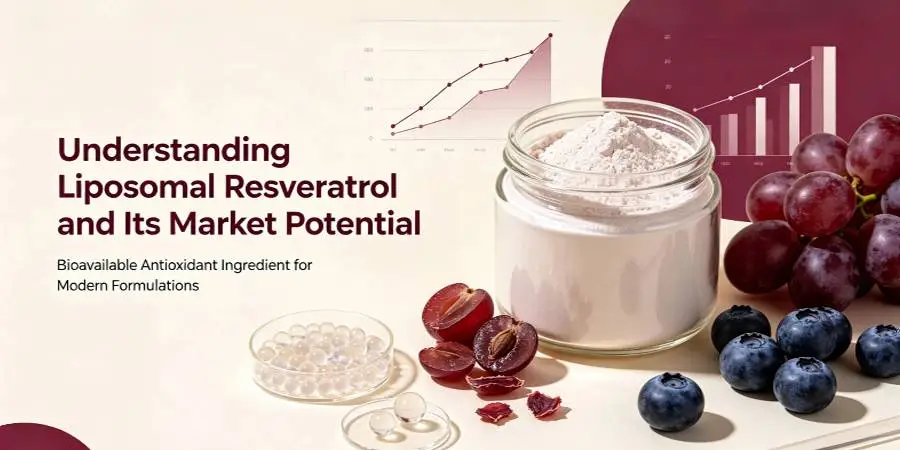
Understanding Liposomal Resveratrol and Its Market Potential
The Science Behind Enhanced Bioavailability
Liposomal delivery methods convert poorly absorbed compounds into highly absorbable molecules. Resveratrol is a polyphenolic antioxidant, found naturally in grapes and berries. But it’s hard to ingest in its native form, since it breaks down too quickly and doesn’t dissolve well in water. Liposomal encapsulation overcomes these problems by encapsulating resveratrol molecules inside phospholipid bilayers, identical to cell membranes, which enables nutrients to pass straight through intestinal barriers.
Resveratrol bioavailability may be increased up to 14-fold by using liposomal resveratrol formulations compared to standard pills, as shown by research. The actual difference maker was the protective lipid coating, which inhibits the active molecule degrading in the stomach and allows it to be taken up by cells. That technological advantage directly impacts the effectiveness of their goods and the pleasure of their customers for supplement firms that want to appeal to health-conscious consumers who seek actual results.
Market Dynamics Driving Procurement Decisions
The world market for resveratrol has grown very quickly. The nutraceutical and functional food industries in North America are particularly big buyers. More people are learning about mitochondrial health, cellular aging, and oxidative stress. This has opened the door for premium formulations with better absorption profiles that can justify higher prices.
More and more, companies that make functional drinks are looking for liposomal actives that dissolve easily in water and work well in ready-to-drink formats without causing any problems with taste or precipitation. Beauty-from-within brands use liposomal technology to back up claims that their nutricosmetic products can help with skin health and photoaging. Knowing these application-specific needs helps purchasing teams make sure that the standards of the ingredients match the placement of the finished product and what customers expect.
Core Criteria for Selecting High-Quality Liposomal Resveratrol Ingredients
Purity and Analytical Verification
The base material is where quality starts. High-Performance Liquid Chromatography (HPLC) study should show that the trans-resveratrol level is at least 98% pure. This way of analysis measures the amount of the active isomer and looks for signs of possible breakdown into the biologically useless cis-form. For each production batch, suppliers should give Certificates of Analysis (CoA) that show not only the amount of resveratrol, but also the amount of heavy metals found using Inductively Coupled Plasma Mass Spectrometry (ICP-MS) and the number of microbes that can grow, as required by USP standards.
Specialized tests are needed to tell the difference between real liposomal resveratrol goods and regular emulsions. Using centrifugation and ultrafiltration to measure encapsulation efficiency removes free resveratrol from liposome-bound material before figuring out how much is there. Premium ingredients have encapsulation rates higher than 90%, which makes sure that the bioavailability benefits are based on the actual product composition and not just marketing claims.
Particle Characterization and Structural Integrity
The quality of liposomes rests a lot on how evenly the particles are sized and how regular their structure is. Dynamic Light Scattering (DLS) testing should show particles with sizes between 50 and 200 nanometers, which is the best range for absorption by the gut and cell uptake. Values below 0.3 for the Polydispersity Index (PDI) show regular particle populations, which are linked to stable and consistent product performance.
Electrostatic stability, shown by zeta potential measurements between -20mV and -50mV, predicts that the formulation will not clump together during storage. Using Cryo-Transmission Electron Microscopy (Cryo-TEM) to check visually shows that the particles are spherical bilayer vesicles and not broken up lipid pieces. To stop people from lying about the quality of a product, the requirements for buying from a liposomal resveratrol manufacturer should clearly list these characterization factors and include proof from a third-party lab.
Stability and Formulation Compatibility
According to ICH rules, shelf-life validation tells the difference between stable formulations that don't lose their potency over time and unstable goods that do. If you buy high-quality liposomal resveratrol powders, they should stay stable at room temperature for 36 months, keeping their capsule integrity and trans-resveratrol content the same. Accelerated aging studies at 40°C/75% relative humidity show possible ways that things could break down and help manufacturers decide how to store things for later use.
When looking at ingredients for certain dosage types, how they reconstitute is very important. For drinks, powders need to mix completely with water so they don't settle to the bottom, and for capsules and tablets, they need fillers that work well with liposomes and keep their shape when they're compressed. You can avoid costly reformulation efforts and production delays by testing samples in your target formulation matrix before committing to large-volume orders.
Certification Standards and Regulatory Readiness
Full certification portfolios show that a supplier is dedicated to quality systems and following the rules. Current Good Manufacturing Practices (cGMP), ISO 22000 (Food Safety Management), and FSSC 22000 (Food Safety System Certification) are some of the most important standards. Consistent industrial methods, contamination control, and being able to track products from raw materials to finished goods are all made possible by these systems.
Market-specific needs are very different from one area to the next. For US distribution, FDA compliance, Novel Food status for European markets, and ASEAN GMP recognition for growth in the Asia-Pacific region all require different sets of paperwork. Suppliers who offer pre-compiled regulatory dossiers can speed up the launch of your product by giving you the technical information you need for label claims and ingredient approvals. Verification that a product is non-GMO, vegan, and allergen-free supports a clean-label stance that appeals to modern consumers.
Comparing Liposomal Resveratrol with Alternative Delivery Systems
Absorption Performance Across Formulation Types
Standard resveratrol powders have problems with absorption that make them less useful as a medicine. When standard forms are taken by mouth, they are quickly broken down in the first pass. This means that blood plasma concentrations stay below optimal levels even when high doses are given. Because of this metabolic weakness, standard resveratrol doses of 500 mg or more per day are often needed in clinical studies to get only mild biological effects.
Liposomal resveratrol encapsulation changes pharmacokinetic profiles in a fundamental way by keeping resveratrol safe during digestion and making it easier for it to get directly into cells. Comparative tests that measure peak plasma content (Cmax) and area under the curve (AUC) show that liposomal versions are better at absorption. Because of this performance benefit, brands can make successful goods with lower doses of active ingredients. This lowers the cost of raw materials and reduces the stomach pain that comes with megadosing.
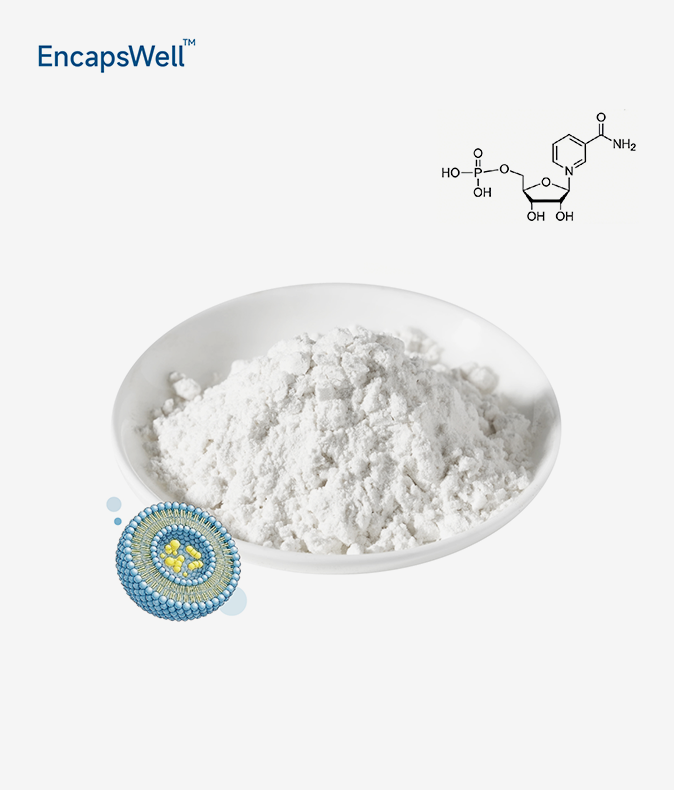
When you mix substances that work well together, like NMN (Nicotinamide Mononucleotide) and quercetin, you get formulations that help you live longer by hitting multiple aging processes. Liposomal systems can hold both hydrophobic and hydrophilic actives within a single transport platform. This makes formulations simpler and increases the range of therapies that can be used.
Evaluating Supplier Capabilities and Value Propositions
Geographical sourcing choices affect the reliability of the supply chain, the consistency of regulations, and the ease of access to expert help. US-based suppliers, like EmerWell, whose headquarters are in San Diego, California, offer many benefits to North American procurement teams, such as the ability to communicate across time zones, store samples in the US for quick delivery, and have a lab on-site for creating custom formulations.
When comparing possible partners, look at their scientific knowledge and R&D infrastructure. Development teams run by PhDs know a lot about liposomal chemistry, which helps them make the best recipes for different uses and solve technical problems that come up during scaling up. Suppliers with cGMP-certified facilities that allow for batch tracking on blockchain provide the strict paperwork needed for store distribution and regulatory checks.
Strategic partners are different from commodity suppliers because they can customize their products. If you can change the particle size, the phospholipid sources, or the way that multiple actives are co-encapsulated, you can make unique recipes that set your product line apart. Bulk pricing levels that start at 500 kg per month from a resveratrol powder bulk supplier allow for growing brands and give you a good idea of how much things will cost so you can plan your budget.
How to Procure Liposomal Resveratrol with Confidence
Defining Technical Specifications
Misunderstandings and quality disputes can be avoided by making the purchase requirements clear. When you ask for a quote for liposomal resveratrol, you should be clear about how much trans-resveratrol you need, what particle size and PDI values are appropriate, how well the capsules should seal, and how stable they should be. Include information about the dosage form (powder, liquid-ready concentrate, or pre-formulated capsule blend) to make sure that suppliers offer the right formats for the way you make the medicine.
Ask for complete paperwork packages that include accounts of the manufacturing process, reports on the confirmation of analytical methods, outlines of stability studies, and copies of certifications. Being open and honest in these areas shows that the seller is skilled and makes it easier for your quality assurance team to check.
Sample Evaluation and Pilot Testing
Never commit to a certain amount of production without first testing a sample thoroughly. Order enough for your own independent lab to do analytical tests, formulation suitability tests in your target matrix, and small-scale stable tracking. Sensory evaluation of taste, smell, and mouthfeel is especially important for chewables and drinks, where the customer experience has a direct effect on the likelihood that the customer will buy again.
Testing samples from several suppliers at the same time creates comparative data that helps make fair choices about which providers to use. Write down differences in bioavailability markers, reconstitution behavior, and stability profiles in order to explain your sourcing choices to internal stakeholders and set standards for ongoing quality monitoring.
Building Resilient Supplier Relationships
Long-term partnerships offer more value than just lower prices for transactions. Suppliers who care about your success will help you with technical issues during formulation problems, give you priority when there aren't enough raw materials, and work with you to create next-generation products that are in line with market trends.
Make sure there are clear rules for how to communicate about things like placing orders, how to report quality problems, and how to handle changes to formulations. Your product plans and your supplier's skills should stay in sync by talking about volume forecasts, capacity planning, and regulatory updates at regular business reviews.
Dual-sourcing methods lower the risk of supply disruptions while using the way competition works to get the best prices. Keeping relationships with both primary and secondary suppliers can help keep your business safe and save you money if you do it right.
Conclusion
Getting high-quality liposomal resveratrol requires technical know-how, understanding of regulations, and strategic review of suppliers. By putting an emphasis on efficient encapsulation, analytical validation, stability validation, and full certifications, you can be sure that the performance of your ingredients lives up to what your brand promises. Procurement teams that are good at their jobs combine strict requirements with cooperative relationships with suppliers. This gives them long-term competitive benefits through design excellence. As the market for life supplements grows, brands that offer proven bioavailability benefits are becoming more popular. This means that choosing the right ingredients is very important for product success and customer trust.
FAQ
1. What makes liposomal resveratrol more effective than standard forms?
Liposomal delivery systems put liposomal resveratrol inside phospholipid bilayers, which keep the active ingredient from breaking down in the stomach and make it easier for cells to absorb. This structural advantage makes the powder up to 14 times more bioavailable than regular powders. This means that higher blood plasma concentrations and better biological activity at lower doses are possible.
2. Which certifications should I prioritize when evaluating suppliers?
As basic quality standards, pay attention to cGMP, ISO 22000, and FSSC 22000. Check to see if the product is non-GMO, if it's safe for vegans, and if it meets any regional requirements, such as FDA rules for US markets or Novel Food clearance for European distribution. Full portfolios of certifications show that manufacturing is done correctly and that the company is ready for regulations.
3. How can I verify actual encapsulation versus simple emulsification?
Ask for test results from centrifugation-ultrafiltration that show how much resveratrol is free and how much is contained. Ask for Cryo-TEM images that show circular spheres that are still whole. DLS reports that show the particle size distribution and PDI values give us more proof of the structure. Third-party laboratory confirmation is an independent way to check that what a supplier says is true.
Partner with EmerWell for Superior Liposomal Resveratrol Solutions
Work with EmerWell to get the best liposomal resveratrol solutions. EmerWell offers liposomal resveratrol that is precisely designed and made using our own EncapsWell™ platform. Our R&D center and lab in San Diego offer hands-on technical support, and our domestic warehousing makes sure that samples get to anywhere in North America quickly. We can speed up the creation of your product from idea to sale by using our PhD-led formulation knowledge, cGMP-certified manufacturing through our partner Wellgreen, and pre-compiled regulatory dossiers that cover more than 30 global markets. Email our team at info@emerwell-bio.com to talk about custom formulations, get samples, or find out how EmerWell's liposomal resveratrol supplier services can help you make your supplement line better by adding scientifically proven, ready-to-sell ingredients.
References
1. Walle, T. "Bioavailability of Resveratrol." Annals of the New York Academy of Sciences, vol. 1215, 2011, pp. 9-15.
2. Amri, A., et al. "Administration of Resveratrol: What Formulation Solutions to Bioavailability Limitations?" Journal of Controlled Release, vol. 158, no. 2, 2012, pp. 182-193.
3. Sessa, M., et al. "Evaluation of the Stability and Antioxidant Activity of Nanoencapsulated Resveratrol during In Vitro Digestion." Journal of Agricultural and Food Chemistry, vol. 59, no. 23, 2011, pp. 12352-12360.
4. Fang, J.Y., et al. "Effect of Liposomes and Niosomes on Skin Permeation of Enoxacin." International Journal of Pharmaceutics, vol. 219, no. 1-2, 2001, pp. 61-72.
5. Telange, D.R., et al. "Improved Bioavailability of Resveratrol by Liposomal Formulation: Pharmacokinetic and Pharmacodynamic Studies." Drug Development and Industrial Pharmacy, vol. 40, no. 8, 2014, pp. 1059-1068.
6. Zu, Y., et al. "Preparation and Characterization of Amorphous Amphotericin B Nanoparticles for Oral Administration through Liquid Antisolvent Precipitation." European Journal of Pharmaceutical Sciences, vol. 53, 2014, pp. 109-117.
Online Message
YOU MAY LIKE
High quality furniture manufacturer
_1776234266736.webp)