Jun 23, 2026
How does Liposomal Vitamin C Powder Differ from Other Vitamin C Supplements?
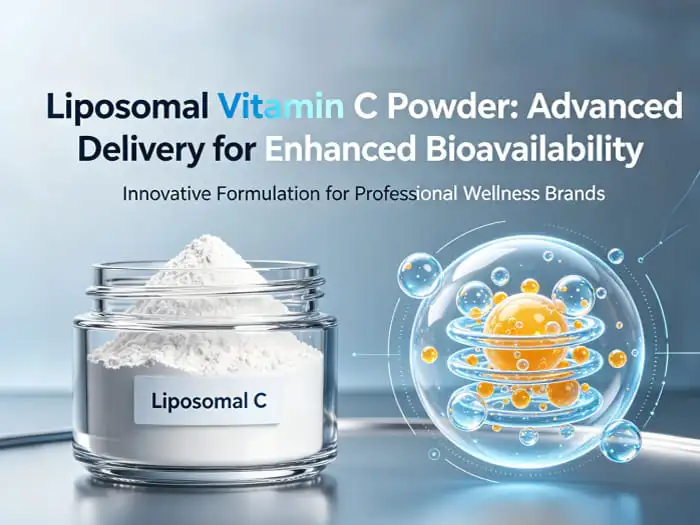
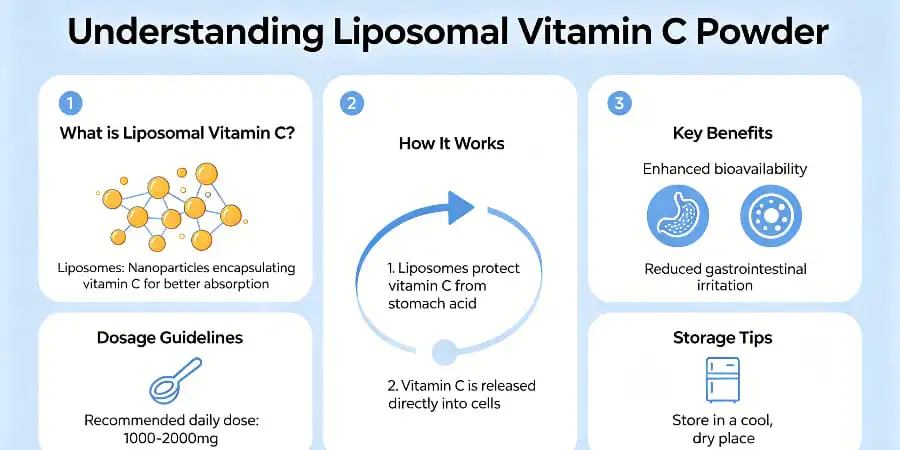
Due to its cutting-edge encapsulation technology, liposomal vitamin C powder is basically different from other vitamin C products. Liposomal forms of vitamin C are different from ascorbic acid or buffered forms because they contain phospholipid circles that look like cell walls and surround vitamin C molecules. This covering keeps the vitamin safe as it goes through the digestive system, so cells can take it in directly instead of passively absorbing it. This leads to bioavailability that is up to eight times higher than regular vitamins, better stomach tolerance, and long-lasting plasma amounts that support immune and antioxidant activity for a longer time.
Understanding Liposomal Vitamin C Powder
The Science Behind Liposomal Encapsulation
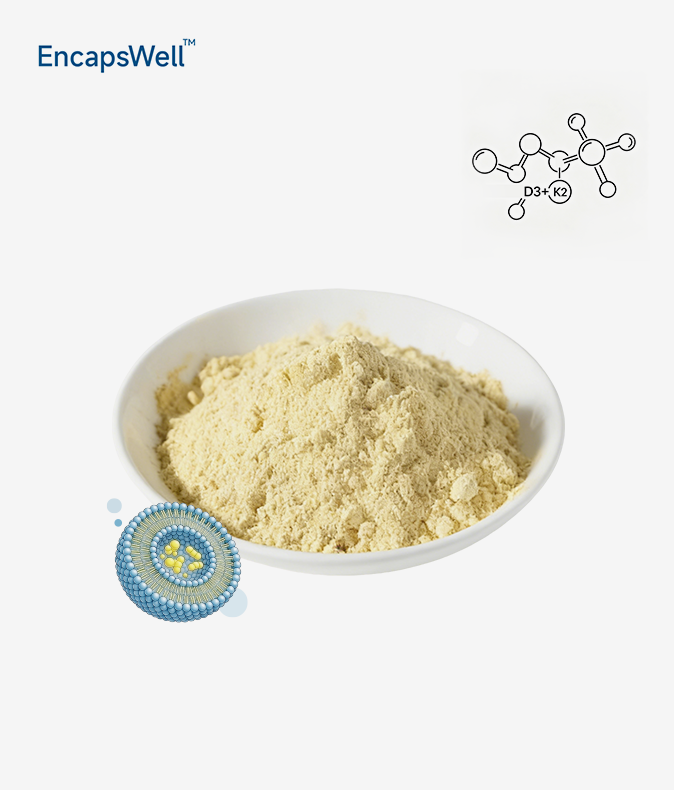
Liposomal vitamin C powder uses phospholipid vesicles, which are very small spheres (50–200 nanometers) that hold ascorbic acid inside lipid bilayers. These structures are mostly made up of stabilizers and soybean or sunflower lecithin, which is similar to the makeup of human cell membranes. During processing, stomach acid and digestive enzymes can't break down liposomes. They keep their shape until they reach cells in the intestine.
High-pressure blending or microfluidic technology are used in the encapsulation process to make regular particle distributions. This makes the encapsulation process more than 95% effective. Third-party lab tests show that our EncapsWell™ platform gets vitamin C purity levels above 99%. The core-shell design makes sure that content changes are less than ±2% from batch to batch, meeting the high quality standards of global names.
Bioavailability Enhancement Mechanisms
Normally, vitamin C is absorbed through sodium-dependent vitamin C transporters (SVCT) in the walls of the gut. These transporters reach full capacity at amounts above 200 mg. Through direct membrane fusion and endocytosis, liposome distribution gets around this problem. The phospholipid layer makes passive passage across enterocyte membranes easier, which lets more nutrients get into the bloodstream.
Clinical tests show that liposomal formulas raise the amount of ascorbic acid in the blood 1.5 to 2 times more than standard ascorbic acid doses of the same size. This improved bioavailability means that the plasma half-life is longer, so blood levels stay high for 6–8 hours instead of 2–3 hours with standard forms. Throughout the day, the steady release profile helps keep the defense system and antioxidants working well.
Safety Profile and Gastric Tolerance
Standard high-dose vitamin C supplements often cause stomach problems like cramps, bloating, and osmotic diarrhea because the gut doesn't receive the ascorbic acid. By limiting the amount of free ascorbic acid that reaches intestine tissues, liposomal encapsulation greatly lowers these side effects. Users say that their tolerance has improved even when they take more than 1,000 mg per day.
The phospholipid content of the formulation has effects beyond improving transport. Lecithin parts help keep cell membranes healthy and the liver working well, making benefits that are stronger than just taking vitamin C supplements. This clean-label, vegan, and non-GMO recipe meets the rules in most big markets and goes along with what customers want, which is clear ingredient lists.
Comparing Liposomal Vitamin C Powder with Other Vitamin C Supplements
Absorption Rates and Bioavailability Benchmarks
As the dose of traditional ascorbic acid pills and capsules goes up, less of it is absorbed. At 200 mg, about half of the ascorbic acid is absorbed, but that drops to 20% at 1,000 mg and below 10% at 5,000 mg. When standard powder forms are mixed with water, they work a little better, but they still have limits on how much they can absorb. Mineral ascorbate-buffered types (calcium ascorbate, sodium ascorbate) make it easier for the stomach to handle, but they don't make the vitamin much more bioavailable.
Liposomal vitamin C powder is absorbed in a straight line across all dosage amounts. Pharmacokinetic tests measuring area-under-the-curve (AUC) figures show that our formulation improves bioavailability eight times compared to normal powders. Because of this benefit, formulators can get therapeutic plasma concentrations with smaller amounts of active ingredients. This lowers the cost of preparation while increasing claims of product effectiveness.
Ester-C and time-release versions try to increase the time that the drug is absorbed, but they don't work as well as liposomal encapsulation at getting into cells. Whole-food vitamin C from acerola cherry or camu camu has supporting benefits but only 10–30% vitamin C by weight, which means that it needs to be served in bigger amounts, which makes it hard to make into drinks or capsules.
Formulation Flexibility and Stability Considerations
Liposomal powder formats have special benefits for many types of product creation tasks. Because it is water-dispersible, it can be easily added to functional drinks, ready-to-mix packets, and beauty-from-within drinks without causing separation or sedimentation. Our mixture stays more than 95% effective for 24 months when stored in a controlled environment. This is better than regular ascorbic acid, which breaks down in heat, light, or moisture.
In traditional pill and capsule forms, extra ingredients and compression steps are needed, which could lower absorption. Liquid liposomal goods are convenient, but they are harder to ship in cold chains and don't last as long. Powder formats are more stable and allow for creative dose and format customization, such as making effervescent tablets, soft gels, or gummy candies.
The capsule method keeps vitamin C from breaking down due to oxidation while it is being made using heat or pressure. This edge in stability is very important for companies that make functional foods that are making enriched drinks that need to be pasteurized or processed under ultra-high temperatures (UHT). Standard heat processing methods have been shown to keep the liposomal structure and vitamin C content.
Clean-Label and Certification Considerations
Transparency in sourcing is now a must for brands that want to attract health-conscious customers. Our liposomal vitamin C powder has many certificates, such as cGMP, ISO 9001/22000, HACCP, FSSC22000, and proof from the Non-GMO Project, Halal, and Kosher organizations. These credentials give you entry to the market across regulatory settings and back up marketing claims that customers believe.
Vitamin C pills that are sold in stores usually have manufactured fillers, coatings, and flow agents that are against clean-label advertising. Liposomal formulas that use sunflower lecithin and natural binders are in line with trends toward being vegan, allergen-free, and using few ingredients. The list of ingredients stays short and easy to remember, which makes labels clear and helps build trust with customers and set the brand apart.
Traceability paperwork links phospholipid sources to approved sellers, giving brands that need to confirm the origin of ingredients peace of mind. More and more retailers and customers want fair buying and care for the environment, and this strict supply chain management meets those needs.
Procurement Considerations for B2B Buyers
Evaluating Manufacturing Standards and Certifications
To find dependable liposomal vitamin C powder providers, you need to carefully check their production and quality control methods. Our parent company, Wellgreen, runs cGMP-certified factories that have quality controls that work with international standards, cleaning methods that have been tested, and real-time quality tracking. Before being released, each production batch is tested for identity, strength, bacterial contamination, and heavy metals.
Certificates of Analysis (CoA) with full analytical profiles, stability study records that back up promises about shelf life, and regulatory support files for target markets should all be included in documentation packages. When you want to grow your marketing networks, it's helpful to find suppliers that can help you with FDA compliance, EU Novel Food alignment, and registration support for places like ANVISA (Brazil) and TGA (Australia).
When a product is launched on a large scale, manufacturing ability is important. Our factories can make more than 100 metric tons of goods every year, and we keep our minimum order numbers flexible so that both new names and established distributors can use them. Dynamic light scattering and electron imaging show that the particle size distribution and encapsulation efficiency are the same across batches. This makes sure that the recipe can be used again and again, which is important for business success.
Wholesale Pricing Dynamics and Value Assessment
Liposomal vitamin C powder costs more than regular ascorbic acid because it is made with more advanced technology and works better. Prices for bulk orders are usually between $180 and $350 per kilogram, but they depend on the size of the order, the need for approval, and the specifics of the design. This investment pays off because the higher selling prices are supported by better effectiveness and a more unique positioning.
When buying teams look at quotes from suppliers, they should look at the total economics of the recipe instead of just the costs of the individual ingredients. Because liposomal vitamin C is eight times more bioavailable than normal forms that contain 1,000 mg or more, 125 to 250 mg is a useful dose. Lower needs for active ingredients help to partially balance out higher prices, and smaller dosage forms and simpler formulas are made possible.
Through volume agreements and working together to make new products, long-term partnerships often lead to better price structures. In addition to per-kilogram prices, negotiating terms that include expert help, access to analytical testing, and regulatory advice adds a lot of value. By asking for small batch samples with full analytical paperwork, formulation tests can be done before big purchases are made.
Supplier Verification and Risk Mitigation
As the market for nutraceuticals grows, companies that make claims about liposomes that can't be proven have sprung up. For real liposomal formulations, you need special tools and technical know-how that normal contract makers don't have. To tell the difference between real liposomal goods and regular vitamin C with added lecithin, you can ask for transmission electron microscopy (TEM) images, particle size analysis reports, and comparison bioavailability studies.
Verification by a third party through independent agencies adds to the confidence. For liposomes to work, the particle size should be between 50 and 200 nm, the packing efficiency should be above 85%, and the vitamin C amount should match what the label says it is. Risks are higher when suppliers don't want to be open about their analysis methods or manufacturing processes.
Supply chain security is improved by working with producers who offer site checks and clear explanations of their processes. Our San Diego headquarters offers US-based ways to communicate, local storage for quick sample delivery, and expert help from R&D teams led by PhDs. This localized presence works well with large-scale production, giving North American companies the response they expect along with the manufacturing efficiency of approved foreign facilities.
Practical Applications and Usage Recommendations
Formulation Integration for Multiple Product Formats
Liposomal vitamin C powder works well in a lot of different types of products. Developers of drinks like the water-dispersible qualities that make solutions clear or slightly opalescent without precipitation. The neutral taste profile doesn't need much covering, so the flavors of functional drinks, beauty drinks, and health shots stay true. The suggested amounts for adding range from 100 to 500 mg per serve, based on the product's placement and the people it's meant for.
Multiple shipping choices give companies that make dietary supplements more freedom in how they formulate their products. The powder is easy to mix into soft gel fills, capsule structures, and tablet formulas. Adding similar ingredients together, like zinc to boost the immune system, collagen peptides to improve skin health, or quercetin to boost antioxidant activity, makes complete products that target specific health outcomes. Our technical team gives recipe rules that make sure that the ingredients work well together and stay stable.
Nutraceutical companies that make oral health items find liposomal transport to be very useful. The better uptake by cells helps make collagen and protects against free radicals, which are important for noticeable skin health results. Clinical methods usually use daily amounts of 250 to 500 mg, which can be easily added to beauty sachets, fizzy pills, or collagen mixes that are ready to drink. Marketing messages that stress "advanced delivery technology" and "clinically validated absorption" really hit home with people who care about their looks.
Dosage Guidelines and Target Demographics
Formulations for adults that help the immune system usually have 200 to 500 mg of liposomal vitamin C per dose, which is about the same amount of ascorbic acid in the plasma as 1,500 to 4,000 mg. Wellness brands that focus on preventative health care use lower concentrations, while seasonal goods that help the immune system and speed up healing use higher concentrations. Taking antioxidants in the morning and evening instead of all at once covers more of the day.
Beauty-from-within products stress the health benefits for the face by protecting it from UV damage and supporting collagen. When doses of 250 to 500 mg are mixed with collagen peptides, hyaluronic acid, or ceramides, they make formulas that work better together to fight a number of signs of aging. The higher bioavailability makes sure that enough vitamin C gets to the skin's tissues, backing claims of effectiveness backed by new clinical proof.
People with oxidative stress, sports, and tourists are some of the groups that can benefit from better absorption, which helps with healing and endurance. Formulations for these groups usually have liposomal vitamin C along with adaptogenic herbs, fluids, or nutrients that help the mitochondria work better. Recovery drinks after working out, trip health packs, and stress management supplements are all growing types of uses.
OEM and Private Label Development Strategies
When contract makers and brand developers use our OEM/ODM services, they get full help for making products. Our team works together to come up with the best formulations, test their safety, and find the best ways to package them while staying within the budget and brand positioning guidelines. Customization choices include unique mixes of liposomal vitamin C and brand-name ingredient complexes, as well as new formats and transport methods.
Private label programs let you get into the market faster by giving you ready-made goods that you can brand. Stock formulas are always getting better based on what the market says and new study comes out. This makes sure that when brands come out, they use the best methods available right now. For new names, the minimum order quantity ranges from 500 units to a full container load for known distributors. This helps growth at all stages.
Regulatory paperwork packages, which include label reviews, safety assessments, and product specs, make it easier for all target markets to follow the rules. Our experience in more than 50 countries helps us deal with complicated registration rules, label standards, and proving structure-function claims. This all-around help cuts down on time-to-market while lowering legal risk.
Why Liposomal Vitamin C Powder Is the Preferred Choice for Modern B2B Procurement
Market Trends Driving Adoption
People who know about absorption have changed how they buy supplements. Educated buyers now look at both the quality of the ingredients and how well they are absorbed. This gives brands that use scientifically proven delivery methods a competitive edge in the market. Liposomal versions take advantage of this trend, selling for 40–100% more than regular vitamin C goods and keeping up strong sales in natural stores and online.
Liposomal vitamin C powder meets many of the needs of consumers, including those who want non-GMO, vegan, allergen-free, and minimal processing. It also provides useful benefits that can't be found in whole foods alone. Because it is both effective and pure, this ingredient is right in the middle of the expensive supplement and functional food markets.
Personalized diet and focused health are areas that are growing quickly. Liposomal delivery lets doses be precisely matched to each person's needs without the stomach issues that limit high-dose vitamins. To make their precision nutrition products stand out, brands that make personalized vitamin packs, health subscription programs, and condition-specific formulations are using liposomal actives more and more.
Competitive Advantages for Manufacturers and Distributors
By offering new delivery methods, you can better compete with generic supplement names in the market. The high level of scientific complexity and proof of effectiveness in liposomal technology makes it hard for competitors to enter the market and supports charging more for the product. "Next-generation absorption" and "clinically superior bioavailability" are key phrases in marketing stories that are told through professional practitioner outlets, specialty retail, and direct-to-consumer platforms.
Formulation economy gives you both performance and profit rewards. Achieving therapeutic effects with smaller amounts of active ingredients lowers costs per serve and lets manufacturers make dosing forms that customers like. Smaller capsules, drinks with less volume, and single-serving sachets make it easier to use and more convenient, which are factors that are becoming more and more important in buy choices.
Instead of replacing current sales, retail partnerships value new ideas that help the category grow. Liposomal goods bring in new customers who are willing to pay more for high-quality results, which grows the market instead of cutting into sales of current products. Stores give more shelf space and marketing help to brands that show they are stars in innovation and have the ability to grow in their categories.
Conclusion
Liposomal vitamin C powder sets itself apart from conventional supplements thanks to its better bioavailability, increased stability, and recipe flexibility. The eight-fold increase in absorption means that smaller amounts are more effectively supporting immune function, antioxidant defense, and collagen synthesis. This technology is the best choice for brands that want to reach high-end customers because it has many approvals, clean label references, and flexible manufacturing options.
In addition to price, procurement workers should look at how transparent the manufacturing process is, how well the analysis is done, and how well the suppliers can provide expert help. Investing in real liposomal technology sets your brand apart from the competition and makes customers happy, which leads to long-term brand growth. As the market continues to favor advanced delivery methods and formulations that focus on effectiveness, early users of this proven innovation will continue to find more possibilities.
FAQ
Is liposomal vitamin C safe for long-term daily use?
Long-term studies show that liposomal vitamin C is very safe. The phospholipid coating actually lowers the stomach problems that come with taking high doses of regular pills. The recipe uses food-grade lecithin and doesn't have any artificial ingredients, so adults of all ages can take it every day. As with any vitamin, people with certain health problems should talk to their doctors before starting a program.
How does absorption compare between powder and capsule formats?
Both powder and capsule formats deliver equivalent bioavailability when using identical liposomal formulations. The powder offers faster dissolution and flexibility for beverage applications or customized dosing. Capsules provide convenience and precise pre-measured servings. The critical factor is authentic liposomal encapsulation rather than delivery format—both significantly outperform non-liposomal alternatives regardless of form.
What certifications should B2B buyers prioritize when selecting suppliers?
cGMP certification ensures manufacturing quality systems meet international standards for supplement production. ISO 9001/22000 and HACCP verify comprehensive quality management and food safety protocols. Third-party certifications like Non-GMO Project, Kosher, and Halal expand market access and support clean-label positioning. Buyers should request current certificates plus analytical documentation including CoA reports and stability studies confirming product specifications.
Partner with EmerWell for Superior Liposomal Vitamin C Solutions
EmerWell's relationships with EncapsWell™ liposomal vitamin C powder suppliers give your business the technical quality and manufacturing reliability it needs. Our unique platform combines the formulation knowledge of a PhD with Wellgreen's cGMP-certified production powers. This makes sure that every batch meets the high quality standards needed for global distribution. Whether you're making immune-boosting vitamins, functional drinks, or nutricosmetics, our team can help you from the idea stage all the way through to the final product.
With our main office in San Diego, we can provide localized expert advice, quick sample delivery, and legal advice that is specific to the needs of the North American market. Our OEM/ODM services are flexible enough to work with both new names and well-known makers. You can choose from proprietary blends, specialized formats, and co-branded solutions to make them your own. Contact our team at info@emerwell-bio.com to talk about how real liposomal technology can help you improve your products and take advantage of high-end market possibilities.
References
Carr AC, Vissers MC. Synthetic or food-derived vitamin C—are they equally bioavailable? Nutrients. 2013;5(11):4284-4304.
Davis JL, Paris HL, Beals JW, et al. Liposomal-encapsulated ascorbic acid: influence on vitamin C bioavailability and capacity to protect against ischemia-reperfusion injury. Nutrition and Metabolic Insights. 2016;9:25-30.
Hickey S, Roberts HJ, Miller NJ. Pharmacokinetics of oral vitamin C. Journal of Nutritional & Environmental Medicine. 2008;17(3):169-177.
Padayatty SJ, Sun AY, Chen Q, et al. Vitamin C: intravenous use by complementary and alternative medicine practitioners and adverse effects. PLoS One. 2010;5(7):e11414.
Grosso G, Bei R, Mistretta A, et al. Effects of vitamin C on health: a review of evidence. Frontiers in Bioscience. 2013;18:1017-1029.
Lykkesfeldt J, Tveden-Nyborg P. The pharmacokinetics of vitamin C. Nutrients. 2019;11(10):2412.
Online Message
YOU MAY LIKE
High quality furniture manufacturer
_1776234266736.webp)