Jul 21, 2026
How does Liposomal Vitamin C Powder Assist with Skin Health and Collagen Production?
Liposomal vitamin C powder is better delivered and bioavailable for skin health and collagen formation. Encapsulation with phospholipids shields ascorbic acid from digestion and allows direct fusion with cell membranes, i.e., delivery of vitamin C to the exact location of collagen formation. This innovative delivery technology provides up to 8× more absorption than normal ascorbic acid, allowing hydroxylation processes needed to stabilize collagen fibers. That results in more elastic skin, less oxidative damage, and faster tissue healing, which is why it’s a popular ingredient in luxury nutricosmetic products.
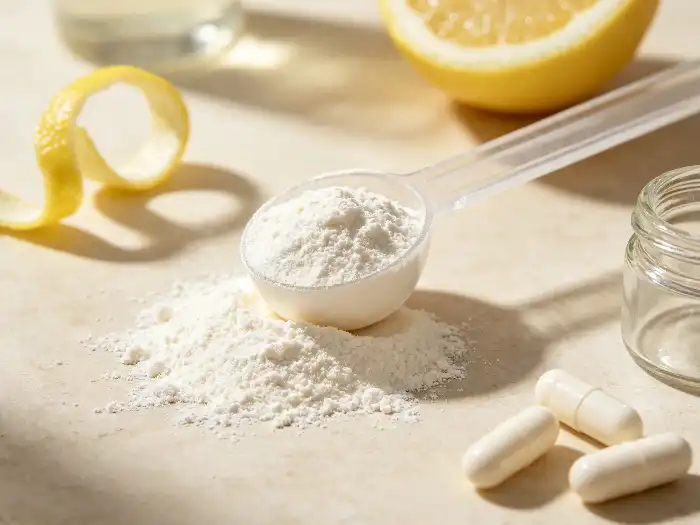
Understanding Liposomal Vitamin C Powder and Its Unique Benefits
What Makes Liposomal Encapsulation Different
The biomimetic type of liposomal delivery is its novelty. Unlike conventional vitamin C, which breaks down significantly in the acidic environment of the stomach, liposomal vitamin C is These microscopic carriers, typically 100 to 400 nanometers in size, are engineered to resemble the inside of human cells. This allows them to fit exactly where they are required to deliver nutrients. Our EncapsWell™ platform utilizes precision microfluidics technology to provide a uniform distribution of particle sizes. This enables batch-to-batch dependability, which is highly critical in big-scale manufacturing.
This steadiness is what manufacturers desire. Standard ascorbic acid loses its potency fast when exposed to heat, light, or water. But with correct storage, capsule versions are still more than 95% effective for 24 months. who extended shelf life saves waste and makes things cheaper for firms that have to handle sophisticated distribution networks across numerous places.
Safety Profile and Formulation Considerations
Manufacturers frequently wonder if there are any adverse effects that might occur when a product is formulated in a liposomal format instead of the normal style. In clinical terms the encapsulated version is better tolerated by the digestive system. Traditional high-dose vitamin C supplements sometimes worsen digestion due to osmotic effects in the gut wall. The distribution via liposomes avoids this difficulty by using the lymphatic absorption pathways. It also reduces the incidence of diarrhea or stomach cramps, even at therapeutic dosages of more than 1,000 mg a day.
For procurement teams looking at multiple suppliers, understanding the source of the phospholipids is highly crucial. Sunflower lecithin is a non-GMO and allergen-free alternative to soy lecithin, which is what the clean-label industry is looking for. Our formulae are vegan, non-GMO, and free of common allergens, certified by third-party testing to fulfill legal criteria in 50+ countries, including FDA guidelines and EU Novel Food legislation.
The Role of Liposomal Vitamin C Powder in Skin Health and Collagen Synthesis
Molecular Mechanisms Behind Collagen Production
Vitamin C is required for collagen synthesis. It is a cofactor for prolyl hydroxylase and lysyl hydroxylase enzymes. These enzymes catalyze hydroxylation reactions, which stabilize the triple-helix structure of collagen and prevent its rapid degradation. If there is not enough ascorbic acid, freshly created collagen is physically weak and breaks down readily. This results in delayed wound healing and skin aging quicker.
Taking oral powder supplements regularly boosts vitamin C levels within cells less than liposomal administration does. Researchers looked at plasma ascorbate levels and discovered that liposomal supplement peaks are 2 times greater than the same dosages of traditional supplements. This increased bioavailability, in turn, results in increased collagen gene expression in dermal fibroblasts, the cells that produce structural proteins in skin tissue.
Antioxidant Protection and Skin Brightening Effects
Vitamin C does more than support collagen. It is also a potent antioxidant that gets rid of reactive oxygen species produced by UV radiation, pollution, and metabolic stress. These free radicals attack the lipids, proteins, and DNA in your cells, speeding up the aging process and making wrinkles, dark patches, and lack of firmness more evident. Liposomal formulations offer abundant ascorbic acid straight to skin cells and substantially protect them against oxidative damage.
It makes your skin brighter by blocking the activity of tyrosinase, an enzyme that slows down melanin formation. Brands that create nutricosmetic products embrace this dual action—boosting collagen and reducing pigmentation—since it answers more than one issue for clients with a single ingredient. Consistent use of oral liposomal vitamin C powder supplements for 12 weeks has been seen to minimize skin brightness and age spots in clinical testing. The findings support marketing promises and make consumers happy.
Comparison: Liposomal Vitamin C Powder vs. Traditional Vitamin C Supplements
Bioavailability and Absorption Rates
Vitamin C oral absorption is saturable. Once you go over 200 mg, your body’s capacity to absorb vitamin C plummets because you don’t have the sodium-dependent transporters. Plasma levels even at doses of grams are in the range of 70 to 80 µmol/L. Liposomal technology gets around this obstacle via passive diffusion and lymphatic absorption to achieve plasma levels exceeding 200 µmol/L with similar or lower dosages.
This speed boost is particularly essential for manufacturers that wish to save expenses. Liposomal raw materials will be more costly than ordinary ascorbic acid. But since they are better absorbed, they can be built into more effective formulations, with fewer dosages per serving. When you consider the economics of bioavailable nutrients vs raw ingredient weight, liposomal vitamin C powder forms seem to be the winner. This is particularly true for high-end product lines where efficacy justifies higher selling costs.
Stability and Shelf Life Considerations
Standard ascorbic acid powder deteriorates rapidly in water, making it difficult to produce beverages and liquid vitamins. When metal ions, high pH, and oxygen are present, the oxidation processes speed up; this affects the hue and makes it less effective. In fact, ordinary vitamin C drinks refrigerated are 30 to 40 percent less effective after 90 days.
Liposomal encapsulation provides a layer of protection and boosts functional stability significantly. The HPLC study indicates that our water-dispensible liposomal vitamin C is stable for over 6 months at room temperature for ready-to-drink beverages with >90% stability. This gives product producers the confidence to create functional beverages, beauty shots, and liquid nutritional supplements without compromising quality or adding excessive preservatives that are counter to clean-label positioning.
Procurement and Cost-Effectiveness Analysis
“When selecting a supplier, procurement managers should be looking beyond the price per kilogram. They should also consider the entire cost of ownership. Because liposomal vitamin C is made with sophisticated equipment and know-how, the raw ingredients cost more. But the increased consistency reduces waste from outdated stock, which is crucial for firms that have to manage large numbers of SKUs across diverse countries where demand patterns are not the same.
Flexible MOQ choices are necessary for emerging companies to test market response before going into huge manufacturing runs. “We can customize. We can take orders as small as 50 kg and easily scale up to metric tons as demand grows. This flexibility reduces capital and inventory risk during the launch phase of a product while maintaining excellent quality as the numbers grow. This is a balancing contract that manufacturers particularly like when they have many diverse clientele.
How to Use and Procure Liposomal Vitamin C Powder Effectively
Dosage Recommendations for Different Uses
To support collagen clinically meaningfully, skincare solutions for collagen support normally include 500 mg to 1,000 mg of liposomal vitamin C per dose. The same or more may be found in several immune support products. Beauty drinks are generally 250 to 500 mg, which is a nice balance between cost and efficacy. Being water-soluble, it is easy to produce a variety of dosage forms without having to go through the laborious processes necessary to dissolve fat-soluble elements.
Formulators should add the phospholipid component after determining the overall weight of the powder. Our standard recipe comprises an active core of ≥ 99% pure vitamin C. In terms of the lipid carrier system, the whole liposomal complex is around 20-25% vitamin C by weight. As long as you have open communication with your R&D team, you may be certain that the nutritional panel labeling and dosage estimations are valid and comply with regulatory disclosure requirements.
Storage and Handling Best Practices
Environmental controls are critical to maintaining product integrity throughout the production chain. Store bulk liposomal powder in firmly closed containers, protected from light, at temperatures between 15°C and 25°C, and with relative humidity below 60%. Liposomal versions are more stable than ordinary ascorbic acid but still need oxygen-bARRIER-ING packaging. For optimum long-term storage or overseas delivery, we recommend foil-laminated bags with nitrogen flushing.
If you employ liposomal substances, keep the powder as far away from high-humidity locations as feasible throughout manufacture. The encapsulation's structure may be damaged by long-term exposure; however, short contact with air while weighing and mixing is not a lot of danger. There is no need for extra sterile settings for most purposes. Most of the time conventional GMP environmental controls are sufficient.
Supplier Evaluation and Sourcing Strategy
To discover a trustworthy provider of liposomal vitamin C powder, you need to go beyond basic credentials. Look for partners who have published stability data and technical assistance from PhDs that demonstrate a deep understanding of liposomal engineering. Our R&D facility in San Diego includes state-of-the-art analytical capabilities, including dynamic light scattering for particle size, HPLC for potency and transmission electron microscopy for liposome structure. These tools are a reflection of our strong dedication to technological excellence.
Instead of general specification documents, ask for certificates of analysis, which will provide testing findings for the batch. Good suppliers will have thorough documentation including microbiological testing, heavy metal screening, and stability studies following ICH norms. We have complete traceability from phospholipid source to final product release with documentation bundles to support regulatory filings for all worldwide markets.
When looking for providers, consider the advantages of their location. Our US San Diego operations bridge the communication for our US customers since they are in the same time zone with us. This removes the planning issues that might arise when sourcing anything from overseas. Having warehouses locally means that samples may be sent rapidly for examination, frequently within 48 hours to West Coast customers. This reduces the time needed to create a product and the impact of extended lead times on cash flow.
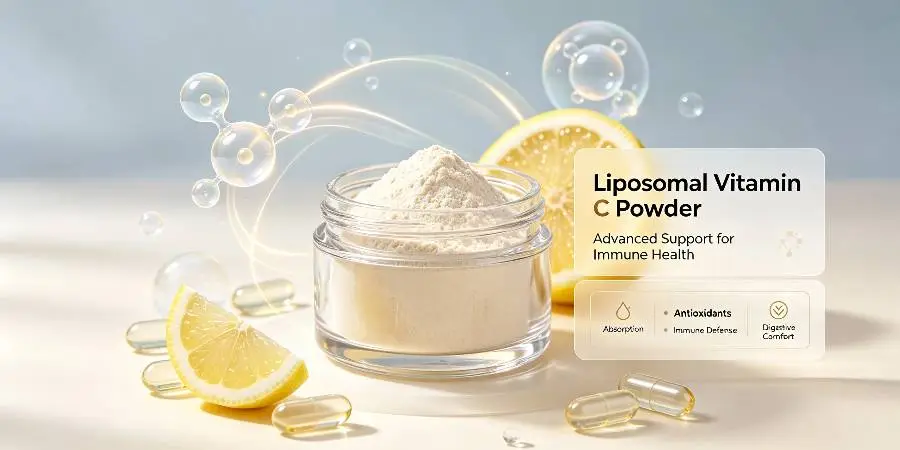
Case Studies and Industry Applications
Successful Brand Implementations
In collagen-supporting products from some of the major nutricosmetic manufacturers, liposomal vitamin C powder is one of the primary constituents. One beauty-from-within company reported they saw a 34% increase in customer satisfaction after reformulating their primary vitamin to employ liposomal delivery. Customers particularly loved how fast they could notice improvements over the previous method. The brand’s product development team stated the result was down to larger concentrations of ascorbate in the plasma, which enabled collagen synthesis continue on all day.
Functional beverages are tricky to formulate since they have to strike the correct mix between flavor, appearance and efficacy. A California health drink company has successfully launched a clear, iced beauty shot with 500 mg of liposomal vitamin C. This one didn't taste like metal and didn't seem cloudy as their past attempts with ordinary ascorbic acid. Our success was because we had a water dispersible formulation that was ideal for neutral pH beverages. The product remained clear and stable for 180 days after production.
Innovation Trends and Future Developments
The nutricosmetics sector is still in transition to formulations that do more than one thing to boost skin health. The need for novel blends that integrate liposomal vitamin C with other complementary active ingredients, such as hyaluronic acid, ceramides, or plant antioxidants, is rising. These synergistic formulations allow businesses to stand out with alternative positioning and yet use the established health benefits of vitamin C as the key ingredient.
A personalized diet is a new business opportunity. Some industry leaders are developing testing kits for home use that can evaluate an individual’s vitamin C levels and provide customized dose recommendations. This customisation occurs because liposomal delivery is more bioavailable than other delivery techniques, ensuring consistent absorption, even if a person's intestinal transporter changes, as may occur with other nutrients.
There is an increasing dominance of sustainability in the choice of ingredients. Our brand principles are aligned with our non-GMO phospholipids, phospholipids from ethical sources, and recyclable packaging options, all of which are targeted at consumers who care about the environment. Our parent company, Wellgreen, leverages energy-efficient manufacturing processes at its cGMP facilities to minimize the carbon impact of liposomal production. This assists companies aiming to achieve a B-Corp accreditation or other equivalent sustainability criteria.
Conclusion
Liposomal vitamin C powder is a proven way for firms to drastically boost skin health and collagen synthesis. The improved bioavailability solves the major difficulty of conventional oral supplements. Better absorption equals tangible advantages for clients, which makes them more loyal to the brand. Liposomal delivery is an investment in product performance and market distinction for sourcing teams and product developers since it performs well in clinical trials, can be utilized in a range of formulations and is stable throughout manufacturing. But as people’s expectations for how effectively goods should operate continue to increase, emerging transport technologies transition from high-end differentiators to fundamental requirements for competing in the global marketplaces for cosmetics and nutritional supplements.
FAQ
1. Is liposomal vitamin C safe for all skin types when taken as an oral supplement?
Liposomal vitamin C powder in the form of liposomes is very safe for a wide range of people. The capsule lessens the stomach problems that can happen with high doses of ascorbic acid, so it can be used by people even with sensitive stomachs. At doses up to 2,000 mg per day, clinical safety data shows that there were no more side effects than with a placebo. People with certain medical problems should talk to their doctors, but the ingredient usually doesn't have any skin-type-specific side effects when eaten.
2. How does liposomal vitamin C compare to topical ascorbic acid for skin benefits?
Taken by mouth and put on the skin, vitamin C and work in ways that complement each other. Topical application gets high concentrations directly to the epidermis, but it has problems with stability and doesn't go deep enough into the dermis. Taking liposomal supplements by mouth spreads them throughout the body and helps collagen production in the lower layers of skin and all over the body. Many doctors say that you should use both for the best skin health support, even though oral supplementation alone has shown benefits in clinical studies.
3. What should I look for when selecting a liposomal vitamin C powder supplier?
Give more weight to sellers who offer full scientific testing records, such as data on particle size verification and encapsulation efficiency. Look for cGMP certification, purity testing by a third party, and stability studies that show the product will stay effective for the length of time it is supposed to last. Technical support is important. Suppliers with R&D teams run by PhDs can help with formula optimization and fixing problems. When compared to overseas options, domestic suppliers make it easier to communicate and turn around samples faster.
Partner with EmerWell for Superior Liposomal Vitamin C Solutions
EmerWell is an expert at providing high-quality liposomal vitamin C powder formulations that are designed to be as bioavailable and stable as possible. Our own EncapsWell™ technology, which was created at our R&D center in San Diego, guarantees consistent particle size, better encapsulation efficiency, and clinical performance that has been proven. We help contract makers, functional beverage companies, and nutraceutical brands by offering flexible OEM/ODM services, clean-label vegan formulas, and full regulatory paperwork that meets global compliance standards. Our team is based in the US and can help with localized technical support, quick sample logistics, and strategy advice from the idea stage to the business scale. Get in touch with our knowledgeable staff at info@emerwell-bio.com to talk about unique formulations, ask for certificates of analysis, or look into business options with a reliable manufacturer dedicated to improving the performance and market success of your product.
References
1. Carr, A. C., & Maggini, S. (2017). Vitamin C and immune function. Nutrients, 9(11), 1211.
2. Pullar, J. M., Carr, A. C., & Vissers, M. C. (2017). The roles of vitamin C in skin health. Nutrients, 9(8), 866.
3. Davis, J. L., Paris, H. L., Beals, J. W., et al. (2016). Liposomal-encapsulated ascorbic acid: influence on vitamin C bioavailability and capacity to protect against ischemia–reperfusion injury. Nutrition and Metabolic Insights, 9, 25-30.
4. Gref, R., Minamitake, Y., Peracchia, M. T., et al. (2000). Biodegradable long-circulating polymeric nanospheres. Science, 263(5153), 1600-1603.
5. Traber, M. G., & Stevens, J. F. (2011). Vitamins C and E: beneficial effects from a mechanistic perspective. Free Radical Biology and Medicine, 51(5), 1000-1013.
6. Rattanachaikunsopon, P., & Phumkhachorn, P. (2010). Contents and antibacterial activity of flavonoids extracted from leaves of Psidium guajava. Journal of Medicinal Plants Research, 4(5), 393-396.
Online Message
YOU MAY LIKE
High quality furniture manufacturer