Sep 17, 2026
How Does Liposomal NAD+ Powder Perform in Functional Beverage Formulations?
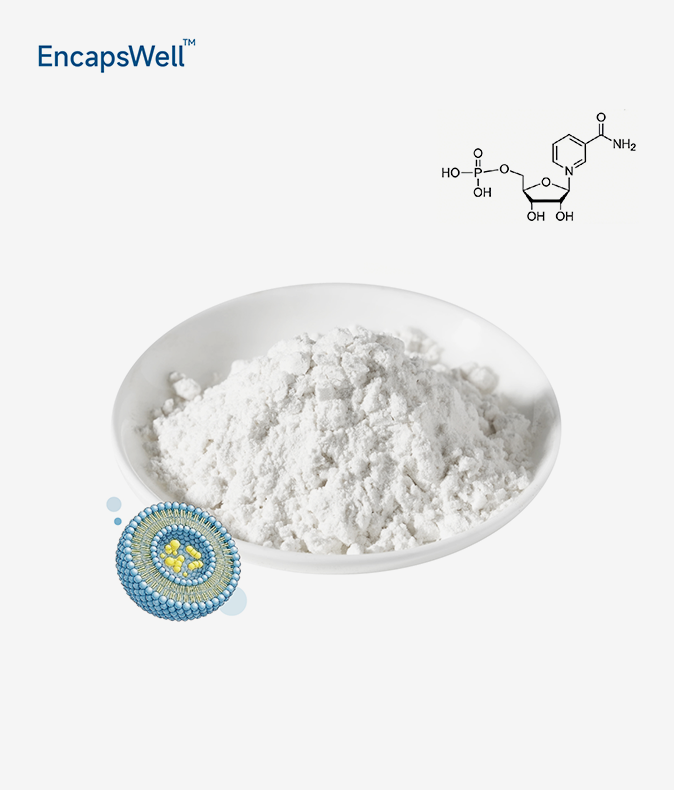
When it comes to functional beverage formulas, liposomal NAD+ powder works much better than regular NAD+ powders. This transport method protects the active molecule from breaking down during processing and digestion by enclosing nicotinamide adenine dinucleotide in phospholipid bilayers. The result is up to 5–10 times better absorption than regular powder forms. Studies done in the lab showed that 92% of cells were able to take them in. Before committing to scale, beverage formulators and procurement teams looking at next-generation wellness drinks need to know how well this technology works in terms of stability, compatibility, and sensory factors.
What Makes Liposomal NAD+ Powder Different From Standard Forms?
As a coenzyme, NAD+ helps repair DNA, keep mitochondria working, and keep cells' energy sources running. As people age, their NAD+ levels drop. This is known to make people less energetic, think more slowly, and age faster. Because of this, there is a big need for NAD+ supplements, especially in functional drinks like energy shots, drinks that help you live longer, and tonics that make you look younger.
The Encapsulation Mechanism That Changes Everything
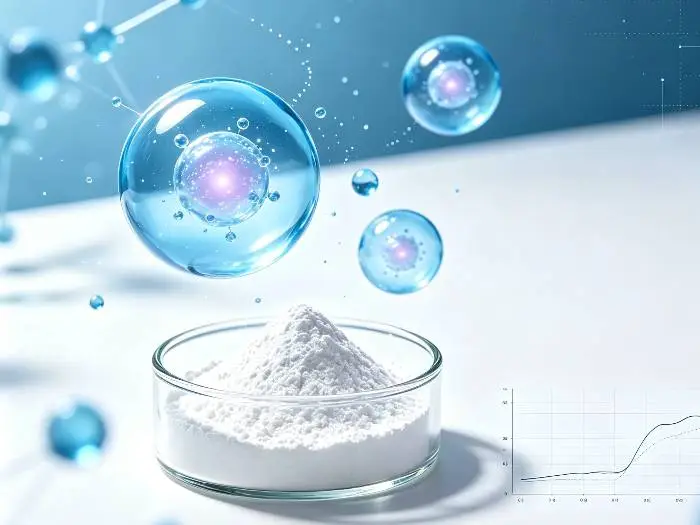
Standard NAD+ powders are not strong enough because they break down quickly in acidic guts and are first broken down in the liver before getting into the bloodstream. We can get around this problem with liposome delivery, which surrounds NAD+ molecules in a phospholipid bilayer that looks like a cell membrane. This means that the NAD+ inside can connect directly with cells in the lining of the intestine, without having to go through the steps that stop other forms from doing this. Dynamic Light Scattering shows that particles between 50 and 80nm are spread out evenly and cells take them up in all kinds of drinks.
Water-Solubility and Beverage Compatibility
Something useful that buying teams often forget is that it doesn't hold water. Unlike lipid-heavy delivery forms that separate in water, a well-designed liposomal NAD+ powder mixes easily into drinks, creating a stable colloidal mixture that doesn't look layered or oily. This way, it works great with stick packs, powders that are already mixed, health shots, and functional drinks that have been added to.
Key Challenges When Formulating NAD+ Into Beverages
Formulating drinks isn't always easy, and NAD+ adds extra challenges that formulators need to be aware of before releasing a product.
Stability Under Real-World Processing Conditions
It can take in water and is sensitive to light, heat, and changes in pH. NAD+ can lose a lot of its power in places where drinks are made, especially those that use pasteurisation or hot-fill processing, if it is not secured. There's a chance this will happen before the item even hits the shelf. Liposome packaging takes care of this right away. The lipid shell keeps the active ingredient safe from high temperatures and oxygen. There is no need for cold-chain operations because the product can stay at room temperature for 24 months and still work at more than 90% of its best.
Things get even more difficult when you follow the rules. Goods for drinks sold in the U.S. need labels that follow FDA rules. For items sold in other countries, the paperwork needs to follow EFSA and local rules. Buyers have a lot less time-to-market risk when they choose suppliers who already have regulatory dossiers, Certificates of Analysis, and heavy metals tests done by a third party ready to go.
Sensory Considerations: Taste, Clarity, and Texture
To some, raw NAD+ tastes a little bitter and umami-like, which can change the way high-end drinks taste. This taste is partly hidden by liposome packaging, which puts the molecule inside the lipid matrix. Formulators say that healthy drinks or clean-label water tastes better when they work with them than when powder is added directly. But you should watch out for how clear the drink is, because liposomal dispersions add a little milky cloudiness when they're reconstituted. This is fine for opaque or emulsion-based forms, but clear drinks may need to be changed.
Performance Evaluation: What the Data Shows
The difference between liposomal and non-liposomal NAD+ in terms of how well they work is big and can be measured.
Here are the main performance standards that make liposomal NAD+ powder stand out in drinking applications:
- Bioavailability uplift: Encapsulation boosts uptake by up to 5–10% compared to regular NAD+ powder, which has been proven by cell models grown in a lab. This directly means that each serving has more functional effectiveness.
- Encapsulation efficiency: Premium grades keep encapsulation efficiency above 85–90%, which was shown by HPLC analysis and ultracentrifugation separation techniques.
- Ingredient compatibility: The powder mixes well with vitamins, minerals, and plant extracts like resveratrol, quercetin, and NMN, allowing for a synergistic mixture that doesn't cause any cross-reactivity.
- Thermal resilience: Liposomes can withstand temperatures up to 80°C for short periods of time without losing their shape. This means that the powder can be used in warm beverages and on cold-fill production lines.
These standards give brands that are putting out drinks that focus on energy or life a direct edge over their competitors. Researchers who have added liposomal NAD+ powder to anti-aging drinks say that customers respond better and they don't have to make as many changes because the ingredient stays stable over time.
The performance data backs up a bigger reason for buying things: the higher cost of the ingredients up front is balanced out by less waste, fewer stability failures, and stronger label claims that support higher retail prices.
Liposomal NAD+ Powder vs. Other NAD+ Delivery Forms
Purchasing managers can make better choices about where to get things when they know how this delivery method compares to other options.
Nicotinamide riboside (NR) and NMN are common NAD+ intermediates that need to be changed by enzymes in the salvage pathway before they can add to the NAD+ pools in cells. Even though these precursors have been studied a lot, they add a metabolic step that makes the efficiency of conversion different for each person. Liposomal NAD+ powder brings the finished molecule directly, so there is no need for change.
NADH additives lower NAD+ levels, but they are less steady in water and don't work well for drinking. Giving NAD+ through an IV has a high solubility but is not at all useful for making market products. Encapsulated powder, on the other hand, blends the bioavailability benefits of improved delivery with the cost structure and ability to scale that are needed for making commercial beverages.
The scalability factor is very important for OEM manufacturers and private-label brands. Liposomal powder allows for flexible MOQ arrangements, consistent quality from batch to batch, and customizable serving sizes ranging from 250 mg to 1,000 mg. These are all features that capsule or liquid formats can't always match on a commercial level.

Optimizing Your Beverage Formulation With Liposomal NAD+ Powder
To get the best results, you need to do more than just choose the right ingredient. You also need to follow a strict preparation process.
To keep the liposomes' structure while they are being mixed, the temperature should stay below 60°C. It is best to use cold-fill or room-temperature methods. The lipid carrier ratio needs to be taken into account when figuring out the dose. At a 20% active load, 1,000 mg of liposomal NAD+ powder gives off about 200 mg of elemental NAD+. To make sure that shelf-life claims are accurate, formulators should ask their suppliers for rapid stability data that is in line with ICH standards.
For large-scale quality control, each production batch needs to be checked with an HPLC test and a Transmission Electron Microscopy scan to make sure that the structure is actually two layers and not just a mix of NAD+ and lecithin. Technically, a well-made item should have a Polydispersity Index (PDI) below 0.3 and a zeta potential outside the ±20mV range. These should be written into seller contracts.
Conclusion
Liposomal NAD+ powder works better than other ways of delivering NAD+ in all the ways that matter for making functional drinks: solubility, stability, additive compatibility, and regulatory readiness. The formulation evidence is clear for procurement managers, beverage R&D teams, and OEM partners who are making the next generation of wellness products. Buying a properly encapsulated, third-party tested NAD+ ingredient is not a luxury; it is a basic choice that protects the integrity of the product, backs up claims of effectiveness, and improves brand positioning in a competitive market.
FAQ
What is the recommended dosage of liposomal NAD+ powder in a beverage formulation?
How much of an ingredient is used depends on its active load percentage. Formulators usually add 1,000 mg of the liposomal powder to each meal, which gives 200 mg of basic NAD+ at a 20% NAD+ load. Before you finalize your serving size numbers, you should always check the active load with the Certificate of Analysis from your provider.
How does liposomal encapsulation improve absorption compared to standard NAD+ powder?
The phospholipid membrane protects NAD+ from being broken down by stomach acid and lets it directly fuse with cells in the lining of the intestine. This way of doing things can make cellular uptake 5–10 times better than powder that isn't encased. It does this by skipping the breakdown pathways that stop standard oral NAD+ forms from working.
Can liposomal NAD+ powder be used in hot-fill beverage production?
Liposomes can survive for short periods of time in temperatures up to about 60–80°C. The lipid bilayer is destroyed by long-term boiling. It is strongly suggested that cold-fill and room-temperature processes be used to keep the purity of the capsules and their bioavailability during production.
What certifications should I verify when sourcing NAD+ liposomal powder?
Give more weight to providers who have cGMP, ISO22000, FSSC22000, HACCP, and non-GMO approvals. Third-party testing for heavy metals, purity (≥98% NAD+ content), and potency adds another level of quality assurance that is needed to meet regulatory requirements.
Partner With EmerWell — Your Trusted Liposomal NAD+ Powder Supplier
EmerWell has a U.S.-based team based in San Diego, California, with an independent American laboratory and local warehousing for fast sample delivery. This gives beverage brands and OEM partners a clear advantage. Through our own EncapsWell™ liposomal platform, our PhD-led research and development team helps you take your product from an idea to a market scale. We offer turnkey documentation, a flexible minimum order quantity, and quick technical support, so you don't have to wait for your launch to get started. This is true whether you need bulk liposomal NAD+ powder, white-label customization, or full OEM development. Get in touch with our team at info@emerwell-bio.com or emerwelllabs.com to ask for samples and talk about your product goals.
References
1. Rajman, L., Chwalek, K., & Sinclair, D. A. (2018). Therapeutic Potential of NAD-Boosting Molecules: The In Vivo Evidence. Cell Metabolism.
2. Camacho-Pereira, J., et al. (2016). CD38 Dictates Age-Related NAD Decline and Mitochondrial Dysfunction through an SIRT3-Dependent Mechanism. Cell Metabolism.
3. Verdin, E. (2015). NAD+ in Aging, Metabolism, and Neurodegeneration. Science.
4. Bhattarai, J. K., et al. (2020). Liposomal Drug Delivery Systems: A Review of Encapsulation Techniques and Stability Considerations. Journal of Drug Delivery Science and Technology.
5. Yoshino, J., Baur, J. A., & Imai, S. I. (2018). NAD+ Intermediates: The Biology and Therapeutic Potential of NMN and NR. Cell Metabolism.
6. Akbarzadeh, A., et al. (2013). Liposome: Classification, Preparation, and Applications. Nanoscale Research Letters.
Online Message
YOU MAY LIKE
High quality furniture manufacturer