May 28, 2026
Exploring the Incredible Benefits of Liposomal Resveratrol
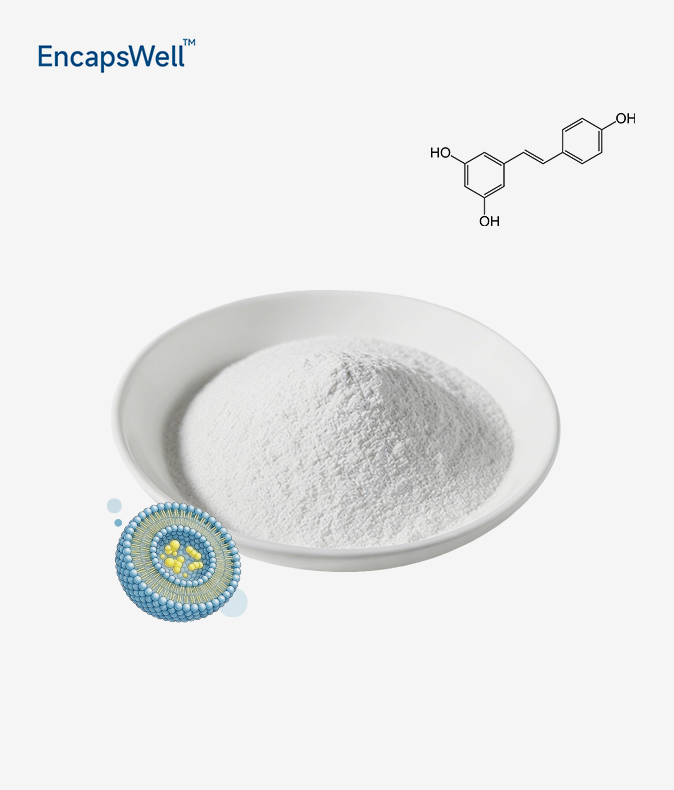
The nutraceutical sector struggles to deliver bioactive chemicals to target tissues in sufficient amounts. Resveratrol, a polyphenolic antioxidant found in grapes and berries, has showed promise in lab trials, although typical preparations have low absorption. Liposomal resveratrol powder preserves the active ingredient during digestion and boosts cellular absorption by 14 times compared to normal formulations. Resveratrol goes from a promising chemical with limited efficacy to a high-performance component with quantifiable outcomes for anti-aging, cardiovascular support, and inflammation control.
What is Liposomal Resveratrol Powder and How Does It Work?
Liposomal delivery technologies are crucial for formulation teams seeking high bioavailability because of its science. Poor water solubility, fast liver metabolism, and acidic stomach degradation plague traditional resveratrol preparations. Despite having enough resveratrol, these variables lower systemic availability rates below 1%, making many products useless.
The Science of Liposomal Encapsulation
Liposomal technology uses non-GMO phospholipid bilayers like sunflower lecithin to imitate the body's cell membrane structure. The lipid covering of these tiny spheres protects resveratrol molecules from severe digestive conditions. These protective barriers allow transport to the small intestine, where M-cells allow direct lymphatic absorption. By circumventing hepatic metabolism, liposomal formulations maintain greater bioactive trans-resveratrol levels.
Powder format offers product development teams benefits. Freeze-drying or spray-drying liquid liposomes creates stable, free-flowing powders for many uses. This process preserves the phospholipid vesicles' structure while improving handling, dosage, and shelf stability over liquid solutions.
Mechanisms of Enhanced Absorption
Liposomal administration profoundly changes resveratrol pharmacokinetics, according to clinical data. In the liver, standard formulations rapidly conjugate active trans-resveratrol into sulfated and glucuronidated metabolites with lower biological activity. Since the liposomal barrier inhibits conversion, plasma concentrations remain higher for longer. Research indicates that liposomal systems can increase bioavailability by 10-16 times compared to crystalline resveratrol, with our EncapsWell™ technology routinely showing 14-fold boost in controlled testing situations.
Key Benefits and Advantages Over Regular Resveratrol
Performance differences that justify premium ingredient costs increasingly drive procurement decisions. Liposomal formulations excel in numerous product developer and quality manager assessment criteria.
Superior Absorption Translates to Lower Effective Dosages
The considerable bioavailability enhancement allows compositions to reach therapeutic thresholds with less resveratrol. Liposomal products can provide similar benefits at 100-150mg, unlike traditional medications at 500mg. Reduced dose leads to smaller capsules, cheaper raw material costs per serving, and better customer compliance owing to lesser pill load. Superior effectiveness at conservative dosages is a competitive advantage for premium products.
Enhanced Stability Profile
Liposomal resveratrol's light, oxygen, and temperature sensitivity has complicated formulation and limited shelf life. The most biologically active trans-isomer changes to the less active cis-form under environmental stress. Encapsulating liposomes greatly reduces this breakdown mechanism. Stability testing under ICH criteria shows that correctly made liposomal resveratrol powder retains over 95% of indicated potency for 36 months under normal ambient settings. This longer stability window lowers waste, improves inventory management, and guarantees consumers receive products that offer promised advantages throughout the lifespan.
Clean Label Compatibility
Today's health-conscious shoppers examine ingredient lists like never before. Our liposomal resveratrol powder contains trans-resveratrol at quantities above 98%, non-GMO phospholipids, and low processing excipients, meeting clean label requirements. The formulation is HALAL, KOSHER, Vegan, ISO22000, FSSC22000, and HACCP-certified, allowing brands to meet international customer preferences and regulatory standards. This certification portfolio speeds time-to-market and provides evidence that passes rigorous compliance evaluations.
Comparing Liposomal Resveratrol Powder with Other Formats
Understanding how delivery formats meet operational needs helps product development and procurement teams. Powder, capsule, or liquid forms affect production, supply chain logistics, and product performance.
Powder Versus Liquid Liposomal Preparations
Liquid liposomal suspensions were the first improved delivery technology, providing rapid bioavailability without dissolving. However, B2B apps face major obstacles from these preparations. Cold chain logistics raise transportation costs and complicate international shipment since liquid stability is temperature-sensitive. Preservatives for microbial stability may clash with clean label placement. Active phospholipids can cause packaging compatibility concerns during long-term storage.
Liposomal resveratrol powder eliminates these issues while maintaining liposomal absorption. Powder can survive ambient temperature storage and shipment, integrate effortlessly into capsule and tablet production lines, and offer formulation flexibility that liquid solutions cannot. Brands can mix the powder with complementing chemicals, make stick packs, or create bespoke release profiles for therapeutic goals.
Standard Resveratrol Versus Liposomal Technology
Cost-conscious procurement teams may wonder if liposomal components are worth the cost. Product positioning and market expectations determine the solution. Generic resveratrol powder costs less per kilogram, but its low absorption requires bigger dosages for minimal effectiveness. Products that fail to deliver are increasingly receiving negative evaluations, hurting brand reputation and consumer retention.
Liposomal compositions cost more because they provide outcomes. Brands may confidently claim efficacy, cut serving sizes, and distinguish in saturated markets. Liposomal formulations are generally cheaper on a cost-per-absorbed-milligram basis than ingredient cost and allow higher profit margins through premium positioning.
Supplier Evaluation Criteria
Finding trustworthy partners for liposomal resveratrol powder involves multidimensional evaluation. Quality begins with raw material sourcing—trans-resveratrol should come from recognized botanical sources with purity certificates. Manufacturers must have genuine Good Manufacturing Practice certificates and liposome formation and characterization techniques. Analytical testing should comprise particle size distribution, encapsulation efficiency, and stability testing per procedures. For regulatory compliance and quality assurance, ingredient traceability systems from source to packaging provide transparency.
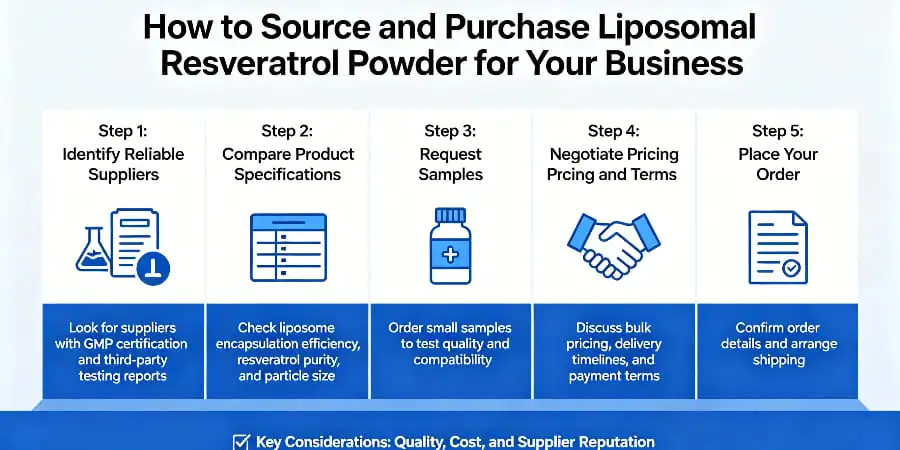
How to Source and Purchase Liposomal Resveratrol Powder for Your Business?
Quality standards are balanced with cost, minimum order numbers, and supplier service capabilities in strategic procurement. A rigorous review procedure finds partners with immediate and long-term growth goals.
Certification and Compliance Documentation
Check supplier credentials for your target markets before discussing purchases. North American nutraceutical brands should validate supplier FDA GRAS and dietary supplement GMP paperwork. Novel Food permission or exemptions and ISO22000 food safety certification are needed for European distribution. Asian markets may require ASEAN GMP or country-specific registrations. Partners with extensive certification portfolios and specialized regulatory affairs professionals can reduce market entrance clearance times by 40% compared to providers without this infrastructure.
Minimum Order Quantities and Scaling Considerations
MOQ constraints that exceed launch volumes sometimes plague early-stage brands. Specialized manufacturing procedures for liposomal resveratrol powder need 100-500 kilogram batches, which raises obstacles. Suppliers with variable MOQ structures let budding businesses evaluate market approval before investing in substantial inventory. As items acquire popularity, bulk pricing levels starting at 500 kilos monthly optimize costs and supply continuity. Scaling production numbers effortlessly eliminates supply interruptions during growth stages, when brand reputation is most sensitive to stock-outs.
Value-Added Services and Technical Support
More liposomal resveratrol ingredient suppliers are formulation partners than material sellers. Technical skills can help optimize product forms and solve production issues. Suppliers with in-house R&D may alter particle size, optimize excipients for specific delivery methods, and evaluate synergy when combining resveratrol with NMN or quercetin. North American companies like suppliers with US-based technical teams and warehouses because they offer prompt communication across suitable time zones and speedy sample delivery, which speeds up development.
Future Trends and Procurement Insights in Liposomal Resveratrol
Market information helps procurement professionals predict supply chain change and discover competitive possibilities. Long-term ingredient strategy teams should monitor many changes.
Next-Generation Delivery Platforms
Advanced liposomal architectures with multi-vesicular structures and tailored delivery systems with binding ligands are being studied. These new platforms offer increased bioavailability and tissue-specific accumulation, which may decrease total dosages and increase target site concentrations. In competitive areas like anti-aging and cognitive health, where superiority drives purchasing choices, innovative companies that utilize verified next-generation delivery systems lead effectiveness standards.
Demand Growth Across Market Segments
Resveratrol uses are growing because to demographics. In developed markets, aging populations need preventative cardiovascular, metabolic, and cognitive health solutions. Beauty-from-within categories expand rapidly as customers adopt nutricosmetic skin care. Sports nutrition applications for exercise recovery and oxidative stress control seem promising. Brands can use liposomal resveratrol formulations in numerous product lines to meet complementing customer demands due to this broadening demand base.
Strategic Supplier Partnerships
Long-term partnerships with approved suppliers boost ingredient supply and cost stability. Collaborations allow customization, priority allocation amid supply limitations, and margin-boosting pricing. Suppliers who expand capacity and optimize processes increase product specifications and service capabilities, which benefits established partners. As the liposomal resveratrol business evolves, the difference between sophisticated suppliers giving complete assistance and commodity-focused providers will likely expand, making early partner selection more important for competitive positioning.
Conclusion
Liposomal resveratrol powder addresses bioavailability issues that have limited its medicinal potential. The 14-fold absorption enhancement over typical formulations makes this intriguing molecule a health-boosting substance for cardiovascular, anti-aging, and inflammatory control. The format provides product creators and procurement experts exceptional stability for 36-month shelf life, clean label compliance with full certifications, and formulation flexibility for varied product forms. Brands can benefit on customer demand for science-backed wellness solutions by strategically sourcing from partners with high quality standards and technical expertise. Premium liposomal substances improve product performance, customer happiness, and market positioning, supporting healthy profit margins in competitive markets.
FAQ
What makes liposomal delivery superior to standard resveratrol supplements?
Standard resveratrol has less than 1% bioavailability due to low water solubility and quick liver degradation. Liposomal encapsulation preserves the active substance throughout digestion and allows intestinal lymphatic absorption without hepatic breakdown. This technique raises blood concentrations 10-14 times higher than standard formulations, allowing lower effective dosages and better therapeutic effects. A phospholipid layer resists oxidative degradation, keeping trans-resveratrol isomer active throughout product shelf life.
How should bulk purchasing quantities be determined for liposomal resveratrol powder?
Use production schedules, 100-500kg MOQs, and projected product velocity to calculate needs. When planning inventory levels, consider 36-month stability data—the prolonged shelf life allows bigger bulk purchases that may qualify for volume pricing. Work with suppliers who enable flexible scalability as your brand expands, starting with minimal quantities to test market approval before committing to greater inventory positions that optimize per-unit costs.
What certifications matter most when evaluating liposomal resveratrol suppliers?
Dietary supplement cGMP, ISO22000 or FSSC22000 for food safety management, and Novel Food authorization for Europe or ASEAN GMP for Asia are priority certifications. Independent lab testing verifies specification conformity. Clean label consumer preferences are influencing buying decisions across demographics, and allergen-free, non-GMO, vegan, HALAL, and KOSHER certifications expand market access.
Partner With a Liposomal Resveratrol Powder Manufacturer Committed to Your Success
EmerWell uses its unique EncapsWell™ liposomal technology to develop market-ready medicines from creative ideas. With over 98% resveratrol, our liposomal resveratrol powder has confirmed 14-fold bioavailability increase and is prepared in our partner Wellgreen's cGMP-certified facilities to the highest quality standards. Procurement teams require technical assistance, regulatory documentation, and trustworthy supply networks, not simply ingredients. Our PhD-led R&D team can design formulations, particle specs, and synergistic combinations to your product vision, and our San Diego headquarters allows effective communication and timely sample delivery across North American time zones. Our customizable MOQ choices and bulk price levels starting at 500kg monthly help your growth, whether you're establishing a premium anti-aging supplement line, producing functional drinks, or growing current formulas. Contact info@emerwell-bio.com to learn how our liposomal resveratrol powder may improve product performance and boost your competitiveness in tough nutraceutical industries.
References
Walle, T. (2011). "Bioavailability of resveratrol." Annals of the New York Academy of Sciences, 1215(1), 9-15.
Cottart, C.H., Nivet-Antoine, V., & Beaudeux, J.L. (2014). "Review of recent data on the metabolism, biological effects, and toxicity of resveratrol in humans." Molecular Nutrition & Food Research, 58(1), 7-21.
Fangueiro, J.F., Andreani, T., Fernandes, L., & Garcia, M.L. (2014). "Physicochemical characterization of epigallocatechin gallate lipid nanoparticles for ocular instillation." Colloids and Surfaces B: Biointerfaces, 123, 452-460.
Sessa, M., Balestrieri, M.L., Ferrari, G., Servillo, L., & Castaldo, D. (2014). "Bioavailability of encapsulated resveratrol into nanoemulsion-based delivery systems." Food Chemistry, 147, 42-50.
Zu, Y., Overby, H., Ren, G., Fan, Z., Zhao, L., & Wang, S. (2015). "Resveratrol liposomes and lipid nanocarriers: Comparison of characteristics and inducing browning of white adipocytes." Colloids and Surfaces B: Biointerfaces, 135, 651-658.
Pandita, D., Kumar, S., Poonia, N., & Lather, V. (2014). "Solid lipid nanoparticles enhance oral bioavailability of resveratrol, a natural polyphenol." Food Research International, 62, 1165-1174.
Online Message
YOU MAY LIKE
High quality furniture manufacturer