Sep 9, 2026
Differences Between Liposomal Vitamin C Powder and Liposomal Vitamin C Liquid
When you're looking for vitamin C for your nutritional line, you quickly have to decide whether you want it in powder or liquid form. The stability patterns, production integration, and end-user uses of liposomal vitamin C powder and liquid formulations are very different. Knowing these differences helps buying teams make choices that work with production schedules, government deadlines, and what customers want. This book explains the real differences that matter for formulators, brand developers, and contract manufacturers who want to make their products work better and be more competitive in the market.
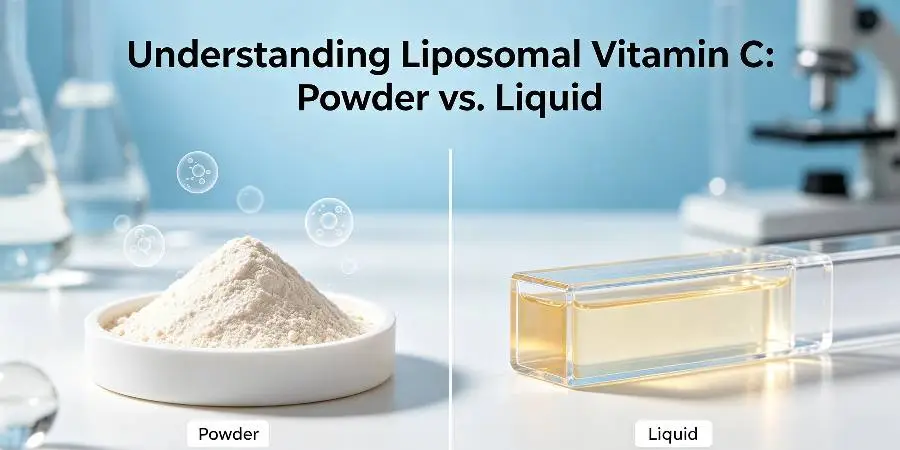
Understanding Liposomal Vitamin C: Powder vs. Liquid
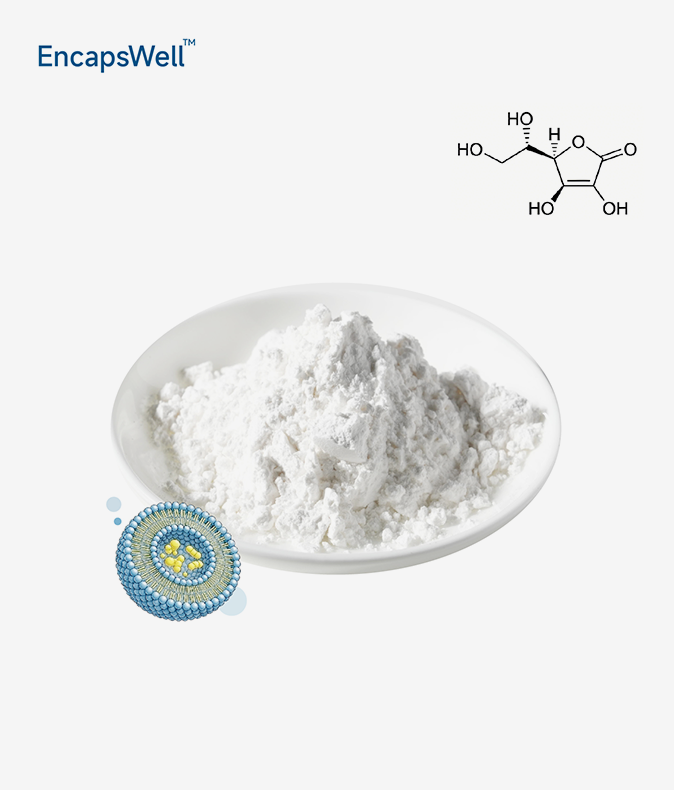
Liposomal delivery systems wrap ascorbic acid in phospholipid bilayers, which makes the shape of the nutrient transfer system more like a cell membrane. This technology fixes a major problem with regular vitamin C: it doesn't absorb well in the gut. The liposomal vitamin C powder form is made by lyophilization or spray-drying liquid liposomal solutions, which turns them into solid, free-moving particles. The liquid form keeps liposomes in a watery base, ready to be drunk directly or mixed into a drink.
How Encapsulation Technology Works
Vesicles made of phospholipids from sunflower or soy lecithin protect vitamin C from oxidation and breakdown in the stomach. EmerWell's EncapsWell™ platform uses nano-encapsulation techniques to make particles that are 50 to 200 nanometers in size. This level of accuracy makes sure that formulations are evenly dispersed and that absorption stays the same. According to separate in vitro absorption studies, our research methods show that properly designed liposomes improve cellular uptake by up to eight times compared to ascorbic acid that is not encapsulated.
Format-Specific Processing Methods
To make powder, liposomal solutions must be frozen and then ice must be sublimated in a vacuum. This process keeps the structure of the liposomes while removing water. The result is a light product with less than 5% wetness. Liquid versions skip this step because they keep liposomes in stable water solutions that have preservatives like potassium sorbate in them to stop microbes from growing. Each method has different effects on your supply chain and the way your products look on store shelves.
Comparison of Liposomal Vitamin C Powder and Liquid: Core Dimensions
To choose between these forms, you need to look at a number of practical factors. The next section looks at how well each one does on key business measures that have a effect on your product development timeline and costs.
Stability and Shelf Life Considerations
Liposomal vitamin C powder formulas are more stable over long stretches of time. When moisture level is kept as low as possible, oxidation rates slow down a lot. You can keep our EncapsWell™ powder at room temperature for 24 months and it will still be over 95% effective. This makes keeping track of goods easier and cuts down on waste from old stock.
Liquid forms have more trouble with rusting because water is active. Once the packaging is opened, breakdown speeds up, even if vitamins like mixed tocopherols are added. Most liquid liposomal goods need to be refrigerated after being opened and should be used within 30 to 60 days. This limitation causes risk for brands that sell through retail outlets where shelf turnover is hard to predict.
Dosage Precision and Formulation Flexibility
Powders are the most flexible way to make your own blends. You can mix liposomal vitamin C with ingredients that work well together, such as zinc citrate, quercetin, or elderberry extract, and then put the mix in veggie pills or press it into tablets. This ability to be put together in different ways helps private label businesses where customers want special formulas. Accurate weighing during production guarantees stability from batch to batch, with changes in content usually being less than ±2%.
When it comes to ready-to-consume products, where ease of use is important, liquids are the best choice. Single-serve sachets or bottle caps with pre-measured amounts take the guessing out for end users. Adding more actives, on the other hand, needs careful compatibility testing because some chemicals make liposomal structures less stable in water. Compared to powder methods, this limitation limits the kinds of mixtures that can be made.
Bioavailability and Absorption Dynamics
There aren't many changes in how well well-made powder and liquid liposomal products are absorbed, according to clinical proof. Both effectively deliver vitamin C that has been enclosed to cells in the intestine. The main factor is how well powders can be reconstituted. When liposomes are mixed with water in the right amounts, they recover and go back to protecting cells. Our scientific team comes up with reconstitution methods that keep the particle size distribution the same, so your finished product works the way it's supposed to.
Liquids don't need to be reconstituted, which could give them a slight speed edge in the stomach. As a way to sell immunity support during times of acute need, some brands use this. When it comes to buying things, absorption parity means that the style you choose depends more on how easy it is to make and what the customers want than on how well it works.
Supply Chain and Cost Efficiency
The cost of shipping powders is much lower than for liquids. A kilogram of powder takes up about one-fifth the space of the same amount of liquid product. This saves money on shipping costs and the environment. This means big savings for foreign shipping, especially when buying from sellers around the world. Powder's lighter weight also makes storage easier, which lets you keep more items in one space.
Different things need very different packaging. Standard moisture-barrier bags or HDPE bottles with desiccant packs can be used for powders. Liquids need special boxes with oxygen filters, which raises the cost of the materials. Costs go up even more because some liquid formulas need cold-chain operations. When you look at quotes from suppliers, you should include these secret costs in your total cost of ownership calculation.
Market Trends and Procurement Insights for B2B Clients
The immune health area keeps growing, and vitamin C goods are taking up a lot of the market. Knowing the area tastes and rules helps you place your products and services in a way that makes them more competitive.
Regional Format Preferences and Consumer Behavior
In North America, liposomal vitamin C powder supplement forms are becoming more popular. This is because health-conscious customers want to be able to customize their doses. Functional drink companies want water-dispersible powders that they can put in ready-to-mix packages more and more. European buyers are more open to liquid supplements, especially in the beauty-from-within market, where claims about skin health are more likely to be believed.
Nutraceutical companies that make sports nutrition products like drinks with electrolytes and amino acids that can be used after a workout. Collagen peptides are often added to drinks sold as "beauty shots" by companies that make beauty supplements. By noticing these trends, you can make sure that the style you choose is right for your target audience.
Quality Certifications and Regulatory Compliance
Testing by a third party is now a must for all recognized brands. Through the factories of our parent business Wellgreen, EmerWell keeps a lot of certifications, such as cGMP, ISO 9001, ISO 22000, HACCP, and FSSC 22000. Our goods are certified as Non-GMO Project Verified, Halal, and Kosher, which lets us sell them to a wide range of people with different nutritional needs.
The regulatory paperwork needed varies by target country. To make the process of importing easier, we offer full Certificates of Analysis, stability records, and allergy statements for our liposomal vitamin C powder. Because we know how to follow FDA rules in the US, EU Novel Food rules, and ANVISA rules in Brazil, getting your goods to market will take less time. When looking at possible providers, make sure that the certifications they have match the way you plan to distribute their products.
Pricing Dynamics and Bulk Procurement Strategies
When it comes to economies of scale, powder price usually works better. Due to the benefits of batch processing, manufacturing becomes more efficient as the number goes up. When you buy in bulk of 500 kilograms or more, you can use tiered prices, which makes your product earnings much higher. Our minimum order amounts are flexible enough to suit both new brands trying new formulas and well-known companies needing metric-ton capacity.
Liquid goods cost more per unit because they contain more water, are harder to package, and have a shorter shelf life, which forces smaller batch runs. Some providers make up for this by presenting themselves as premium, but there is still real pressure on margins. When it comes to value-tier or cost-sensitive product lines, powder forms make more money while still giving customers the absorption benefits they expect from liposomal technology.
Choosing the Right Liposomal Vitamin C Form for Your Business Needs
Your choice of format should be based on a strategy analysis of your brand's personality, routes of marketing, and operational strengths. The following framework tells us how to do this review.
Matching Format to Customer Segments
Liposomal vitamin C powder flexibility is good for nutraceutical brands that sell to health-conscious customers online. Biohackers and health fans who customize their vitamin stacks will like that you can change the size of the servings. Powders also work well with subscription services that care about freshness, since packages that haven't been opened keep their strength over multiple months.
Functional food and drink makers need powders that dissolve easily in water and mix well with drinks without changing the flavors. Our EncapsWell™ recipe dissolves easily, so you don't have to deal with the chalky mouthfeel that comes with cheaper goods. When making delicious health drinks with vitamin C that should improve nutrition without changing the taste, taste balance becomes very important.
Beauty-from-within brands that want to reach high-end customers may like drinks because they feel more immediate and are seen as more luxurious. Glass ampules for a single serving look classy, which means they cost more. But powder-filled pills in stylish packaging are a good middle ground because they combine the benefits of ease of use and security.
Application-Specific Format Selection
Private label supplement makers can do a lot of different things with powders. For customers who like to make their own supplements, you can offer bulk powder, pills, or effervescent tablets for on-the-go water. All of these come from the same basic ingredient, such as liposomal vitamin C powder, which can be encapsulated, tableted, or mixed into drink formats with ease. This wide range of products made from a single raw material makes it easier to keep track of your goods and helps you reach more customers.
Different rules apply to brands of ready-to-drink supplements. Liquid liposomes that have been shown to be stable in finished goods are needed for pre-bottled drinks that will be sold for a long time. It's important to work with your flavor house and do rapid shelf-life tests. Our expert support team helps with these validation studies and gives retailers the stable data they need.
Mitigating Supply Chain Risks
By having both powder and liquid formats, you can protect yourself against availability problems. Because they use different methods of production, problems with both rarely happen at the same time. Keeping qualified providers for each version on hand ensures continuity even when demand goes up or there are problems with transportation.
Quality of the partnership is just as important as product specs. Strategic assets include suppliers who can help with unique formulations, private labeling, and quick expert service. EmerWell's base in San Diego gives US customers localized support, such as regional warehousing for fast sample shipping and direct R&D advice. Working with close foreign suppliers makes contact easier and speeds up the product development process compared to working with suppliers that are far away.
Case Studies and Practical Applications
Real-life examples of execution show how choosing the right style affects business results in various market groups.
OEM Client Success with Powder Formulations
A contract maker in the immune health category contacted EmerWell looking for a cheap liposomal vitamin C for a number of private label customers. They needed to be able to use the same raw material to make both pills and stick packs. We gave liposomal vitamin C powder in the form of EncapsWell™ full formulation advice, which let them come out with eight different goods in four months.
Because the powder was stable for 24 months, they didn't have to keep reformulating it like they did with their past liquid-based goods. Less weight saved money on shipping, which let cross-country packages have competitive prices. Their clients said that customer happiness had gone up, which they said was due to more consistent products that didn't need to be kept cold. Their sales of immune support products went up by 40% in the first year thanks to this partnership.
Beauty Brand Liquid Application
A business that makes nutricosmetics for women ages 25 to 45 made a drink with liquid liposomal vitamin C that boosts collagen. They made the product easy to use and advertised it as a makeup routine for the morning. The liquid form helped them get their message across about instant bioavailability and the luxury of self-care.
Even though it cost more to make, the premium placement made the $4.50 price point for a single-serve bottle reasonable. The brand got spots in high-end grocery stores and small exercise classes where the target audience shops. Requiring refrigeration actually raised the product's perceived value by putting it in the same category as fresh drinks instead of vitamins that can be kept on the shelf. Their style approach worked for this niche market because first-year sales were 25% higher than expected.
Multi-Format Strategy for Market Expansion
A nutraceutical brand that was already well-known for its pill vitamins looked into making useful drinks as well. Instead of changing the recipe of their current product, they worked with EmerWell to create an alternative water-dispersible powder with the same liposomal vitamin C specifications. This method kept the brand's look consistent across platforms while still accommodating different use scenarios.
Capsules were still the main product for daily supplementation, while powder stick packs were made for easy travel and healing after a workout. The multi-format approach increased the number of times people interacted with the company without hurting sales. Cross-promotion between forms led to trials, and 30% of powder users then bought capsules to use at home. This case shows how changing the mix of channels isn't the only way to grow the total market that can be reached; format variety can also do that.
Conclusion
Ultimately, the choice between liposomal vitamin C powder and liquid relies on your business needs, the tastes of your target market, and your product selling strategy. Powders are great for private label businesses, custom blends, and goods that need to last longer because they are more stable, cost less, and can be used in a lot of different ways. Liquids are more convenient and can help a product stand out, especially in ready-to-consume situations where ease of use is a big factor in buying choices. Both forms offer the higher bioavailability that makes liposomal technology different from regular ascorbic acid. This makes sure that your goods give end users real value. It's often smart for successful brands to offer both forms so they can meet the needs of a wider range of customers and go through more methods of distribution. This helps the brand reach more customers while keeping the quality of the product high.
FAQ
1. Do powder and liquid liposomal vitamin C differ in absorption effectiveness?
When products are made to strict standards, the rates of absorption stay the same across all forms. Bioavailability goes up with liposomal packaging technology, no matter if the product starts out as a powder or a liquid. To revive liposomes, powders need to be properly reconstituted. However, following the manufacturer's instructions guarantees full usefulness. Studies that check capillary vitamin C levels after eating show that there aren't any statistically significant differences between powder and liquid goods that are made correctly.
2. What are the best ways to store powder liposomal vitamin C to make it last longer?
Three things must be controlled to keep the quality of powder: wetness, temperature, and light contact. Keep containers in cool, dry places that are out of direct sunlight. Degradation can be stopped with opaque packaging that has moisture shields. Once opened, resealing right away and using desiccant packs will keep food fresh longer. When kept properly, EncapsWell™ powder stays over 95% effective for 24 months. This has been proven by rapid stability testing methods that mimic real-life conditions.
3. Which certifications should B2B buyers prioritize when sourcing?
GMP approval proves that quality systems used in manufacturing meet international standards for making supplements. ISO 22000 and HACCP show that you can handle food safety. Testing for purity and effectiveness by a third party gives you extra proof beyond what the seller says. Non-GMO, Halal, and Kosher approvals make it easier for people to get into markets. When evaluating a seller, make sure to ask for current certificates and audit reports instead of ones that have ended to make sure they are still in compliance.
Partner with EmerWell for Premium Liposomal Vitamin C Solutions
EmerWell makes high-bioavailability liposomal products for brands that won't settle for less than the best. Our EncapsWell™ liposomal vitamin C powder is 8 times more effective at absorption than regular ascorbic acid. It has cGMP certification and has been tested thoroughly by a third party. Our team in San Diego can help you with formulation creation, bulk powder for custom mixing, or pre-encapsulated formats. We offer quick expert support and flexible minimum order numbers. With an ISO 9001/22000-certified production capacity of more than 100 metric tons per year, we work with nutraceutical brands, healthy beverage companies, and original equipment makers (OEMs). Our powder mixes are certified Non-GMO, Vegan, Halal, and Kosher, which lets liposomal vitamin C powder suppliers sell their products all over the world at reasonable prices. Email us at info@emerwell-bio.com to talk about your recipe needs, get certificates of analysis, or set up shipping of samples from our regional warehouse for quick evaluation.
References
1. Davis, J. L., Paris, H. L., Beals, J. W., et al. (2016). Liposomal-encapsulated Ascorbic Acid: Influence on Vitamin C Bioavailability and Capacity to Protect Against Ischemia-Reperfusion Injury. Nutrition and Metabolic Insights, 9, 25-30.
2. Gopi, S., & Balakrishnan, P. (2021). Evaluation and Clinical Comparison Studies on Liposomal and Non-Liposomal Ascorbic Acid for Enhanced Bioavailability. Journal of Liposome Research, 31(4), 356-364.
3. Hickey, S., Roberts, H. J., & Miller, N. J. (2008). Pharmacokinetics of Oral Vitamin C. Journal of Nutritional & Environmental Medicine, 17(3), 169-177.
4. Lykkesfeldt, J., & Tveden-Nyborg, P. (2019). The Pharmacokinetics of Vitamin C. Nutrients, 11(10), 2412.
5. Padayatty, S. J., Sun, H., Wang, Y., et al. (2004). Vitamin C Pharmacokinetics: Implications for Oral and Intravenous Use. Annals of Internal Medicine, 140(7), 533-537.
6. Zhao, Y., & Zheng, J. (2021). Liposomal Encapsulation Improves the Stability and Bioavailability of Ascorbic Acid in Functional Food Applications. Food Science and Technology International, 27(5), 401-412.
Online Message
YOU MAY LIKE
High quality furniture manufacturer