Jul 6, 2026
Bulk Purchasing Options for Liposomal Vitamin C Powder
Selecting the right vitamin C ingredient can significantly influence product performance, manufacturing efficiency, and brand positioning. Liposomal vitamin C powder uses phospholipid coating technology to greatly increase absorption rates, Some studies have reported up to an eight-fold increase in bioavailability under specific experimental conditions. Liposomal encapsulation was developed to address one of the primary limitations of conventional oral vitamin C—its limited systemic availability at higher doses: regular vitamin C pills have trouble getting into cells and making the body tolerate them. If a company is making immune-supporting goods, nutricosmetic formulations, or functional drinks, buying liposomal formulations in bulk gives them performance benefits and manufacturing options that regular ingredients just can't match.
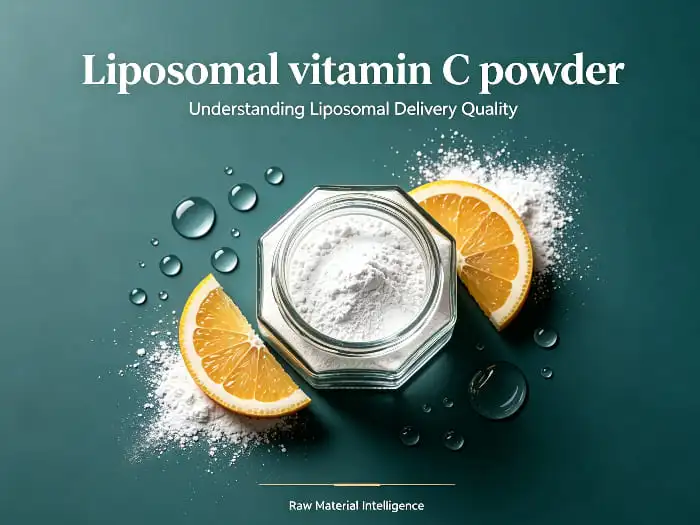
Understanding Liposomal Vitamin C Powder and Its Market Demand
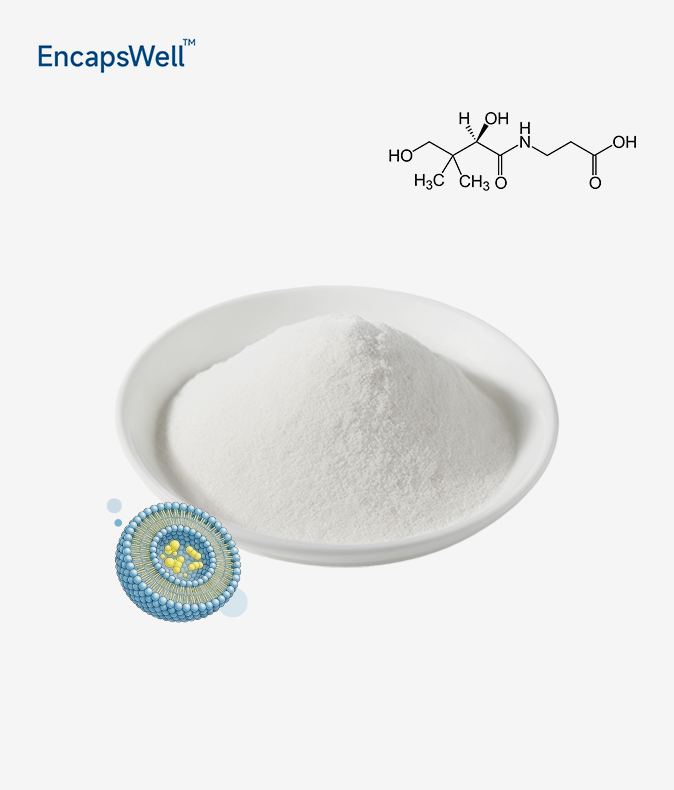
Liposomal encapsulation is at the head of this evolution in the nutraceutical business, which has seen a huge rise in the number of advanced delivery methods. Liposomal vitamin C powder technology wraps vitamin C molecules in very small lipid bilayers, which are structures that look like the walls of our cells. This is different from regular ascorbic acid, which breaks down quickly in the digestive system. This shell protects the vitamin from stomach acids and enzymes, so it can be delivered straight to cells without any damage.
Demand in the market has gone up in many areas. The immune system is still a major factor, especially since people are more aware of how to stay healthy. Beauty-from-within brands like liposomal vitamin C because it helps make collagen and protects cells from damage. This makes it popular in both the health and cosmetics markets. Manufacturers of functional foods and drinks like liposomal actives that dissolve in water and stay stable in liquid formulas without changing the taste.
Bioavailability isn't the only technical benefit. Higher amounts of regular vitamin C can make your stomach hurt because it has osmotic effects in the intestines. Liposomal vitamin C powder gets around this problem, so bigger doses can be taken without causing digestive issues. Because of this, may support high-dose supplementation in products for recovering from surgery, improving sports performance, and following strict wellness plans.
Why Encapsulation Technology Transforms Vitamin C Performance
Particle sizes can be precisely controlled between 50 and 200 nanometers when EncapsWell™ unique methods are used for nano-encapsulation. This range makes steadiness and cell recognition better. The lipid bilayer, which is made up of cholesterol and high-quality phospholipids from sunflower or soy lecithin, forms a structure that cells can easily accept. When liposomes come in touch with intestinal epithelial cells, the membranes fuse. This may facilitate cellular uptake instead of using active transport systems that get full fast.
A third-party HPLC study shows that our production process keeps the purity of the vitamin C above 99%. The core-shell structure keeps oxidation from happening, which is very important because ascorbic acid breaks down quickly in light, heat, or oxygen. Liposomal powders that are properly made keep more than 95% of their power for 24 months when stored in a controlled environment. This is very different from regular powders, which may lose 30% or more of their potency within six months.
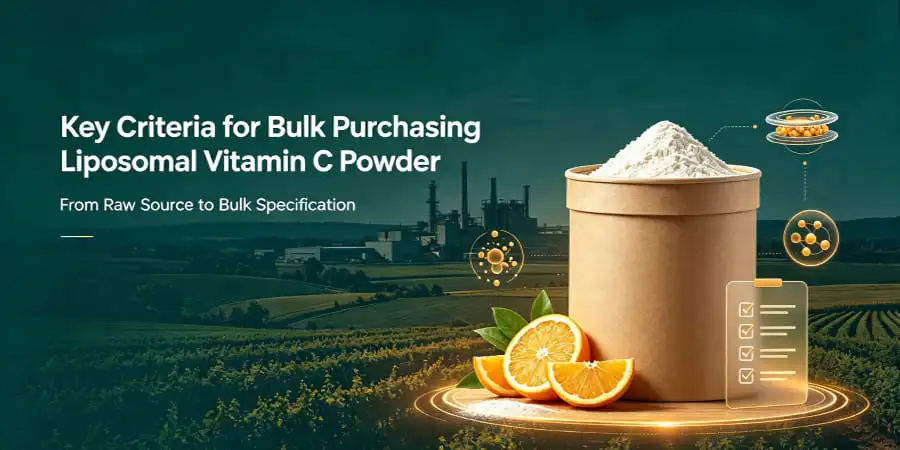
Key Criteria for Bulk Purchasing Liposomal Vitamin C Powder
Choosing what to buy depends on how well the product's specs match up with its intended use. Knowing these factors ahead of time can help you avoid costly delays in reformulating and make sure that all of your target markets follow the rules.
End-Use Application Requirements
For each type of product, the recipe needs to be different. Immunity supplements usually need 500 mg to 1000 mg per dose, with a focus on quickly absorbing the supplement during severe immune difficulties. Vitamin C is often mixed with active ingredients that work well together, like hyaluronic acid or ceramides. To keep ingredients from reacting with each other, compatibility testing is needed. For functional drinks to work, they need versions that dissolve in water, don't change when heated, and stay clear in solution without settling.
Pricing systems are greatly affected by the amount of goods that need to be sold. Contract makers that make more than one private label line may need 500 kg to 1000 kg per quarter, which means they can use tiered price models. New brands that are putting out their first lines of products might start with 50–100 kg trial runs, which is why flexible minimum order numbers are so important. We can handle both situations with flexible production scheduling that strikes a balance between speed and ease of access.
Quality Certifications and Compliance Standards
Compliance with regulations is the key to good bulk buying. Our Wellgreen-certified cGMP manufacturing makes sure that every batch meets strict quality standards, and this rigorous approach extends to every product we produce, including our liposomal vitamin C powder. The ISO 9001 certification shows that quality management is done in a planned way, and the ISO 22000 and HACCP certifications focus on food safety management. This is very important for brands that want to sell in stores, where customers are becoming more interested in how the products are made.
Verification by a third party gives our claims unbiased support. Each batch is checked for the following:
- Purity Analysis: Making sure the vitamin C level is at least 99% using approved HPLC methods
- Microbial Testing: Making sure that international standards are met for yeast, mold, pathogens, and overall plate counts
- Heavy Metal Screening: Making sure that the amounts of lead, arsenic, cadmium, and mercury are within the standards set by the FDA and the EU
- Encapsulation Efficiency: Bioavailability claims must be backed up by measurements of liposomal trapping rates.
Specialty certificates, on top of basic licenses, let you get into niche markets. Getting certified as Halal or Kosher lets you sell your food in religious stores and serve food in public places. Non-GMO Project Verification and vegan approvals are appealing to customers who care about clean labels and look closely at where ingredients come from. We keep a lot of paperwork to back up these claims, like supplier documents for lecithin sources and specs for processing aids.
Pricing Frameworks and Logistics Considerations
Supplier ties are built on trust when price structures are clear. Our prices are based on what the product is really worth, not on a race to the bottom that lowers quality. Volume prices take into account the economies of scale we achieve by making more of something, which lets partners save money directly. Usually, the MOQ starts at 25 kg for testing purposes and goes up to 100 kg for business launches. When commitments of 500 kg or more are made, preferential price kicks in.
Shipping operations need to be carefully coordinated, especially for buyers from other countries. We offer flexible Incoterms, such as FOB, CIF, or DDP, so you can control freight costs or hand off shipping management, depending on how your business works best. Our warehouse in San Diego has US-based goods that can be sent out quickly. Stocked items usually ship within 3–5 business days. This localized method gets rid of long shipping times over seas and makes it easier for buyers in the United States to clear customs.
The different types of packaging protect the goods while also making it easy to handle. Standard sizes include 1 kg, 5 kg, and 25 kg aluminum foil bags that are flushed with nitrogen to keep them from oxidizing. Bulk drums can hold bigger packages and keep the powder's purity. We can also name your package for white-label deals, which cuts down on the time it takes to get your product to market.
Comparing Bulk Purchase Options: Powder vs. Other Formats
Format choice has a big effect on how flexible manufacturing is and how the finished product is positioned. While pills and liquids are useful for certain things, liposomal vitamin C powder forms are the most flexible way for brands to manage their wide range of products.
Powder Format Advantages
Powder shapes allow for the most flexible formulations. R&D teams can carefully control dosing, make custom blends with multiple active ingredients, and adapt to different delivery methods, such as stick packs, effervescent pills, and ready-to-mix beverage mixes. When kept properly, liposomal powder has a longer shelf life of 24 months or more, which lowers inventory risk compared to pre-filled liquids that may need to be refrigerated and have shorter expiry dates.
At scale, cost saving is especially clear. Making powder gets rid of the costs of work and materials that are needed to fill capsules. Shipping weights are lower, which means freight costs are much lower—a 100 kg package of powder takes up a lot less room than the same number of finished capsules. These saves add up over the course of a year's worth of purchases, which boosts margins without lowering quality.
Powder does better in difficult storage conditions when it has a higher stability profile. When you buy liquids in tropical markets with lots of humidity and changing temperatures, you run the risk of them separating or microbes growing. Powder is chemically stable over a wider range of temperatures, which makes it easier to ship and lessens the amount of product that is lost to environmental damage.
When to Consider Capsules or Liquids
Capsules are good for brands that want to make things easy for customers and give accurate doses for a single use. Wellness consumers who are always on the go will like ready-to-consume forms because they don't require mixing. Dosage options are limited by capsule forms, though. For example, if feedback from the market says that the dose should be changed from 500 mg to 750 mg per serve, reformulation would need new capsule sizes and tooling changes.
Liquid-ready formulations help producers who don't have the right tools to handle powder or who want turnkey solutions. Liposomal vitamin C that is already suspended in glycerin or propylene glycol bases is easy to add to lines that make drinks. The trade-off is less security on the shelf and usually higher costs per unit. When it comes to preservative methods and germ control, liquids are also looked at more closely by regulators.
Organic vs. Standard Variants
When choosing between organic and standard lecithin sources, you need to think about how hard the approval process is and how much it costs. For organic certificates (NOP, EOS), detailed supply chain paperwork is needed, which drives up the cost of raw materials by 30 to 50 percent. This investment may be worth it for brands that are aimed at natural goods stores or that charge high prices. Standard non-GMO versions, which use soy or sunflower lecithin to protect their identity, have a clean label and aren't too expensive because they're organic, so they can be sold in regular stores.
How to Select the Best Bulk Supplier for Liposomal Vitamin C Powder
The success or failure of your procurement plan depends on the relationships you have with your suppliers. Aside from negotiating prices, figuring out who the trusted partners and transactional vendors are by looking at their production skills, quality systems, and ability to work together is also important.
Evaluating Manufacturing Expertise and Capacity
Making liposomes needs special skills that generic contract makers might not have. Our R&D team is led by a PhD and has a lot of experience with phospholipid chemistry and nano-encapsulation engineering. This has real-world benefits, such as helping to solve formulation problems, making encapsulation work better for your active ingredients, and giving you stable data to back up your regulatory files.
Your growing path should match up with your production ability. Our Wellgreen plant has a yearly capacity of 100+ metric tons, which can meet the needs of both established brands that need to restock and new businesses that need to grow. Quality that stays the same from batch to batch comes from processes that have been tested and documented key control points. For example, the particle size distribution stays within ±5% of the same across production runs, so you can be sure that your finished goods give customers the same experience every time.
Verification Through Third-Party Testing and Transparency
Asking for Certificates of Analysis (CoA) for more than one batch shows that the quality stays the same over time. Look for tests kits that cover identity, purity, potency, and contaminants in a thorough way. We give you full testing records that include approvals for raw materials, controls during production, and standards for the end product.
Customer recommendations give you straight information. Talking to present clients, especially those in your target market, can help you understand practical facts like how reliable order fulfillment is, how responsive technical support is, and how problems are solved. For a specialized product like liposomal vitamin C, where formulation stability and bioavailability are critical, speaking with existing users is the best way to verify our real-world performance.Potential partners are encouraged to get in touch with our current users, who can vouch for the quality of our service.
Sample review is still the most telling way to test something. Ask for 100–500g samples to test in the lab and try out different formulations on a small scale. This hands-on test makes sure that it works with your other items, checks how well it dissolves, and lets you test its taste. Samples are sent out quickly from our center in San Diego, which helps speed up the development process.
Negotiating Terms That Protect Both Parties
Negotiations that go well combine business needs with the facts of the situation. Talks about prices should take into account promises to buy a certain amount, payment terms, and the length of the deal. Prices stay stable with annual deals and quarterly buy orders, but demand can change. We make deals that focus on working together instead of competing with each other because your success is what drives our growth.
Coordinating logistics should be written down clearly. Set separate wait times for stock things (usually two to three weeks) and custom formulations (four to six weeks). Set up rules for quality conflicts, such as when to repeat and when to settle the dispute. By assigning specialized account managers and expert contacts, you can make sure that there are clear lines of communication that don't get in the way of production plans.
After-sales service is what sets some providers apart from others. We offer ongoing support as your goods go through creation, review by regulators, and launch on the market. Our applications team quickly answers technical questions about how to store, handle, or change the recipe. This way of working together is based on the idea that your success proves the quality of our ingredients and builds strong long-term relationships.
Optimizing the Use of Bulk Liposomal Vitamin C Powder in Product Development
Making strategic choices about formulation will help your products work better and put them in a liposomal vitamin C powder competitive situation. Knowing how to optimize dosage, handle stability, and sell differently can turn good items into market winners.
Dosage Optimization for Target Applications
Immune support products usually have between 500 mg and 1000 mg of vitamin C per dose. They use liposomal absorption to make sure that tissues are saturated without megadosing. This range helps the immune system in a meaningful way during winter difficulties while still being easy to use every day. Acute-use guidelines might suggest 1000–2000 mg for 5–7 days when the illness starts, then switching to 500 mg every day.
For skin health purposes, steady modest dosing is better than random high amounts. To make collagen, vitamin C needs to be available all the time. This means that daily amounts of 250 to 500 mg are perfect for beauty-from-within goods. When you mix vitamin C with nutrients that work well together, like zinc, biotin, or marine collagen peptides, you get special products that work better.
Antioxidant-rich vitamins C are used in exercise healing goods to fight oxidative stress caused by hard training. Electrolytes and amino acids are often found in post-workout formulas, along with 500 to 750 mg of vitamin C. Because liposomal delivery works quickly, it fits perfectly with the short time you have to recover after working out. This makes your product stand out from other recovery drinks.
Formulation Stability and Shelf-Life Management
To keep the strength throughout the shelf life, you need to know how things break down. Oxygen, light, heat, and metal ions can all break down vitamin C. Liposome wrapping is the main way to protect things, but choices about secondary packing are also very important. Standard HDPE containers aren't as stable as aluminum foil laminate bags with oxygen filters. During filling, nitrogen flushing moves air out of the way, which protects the goods even more.
Our storage recommendations for liposomal vitamin C strike a mix between ease of use and potency maintenance, particularly given its sensitive lipid encapsulation. We suggest storing things below 25°C in places with low humidity. Putting it in the fridge isn't required, but it may make it last longer than 24 months. Teaching your customers the right way to store things—like quickly sealing packages and keeping them out of direct sunlight—will make sure that your goods work as intended for as long as they are manufactured.
Accelerated stable tests can predict how something will behave over time when it is stored normally. We do tests at 40°C/75% RH for three months to figure out how fast things break down in normal settings. This information helps with expiration dates and gives you trust in the temperature changes in your supply chain during marketing.
Marketing Differentiation Through Liposomal Technology
Educating consumers turns technology benefits into interesting marketing stories. When you tell knowledgeable buyers how liposomal encapsulation fixes common vitamin C problems like poor absorption, stomach pain, and a short plasma half-life, you build trust. Graphics that show the structure of liposomes and how they carry drugs to cells make complicated science easier to understand.
Use of clinical wording supports marketing as a premium item. Claims like "clinically validated bioavailability," "pharmaceutical-grade encapsulation," and "third-party tested purity" are appealing to picky shoppers who are looking into the quality of ingredients. Audiences that are skeptical will trust you more if you are open about things like posting CoA summaries, explaining sourcing choices, and showing how tests were done.
Positioning with multiple functions increases market value. Vitamin C helps the immune system work, makes collagen, helps the body absorb iron, and protects against free radicals. Products that focus on more than one benefit appeal to a wider range of customers and cost more than products that focus on just one benefit. When you mix ingredients that work well together, you get "complete systems" instead of just supplements, which makes the product seem more valuable.
Conclusion
Buying liposomal vitamin C powder in bulk is a smart way to improve product performance and set your business apart from competitors. The technology's proven bioavailability benefits, along with strict testing and production standards, put your recipes in a good position to succeed in the immune health, beauty-from-within, and functional nutrition markets. Your supply chain should support your growth goals, not get in the way of them, if you choose sellers based on their manufacturing knowledge, open quality systems, and willingness to work together. Whether you are making your first liposomal product or expanding an established line, the things listed here will help you make choices about procurement that are both cost-effective and meet the highest quality standards.
FAQ
1. What minimum order quantities should I expect when purchasing bulk liposomal vitamin C powder?
MOQs are different for each seller and customer. For initial samples, standard formulas usually start at 25–50 kg. This lets brands test the market without taking on too much inventory risk. For commercial production, contracts of 100 to 500 kg are common, which is when volume price starts to look better. For setup costs to be worth it, bigger initial orders (250 kg or more) may be needed for custom formulas or special certifications. At EmerWell, we keep our MOQs open because we know that new brands need to be able to get our products easily, while established manufacturers need a steady supply of big quantities.
2. How can I verify the quality and authenticity of bulk suppliers?
Ask for full proof, such as up-to-date cGMP certifications, ISO approvals, and third-party COAs for recent runs. Independent testing of samples should be done by qualified labs to confirm statements about potency, purity, and encapsulation efficiency. Ask current customers for examples, focused on how consistent the quality is and how reliable the service is. When you can, go to factories to see how they make things and how they handle quality control in person. Reliable providers accept openness and make it easy to track everything from the raw materials to the finished goods.
Partner with EmerWell: Your Trusted Liposomal Vitamin C Powder Supplier
EmerWell makes high-performance liposomal products for brands that need better bioavailability and production dependability. Our EncapsWell™ platform improves absorption 8 times more, which has been scientifically proven and is backed by cGMP approval and thorough quality testing. As Wellgreen's key partner in the US, we offer cutting-edge biotechnology and flexible production options that can handle anything from 25 kg test runs to multi-ton yearly agreements. Our team in San Diego offers regional technical help, quick sample delivery, and expert guidance through the process of developing new formulations and getting ready for regulatory submissions. Email us at info@emerwell-bio.com to talk about your needs for bulk liposomal vitamin C powder and find out how our OEM/ODM services can help you get your product to market faster.
References
1. Carr, A.C. & Maggini, S. (2017). "Vitamin C and Immune Function," Nutrients, 9(11), 1211.
2. Davis, J.L., Paris, H.L., Beals, J.W., et al. (2016). "Liposomal-encapsulated Ascorbic Acid: Influence on Vitamin C Bioavailability and Capacity to Protect Against Ischemia-Reperfusion Injury," Nutrition and Metabolic Insights, 9, 25-30.
3. Pullar, J.M., Carr, A.C., & Vissers, M.C.M. (2017). "The Roles of Vitamin C in Skin Health," Nutrients, 9(8), 866.
4. Caritá, A.C., Fonseca-Santos, B., Shultz, J.D., et al. (2020). "Vitamin C: One Compound, Several Uses. Advances for Delivery, Efficiency and Stability," Nanomedicine: Nanotechnology, Biology and Medicine, 24, 102117.
5. Lykkesfeldt, J. & Tveden-Nyborg, P. (2019). "The Pharmacokinetics of Vitamin C," Nutrients, 11(10), 2412.
6. Łukawski, M., Dałek, P., Borowik, T., et al. (2020). "New Oral Liposomal Vitamin C Formulation: Properties and Bioavailability," Journal of Liposome Research, 30(3), 227-234.
Online Message
YOU MAY LIKE
High quality furniture manufacturer
_1776234266736.webp)