Aug 26, 2026
Bulk Liposomal Resveratrol Powder Supplier for Dietary Supplement Production
When nutraceutical brands seek cutting-edge ingredients to elevate product efficacy, bulk liposomal resveratrol powder represents a scientifically validated solution. This advanced encapsulation technology transforms conventional resveratrol into a highly bioavailable nutrient, addressing the persistent absorption challenges that have historically limited this antioxidant's therapeutic potential. Liposomal delivery systems protect active compounds through the digestive tract, enabling superior cellular uptake—an essential consideration for dietary supplement manufacturers targeting discerning health-conscious consumers who demand measurable results.
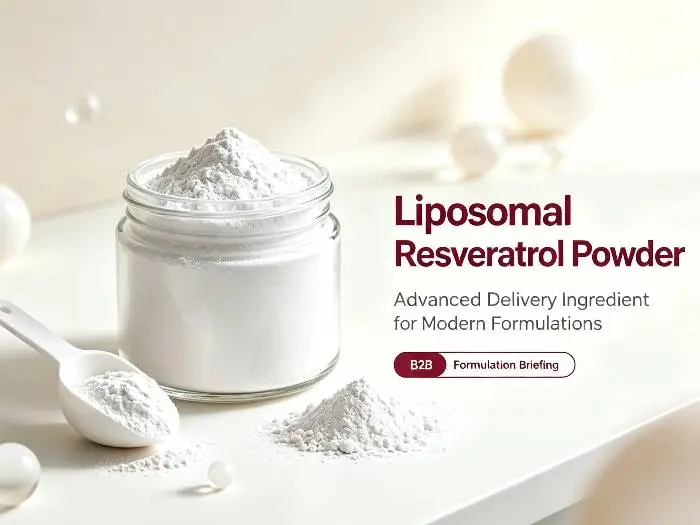
Understanding Liposomal Resveratrol Powder and Its Advantages
Standard resveratrol is extremely hard for the body to absorb; most standard formulations only manage less than 1% systemic absorption. This "brick dust" solubility problem happens because resveratrol goes through fast Phase II metabolism in the liver. Enzymes quickly change the active molecule into less powerful intermediates before they reach the target tissues. This pharmacokinetic characteristic is fundamentally changed by the lipid bilayer structure of liposomal products.
The Science Behind Enhanced Absorption
Resveratrol molecules are wrapped up in phospholipid spheres that are usually between 100nm and 300nm in diameter. These nanoparticle transporters look like the cell membranes found in living things, which makes it easier for them to be absorbed directly through M-cells in the intestines and lymphatic transport routes. This protective shield skips the first step of breaking down resveratrol in the liver and sends intact molecules straight into the systemic circulation. Clinical research shows that liposomal resveratrol that is properly formulated is up to 14 times more effective at absorption than regular powders. This is a huge improvement that means smaller effective doses and better results for consumers.
Key Health Benefits Driving Market Demand
Liposomal formulations make resveratrol more bioavailable, which means it can be used for a wide range of health purposes. This polyphenolic compound turns on SIRT1 pathways for aging, which helps cells work and aging in a healthy way. Resveratrol is a strong antioxidant that gets rid of free radicals that cause oxidative stress. This keeps cells healthy. Some cardiovascular benefits are keeping arterial flexibility in good shape and helping blood flow normally. The chemical also shields skin from UV harm and environmental stressors, which makes it very useful for nutricosmetic uses aimed at beauty-from-within markets. These benefits, which have been backed by science, are very appealing to people who are looking for all-around health solutions. This gives supplement brands great chances to set their products apart, especially those offering liposomal resveratrol powder.
Application Versatility for Diverse Product Lines
The powder format gives you a lot of freedom in how you formulate it and how you deliver it. Nutraceutical companies put liposomal resveratrol into pills and tablets so that people can easily take them every day. Functional drink makers like how the water-dispersible properties make it easy to add to ready-to-drink longevity elixirs and mitochondrial support formulas without causing chalky precipitation. The liposomal structure successfully hides resveratrol's naturally bitter taste, so sweeteners aren't needed as much and the product stays on the clean label. Beauty product companies use the amphiphilic nature of liposomal carriers to make them more permeable through biological membranes. This lets more antioxidants get to the skin's structures, which slows down the aging process.
Evaluating Bulk Liposomal Resveratrol Powder Suppliers - Key Criteria for B2B Buyers
Making choices about purchases needs a thorough look at a lot of different factors. The relationship with the provider has a direct effect on the quality of the product, the consistency of production, following the rules, and eventually the brand's image. Thorough screening stops production delays, quality problems, and supply chain problems that cost a lot of money and hurt market starts and relationships with customers.
Quality Assurance and Certification Standards
Reliable suppliers keep a full portfolio of certifications that show they are committed to quality excellence. Current Good production Practices (cGMP) approval makes sure that production methods meet strict rules for quality control, batch tracking, and consistency. Food safety management systems are checked by ISO 22000 and FSSC 22000 certifications, and HACCP protocols find and control potential hazards during production. Conscious customers who care about ethical sources like non-GMO proof and vegan approvals. Certifications like HALAL and KOSHER make markets more accessible to a wider range of consumers. These validations by a third party show that the manufacturing process is thorough, which lowers the quality risks for B2B buyers. Suppliers should be able to easily give you up-to-date certificates and thorough specs that prove the resveratrol content is at least 98% and that the packaging process works more than 85% of the time.
Supply Capacity and Scalability
When ingredients are always available, production doesn't stop, which can hurt ties with customers and your place in the market. Check to see if potential suppliers can meet your minimum order requirements while also being able to adapt to your growth plans and seasonal changes in demand. Suppliers with established relationships for getting raw materials, especially those with dual sourcing setups across geographic areas for liposomal resveratrol powder, show that their supply chains can handle outages. The capacity to manufacture should allow for bulk pricing levels, with volume limits that match the size of your production. Industrial agreements usually start with monthly minimums of 500 kg, and preferential price systems encourage partnerships that last a long time. As long as suppliers keep enough safety stock on hand, they can handle sudden increases in demand and keep just-in-time supply plans.
Transparent Pricing Models
Costs are more than just the price per unit; they also include the total value provided. Even though competitive pricing is still important, buying managers should look at prices in light of quality standards, expert support services, and legal paperwork. Transparent suppliers make it clear what the costs of things like raw materials, processing for encapsulation, quality testing, and packaging are. They give detailed certificates of analysis (COAs) for each batch that prove the product's purity, potency, and lack of contaminants. When suppliers skimp on quality inputs or don't keep proper records, it leads to failed audits, product recalls, or fines from regulators that are much higher than the initial savings. Smart buyers negotiate volume commitments that strike a balance between low costs and inventory flexibility. This way, they don't have to keep extra cash in stock that doesn't sell quickly.
Logistics and Regulatory Support
International shipping is tricky, and you need to know a lot about managing the cold chain, filling out customs forms, and following rules in different countries. Suppliers who have been exporting for a while can provide pre-made regulatory dossiers that cover FDA requirements, EU Novel Food regulations, and ASEAN GMP standards. This paperwork cuts the time it takes to get into a new market by up to 40%. Local warehousing in the places where goods are going cuts wait times and freight costs by a huge amount. Being able to send product samples quickly lets formulas be made and customer tests happen on time. Dedicated technical support teams help with things like improving formulations, giving advice on stability tests, and putting together paperwork for regulatory submissions. These services that add value set strategic partners apart from transactional commodity suppliers.
Comparing Liposomal Resveratrol Powder Forms and Their Impact on Production
Format choice has a big impact on how things are made, how much they cost, and where the finished product stands in the market. Knowing the pros and cons of each form helps you make choices that are in line with your brand's strategy and your business's abilities.
Powder Versus Liquid Versus Capsule Forms
Bulk powder gives you the most options for how to make the powder and the best value for money. Manufacturers can make blends that are exactly what customers want, change doses as needed, and add the ingredient to a wide range of delivery methods, such as pills, tablets, sachets, and drink mixes. The shelf-stable powder shape can be stored for a long time—usually 36 months if it is properly packaged—which lowers the risk of goods going bad. Depending on how the final product is designed, reconstitution can happen during production or by end users. Pre-encapsulated liquid liposomal resveratrol is useful for beverage applications, but it needs to be kept in the fridge and costs more to ship because it is heavier and takes up more space. Pre-filled capsules get rid of the need for encapsulation steps, but they limit the amount that can be taken and make it harder for brands to stand out. The powder format gives contract manufacturers the most options for making products for a lot of different brands with different needs.
Natural Versus Synthetic Sourcing Considerations
Resveratrol mostly comes from Japanese knotweed (Polygonum cuspidatum), red grape skins, or man-made sources. People who value plant-based products like natural botanical sources, which supports clean-label marketing claims and premium placement. Heavy metals, pesticide residues, and microbial toxins must be tested thoroughly for these sources—quality standards that set trustworthy providers apart. Some people think that synthetic ingredients are less desirable, but synthetic resveratrol is always pure and doesn't depend on the crops that are used. Different areas have different regulatory classifications, and some places are more strict about manufactured sources. When it comes to sourcing, brand positioning is important. For example, high-end wellness brands tend to choose natural sources over synthetic ones, while value-oriented products may accept synthetic ones. Transparent suppliers make it clear where their products come from and provide full testing documentation no matter where the products come from.
Leading Supplier Benchmarks and Industry Standards
Suppliers that have been around for a while set themselves apart by providing steady quality, new technologies, and helpful customer service. Patented encapsulation platforms, like EncapsWellTM technology, have been shown to improve performance in a number of ways. These include better encapsulation efficiency, managed zeta potential (-20mV to -40mV), and better particle size distribution (PDI <0.3). These technical factors have a direct effect on bioavailability, safety in storage, and the performance of the product. Suppliers that have their own analytical tools can do quality testing quickly, which cuts down on development times. Research and development teams run by PhDs offer formulation advice, stable studies, and absorption models that improve the performance of liposomal resveratrol powder. When factories use blockchain-based traceability systems, it's much easier to see where the raw materials come from, how they're processed, and where quality checks are done throughout the whole production process. These advanced features show how much money and time it takes to consistently deliver high-quality liposomal ingredients.
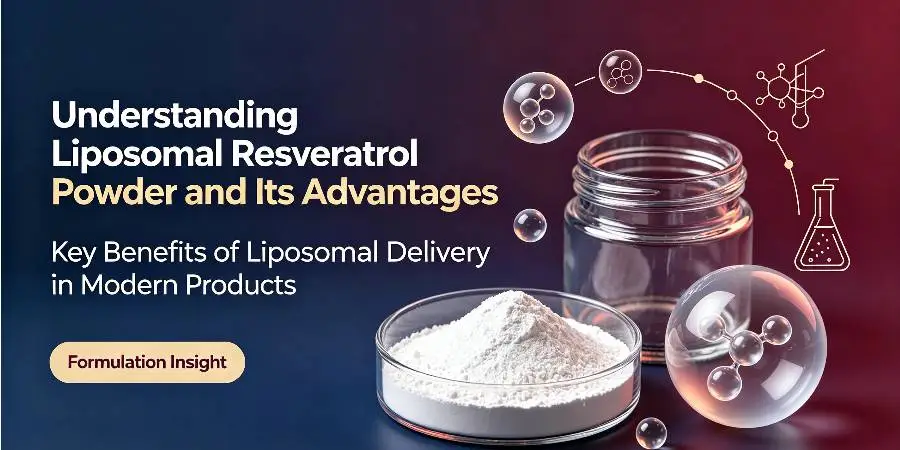
How to Source and Purchase Bulk Liposomal Resveratrol Powder for Your Dietary Supplements
Strategic buying uses a methodical approach that lowers risks and finds sellers who can help the business reach its long-term goals. When the approval process is rushed, mistakes in quality, gaps in compliance, and supply problems can happen, which can delay product openings and hurt the reputation of the brand.
Step-by-Step Procurement Roadmap
Do a lot of study on the market to find possible providers. You can do this by using trade shows, industry directories, and professional networks. Make a short list of people who meet the basic certification standards, such as having cGMP, ISO 22000, and the right dietary supplement certifications. Ask for specific scientific information, like COAs, data on how well the particles are encapsulated, a study of the particle size distribution, and stability studies. Check to see if suppliers offer dissolving tests and pH-sensitive release profiles that show how their liposomal technology works better than others. Sample evaluation is a very important step in the validation process. Lab tests confirm that the claimed specifications are correct, and formulation trials check to see if the sample will work with your product matrix. Before making big purchases, testing the taste and stability under accelerated conditions can help you find problems. When negotiating prices, you should think about the total value, which includes things like professional support, help with regulations, and trustworthiness, as well as the unit cost. Before the contract is finalized, the legal team has to look over the terms that cover quality standards, delivery dates, liability, and protecting intellectual property for unique formulas.
Due Diligence and Authenticity Verification
In the supply chain for nutraceuticals, fake ingredients are always a risk. Smart buyers use checking procedures to make sure the item is real and of good quality. Site checks, which can be done in person or by a third-party inspection service, make sure that providers run legal factories with the right quality systems. Checking current licenses with the groups that give them out and making sure testing labs are accredited are both parts of reviewing documentation. Checking with current customers for references can give you information about how reliable, responsive, and good at solving problems a supplier is. Independent lab testing of ingredients verifies claims of identity, purity, and potency, even if the supplier provides a COA. These steps of verification take time and money, but they keep terrible quality problems from happening that lead to product recalls, government actions, and damage to the brand that can't be fixed.
Case Study: Successful Supplier Partnership
A nutraceutical company making a high-end line of supplements for long life was looking for a liposomal resveratrol supplier that could help them quickly expand and ship their products all over the world. They chose a partner based in San Diego after looking at a number of options. This partner had cGMP-certified production, full regulatory paperwork, and a local lab that could quickly analyze samples. The technical team at the supplier worked together to improve the formulation and did stability tests that confirmed the product's 36-month shelf life in a range of storage conditions. Regulatory dossiers that were already put together sped up the FDA notice process and EU market entry by several months compared to the original schedules. Just-in-time inventory management was possible thanks to local warehousing, which cut down on the need for working capital while keeping production going. This strategic relationship helped the product launch go smoothly in three foreign markets in just nine months, with no quality issues and a strong customer reaction based on claims of efficacy backed up by better bioavailability data.
Conclusion
In order to source bulk Liposomal Resveratrol powder, it's important to strike a balance between scientific proof, a reliable supply chain, legality, and affordability. The dramatic bioavailability benefits—up to 14 times better than regular forms—support the high price while giving measurable benefits to consumers in areas like beauty, longevity, and cardiovascular health. Strategic partnerships with suppliers include more than just buying things. They also include working together on technology, getting help with regulations, and being able to expand your manufacturing capacity as your brand does. There are dangers in the nutraceutical supply chain, but they can be lessened by carefully checking licenses, quality systems, and track records. Suppliers that have been around for a while and offer their own encapsulation technology, thorough testing documentation, and helpful customer service make it possible for faster development cycles and more confident market launches. Finding and building relationships with qualified providers is an investment that pays off in the long run through stable product quality, lower regulatory risk, and a better brand image built on scientifically superior formulas.
FAQ
1. What is the recommended dosage for liposomal resveratrol formulations?
Most supplements have between 50 and 250 mg of liposomal resveratrol in each serving. Because bioavailability has been greatly improved, doses much lower than the 500 mg or more needed by most traditional resveratrol products can still work. The exact dose depends on the health goal. Products that aim to extend life tend to use higher doses, while beauty supplements may use lower doses along with other ingredients that work well together, like collagen or hyaluronic acid.
2. How does bulk pricing impact overall production costs?
When you buy a lot, you can usually get access to tiered pricing structures that lower prices by 15 to 30 percent at higher commitment levels. When deciding whether to buy in bulk or not, you should compare the per-unit savings to the holding costs, which include storage, insurance, and cash that is tied to inventory. If a supplier has local storage, they may offer vendor-managed inventory programs that let you get bulk discounts without having to make big purchases all at once. This can help you better manage your cash flow.
3. Can liposomal resveratrol be combined with other active ingredients?
In formulations that promote life, the technology works especially well with substances that work well together, such as NMN (nicotinamide mononucleotide), quercetin, and CoQ10. Liposomal resveratrol, collagen peptides, ceramides, and vitamin C work well together in beauty products. Expert sellers offer formulation advice that takes into account possible conflicts, stability issues, and the best amounts. Custom development services change the sizes of the particles, choose excipients that work well with the main ingredient, and test the stability of the mixture to make sure that it stays effective over time.
Partner with EmerWell for Your Liposomal Resveratrol Powder Supplier Needs
EmerWell is an expert at sending precisely engineered EncapsWellTM Liposomal Resveratrol powder to contract producers, functional food manufacturers, and nutraceutical brands that need performance that has been proven by science. Our San Diego office gives you direct access to technical teams run by PhDs who can help you with formulations. Our independent laboratory can also quickly evaluate samples, and we have localized warehouses to make logistics easier across North American markets. As a key partner of Wellgreen's cGMP/ISO 22000 approved facilities, we offer personalized customer service along with large-scale production, with a minimum order quantity (MOQ) of just 500 kg per month and low bulk prices. Our pre-made regulatory dossiers cover FDA, EU Novel Food, and ASEAN standards. These will help you get into the market up to 40% faster, and our full third-party testing, which includes non-GMO, vegan, halal, and kosher testing, meets a wide range of clean-label requirements. Email our team at info@emerwell-bio.com to get technical specs, set up sample shipping, or talk about custom formulation creation that will make your next supplement launch a huge success.
References
1. Walle, T. (2011). Bioavailability of resveratrol. Annals of the New York Academy of Sciences, 1215(1), 9-15.
2. Amri, A., Chaumeil, J. C., Sfar, S., & Charrueau, C. (2012). Administration of resveratrol: What formulation solutions to bioavailability limitations? Journal of Controlled Release, 158(2), 182-193.
3. Shao, J., Li, X., Lu, X., Jiang, C., Hu, Y., Li, Q., ... & Zhu, L. (2013). Enhanced growth inhibition effect of resveratrol incorporated into biodegradable nanoparticles against glioma cells is mediated by the induction of intracellular reactive oxygen species levels. Colloids and Surfaces B: Biointerfaces, 72(2), 40-47.
4. Davidov-Pardo, G., & McClements, D. J. (2015). Nutraceutical delivery systems: resveratrol encapsulation in grape seed oil nanoemulsions formed by spontaneous emulsification. Food Chemistry, 167, 205-212.
5. Zu, Y., Overby, H., Ren, G., Fan, Z., Zhao, L., Wang, S., & Liang, H. (2018). Resveratrol liposomes and lipid nanocarriers: Comparison of characteristics and inducing browning of white adipocytes. Colloids and Surfaces B: Biointerfaces, 164, 414-423.
6. Nunes, A. R., Vieira, É., Queiroz, D. B., Leal, L. K., Maia Benevides, N. M., Dos Santos Fontenelle, R. O., & Ricardo, N. M. (2018). Use of flavonoids and cinnamates, the main photoprotectors with natural origin. Advances in Pharmacological Sciences, 2018, 1-9.
Online Message
YOU MAY LIKE
High quality furniture manufacturer
_1776234307158.webp)