Aug 11, 2026
All You Need to Know About Liposomal glutathione
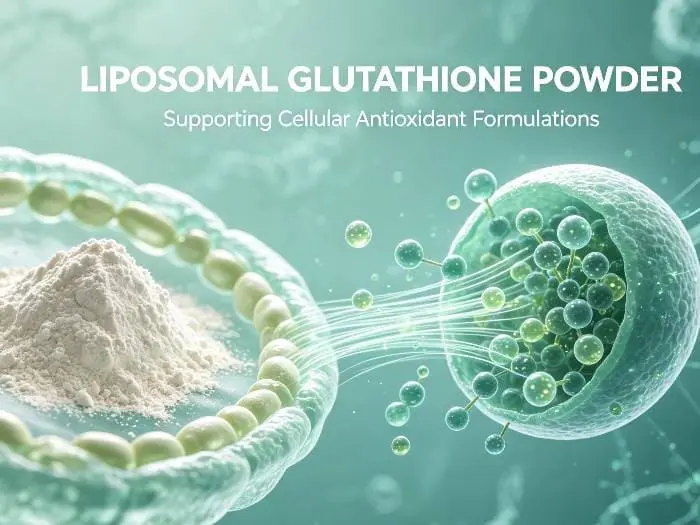
When exploring glutathione supplementation solutions, liposomal glutathione powder stands out as a transformative advancement in bioavailable delivery systems. This phospholipid-encapsulated format shields the delicate tripeptide from gastrointestinal degradation, delivering up to 13 times enhanced absorption compared to conventional formulations. With a proven track record in nutraceutical innovation and clean-label demand rising across North American markets, this technology addresses the critical challenge that has long plagued product developers: getting glutathione intact to where it matters most—inside your customers' cells.
Introduction
There has been a huge change in how antioxidants are delivered in the supplement industry. Glutathione, which is sometimes called the "master antioxidant" of the body, is essential for cleaning out cells, protecting the immune system, and slowing down the aging process. Traditional oral glutathione forms, on the other hand, are not well absorbed by the body, which limits their usefulness for both business and health.
The whole picture changes with liposome technology. These nano-sized phospholipid carriers move glutathione through harsh digestive environments, making sure it gets to target tissues intact. They do this by mimicking the structure of cell membranes. This big step forward has caught the attention of buying professionals, R&D managers, and OEM partners who want to use high-performance ingredients that have been proven scientifically to make their products stand out.
Our simple goal is to give your team the technical knowledge, quality standards, and sourcing strategies they need to confidently choose and include premium Liposomal glutathione powder in their formulas.
What is Liposomal Glutathione Powder?
The Science Behind Liposomal Encapsulation
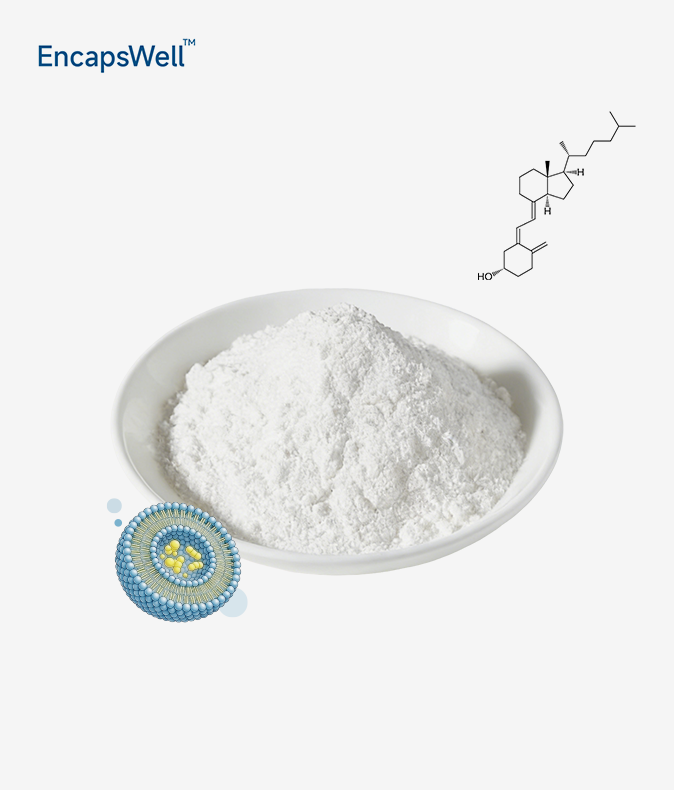
Reduced glutathione (GSH) is a biologically active tripeptide made up of cysteine, glutamic acid, and glycine. Liposomal glutathione powder combines GSH with a phospholipid bilayer delivery system. These very small bubble-like structures, which are usually between 50 and 200 nanometers across, protect the glutathione molecule with a shell that looks like the membranes of human cells.
Advanced methods, like microfluidics or high-pressure homogenization, are used in the encapsulation process to make sure that the particles are all the same size and that the encapsulation works well. This new structure fixes an absorption issue that has been around for a long time: glutathione is easily broken down by enzymes in the stomach and small intestine.
Why Bioavailability Matters for Your Formulations
Standard glutathione pills have absorption rates below 20%, which means that a lot of the active ingredient is lost before it gets to the bloodstream. Liposomal distribution gets around this problem by improving the permeability of the intestines and the lymphatic transport routes. Clinical testing shows that encapsulated powder is 13 times better at absorption than unencapsulated powder. This means that lower doses are needed to get the same results for consumers.
This increase in speed has a direct effect on how you create new products. Formulations need less raw material per serve, which lowers the cost-per-dose while making claims of greater effectiveness stronger. This gives companies a competitive edge when they are trying to attract health-conscious customers and professionals.
Applications Across Product Categories
Liposomal glutathione powder can be used in a number of different market segments:
Functional beverages benefit from formulations that dissolve in water and stay steady in acidic pH settings because they don't clump or separate. Beauty-from-within brands leverage its known ability to control melanin and keep collagen healthy for nutricosmetic uses. Medical nutrition companies incorporate it in specific protocols to help the liver work better and deal with oxidative stress.
Tablet and capsule makers like how the powder can be compressed and works with common excipients. OEM partners like how it can be used to make a wide range of products, from packs to tablets that fizz.
Liposomal Glutathione Powder vs. Other Glutathione Forms
Comparative Absorption Analysis
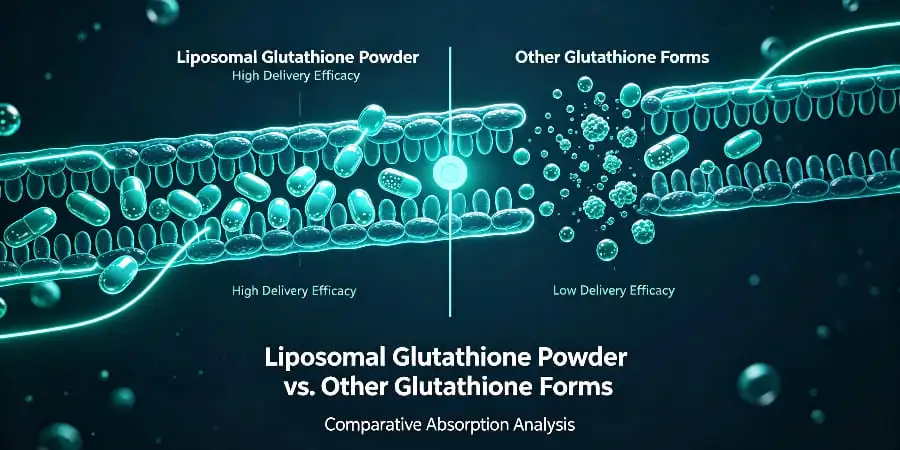
When looking at different ways to deliver glutathione, how well it is absorbed is what matters. Even though traditional reduced glutathione powder is cheap, it breaks down too quickly in stomach acid. Standard capsules and tablets only have a 10–20% systemic bioavailability, which means that bigger amounts are needed, which affects both cost structures and buyer behavior.
N-acetylcysteine (NAC) supplements provide an alternative route by giving the most important building block for the body's own glutathione production. But conversion efficiency changes a lot between people because of genetics and the supply of nutrient cofactors. This makes it hard to predict what will happen, which is bad for product positioning.
Liposomal glutathione powder encapsulation has measured benefits, including maintaining plasma levels for 8 to 12 hours, allowing direct uptake by cells through membrane fusion, and protecting the reduced thiol group that is needed for antioxidant action. These traits lead to measurable clinical endpoints that support marketing claims and keep customers coming back.
Formulation Versatility and End-User Convenience
Liquid Liposomal glutathione powder supplements are the most popular high-end supplements, but they are hard to ship because they need to be kept cold and have a shorter shelf life. These issues can be solved with powder forms that still keep the liposomal benefits.
Using spray-drying or freeze-drying to turn liposomes into powder keeps the structure of the liposomes intact, as shown by electron imaging and particle size analysis. Because it is stable, it can be stored at room temperature for 24 months without losing much of its effectiveness. This meets the needs of global distribution networks and shopping channels.
It's still easy to reconstitute—end users can mix the powder into drinks or smoothies to get the same sensory experience as liquids without having to rely on the cold chain. Liposomal glutathione powder fits seamlessly into this format, offering enhanced bioavailability while maintaining the same convenience. This ease of use is especially appealing to companies that make functional drinks and subscription box services that target millennials and Gen Z.
Strategic Positioning Against Competitive Ingredients
Instead of competing with other antioxidants, Liposomal glutathione powder works with them. Vitamin C makes it easier for glutathione to change back from its oxidized form (GSSG) to its reduced form (GSH). This makes formulations that work well together and appeal to evidence-based practitioners. Collagen peptides and glutathione work together to fight both the structure and oxidative effects of old skin, giving beauty brands two ways to make money.
Liposomal glutathione powder can be added as a premium upgrade to existing products, attracting customers who are willing to pay more for advanced delivery technologies. This tiered approach maximizes portfolio value while meeting the needs of a wide range of price-sensitive groups.
How to Choose the Best Liposomal Glutathione Powder for Your Business Needs
Critical Quality Parameters
To find a trusted supply partner, you need to carefully look over their technology requirements. HPLC analysis should show that the glutathione content is at least 95% pure. The typical sulfur smell, which is sometimes seen as bad, actually means that there are complete thiol groups present, which are necessary for biological activity. The lack of this smell usually means that something is breaking down or oxidizing.
Another measure that can't be changed is encapsulation efficiency. Third-party confirmation from reputable sources shows that 85–95% of the glutathione was successfully trapped within liposomal structures. Dynamic light scattering (DLS) analysis shows that particle size distribution between 100 and 200 nanometers is best for both absorption and formulation stability.
Zeta potential measurements show that the substance will be stable for a long time; values between -20 and -40 mV show that there is enough electrostatic repulsion to keep the particles from sticking together. Ask for certificates of analysis that are specific to each batch and list these parameters along with heavy metal screening (lead, mercury, and cadmium) that meets FDA and EPA safety standards.
Certification Standards and Regulatory Compliance
To get into global markets, you need a wide range of certifications. Look for suppliers that have been certified by ISO 22000 and FSSC 22000 to show that they know how to run a food safety management system. cGMP approval makes sure that the rules for making things are in line with what regulatory bodies consider to be good practices.
Specialty market certificates let you reach more types of customers. For example, HALAL and KOSHER approvals let you reach faith-based consumer markets. Non-GMO Project proof and vegan certification meet the clean-label standards that drive buying choices in North America and Europe. Proof of allergen control that a product is gluten-, soy-, and dairy-free makes it easier to make the product and put it on the label.
Regulatory navigation before the market separates expert sellers from commodity dealers. Support for FDA DSHEA compliance, EU Novel Food reviews, and ASEAN market-specific paperwork should be part of partnerships. This will shorten the time it takes to get your product to market.
OEM Partnership Considerations
Scalability and flexibility are what set strategic suppliers apart from transactional ones. As your business grows, you'll need partners who can help with pilot runs (10–25 kg) while you work on developing the product and then move up to commercial production numbers (500–2,000 kg per month) without affecting the quality.
Customization options are very useful because they let you change the particle size for specific uses, combine them with active ingredients that work well together, like vitamin C or resveratrol, and use flavor-hiding technologies to make ready-to-mix forms taste better. White-label services should include label creation that is compliant, providing a COA, and helping with packing that fits with your brand's image.
Minimum order quantities (MOQs) need to be thought through carefully. Lower MOQs mean less original capital investment, but they may also mean that production capacity is limited or that batches aren't always available. Check how much risk you are willing to take and how reliable the supplier is by looking at things like how often they deliver on time and how they handle complaints.
Practical Guide on Usage, Dosage, and Safety of Liposomal Glutathione
Dosage Recommendations for Product Development
The amount of glutathione that should be taken every day can range from 250 mg to 1,000 mg, based on the goal. Liposomal glutathione powder allows for flexible dosing across these ranges, making it easy to tailor intake for different needs. Detoxification support protocols usually use 500 to 750 mg every day, and 250 to 500 mg combined with vitamin C works well for brightening the skin. To deal with oxidative stress caused by exercise, athletic recovery formulas may use higher doses up to 1,000 mg.
Liposomal forms make drugs more bioavailable, so they can be used at the lower end of these levels. A 250 mg liposomal serving gives the body the same amount of systemic exposure as 2,000 to 3,000 mg of regular glutathione. This means that capsules can be smaller, there is less need for fillers, and customers are more likely to take them as directed.
To keep plasma levels steady throughout the day, product developers should think about divided dosing strategies, which means giving two smaller doses instead of one large dose. This method works best for functional beverage forms because people like to use them as part of their morning and afternoon habits.
Safety Profile and Quality Controls
In clinical studies, glutathione has shown to be very safe, with side effects being very rare and usually mild. Some people may experience stomach pain when they take more than 1,500 mg per day, but liposomal delivery lowers this risk by making digestion better, which means lower dosage levels are needed.
There aren't many contraindications yet, but they should be listed: people who have known cysteine metabolism problems should talk to their doctors before using. Chemotherapy drugs may interact with glutathione because it might affect the oxidative mechanisms of some cancer treatments. Using the right disclaimers can protect you from liability and show that you are a responsible steward.
Monitoring for rust must be part of quality control methods. The 24-month shelf life claims are still valid as long as the stability is tested regularly under fast conditions (40°C, 75% relative humidity). Powder turning yellow means glutathione is being broken down into GSSG, which makes the product useless. Strict storage requirements (below 25°C, away from light and moisture) and oxygen-barrier packaging keep the product's effectiveness throughout the distribution chain.
Market Performance Validation
Customer reviews and clinical case studies are strong ways to back up how a product is positioned. Practitioners say that results can be seen after 4 to 8 weeks of constant use. Setting realistic goals and expectations lowers the number of returns and bad reviews.
The growing amount of written study on Liposomal glutathione powder supports marketing claims that are based on facts. Studies showing better skin luminosity scores, stronger immune markers, and good safety profiles across a wide range of populations provide the proof that regulatory review processes are asking for more and more. Strategic providers can put your team in touch with these tools, which will help them make claims that are legal and set your brand apart in a crowded market.
Procurement Strategies for Liposomal Glutathione Powder in 2026
Current Market Dynamics and Pricing Trends
With compound annual growth rates exceeding 12% through 2024, the market for liposomal supplement ingredients has grown very quickly. This growth shows that both consumers are learning more about bioavailable science and brands are moving toward more premium marketing strategies.
Depending on order number, certification scope, and customization needs, the cost of pharmaceutical-grade Liposomal glutathione powder currently runs from $180 to $350 per kilogram. Because it has a better L-isomer form and a clean label, fermentation-derived glutathione costs more than synthetic options. However, both meet USP43/EP10 monograph standards when made correctly. To ensure a stable supply chain and consistent quality, partnering with a reliable liposomal glutathione manufacturer is equally critical, as their production processes directly influence batch-to-batch purity and the final price-performance ratio.
Making commitments to buy in bulk can save you a lot of money. When compared to buying on the spot, annual supply deals with quarterly delivery plans usually lead to price drops of 15 to 25 percent. At the same time, they ensure supply continuity, which protects against shortages of raw materials during times of high demand.
Supplier Selection Framework
Geographical factors affect the evaluation of a supplier in more ways than just price. Asia-Pacific makers make most of the raw glutathione, but North American partners have clear benefits, such as easier contact across time zones that work well together, faster sample logistics, localized inventory that cuts down on wait times, and regulatory knowledge that meets FDA standards.
Dual-source strategies protect supply chains from the weaknesses that have been shown by recent global problems. Keeping qualified primary and secondary suppliers on hand costs money up front for validation, but it keeps production from stopping completely when a single source fails.
The ability to audit sets apart intelligent buyers from impulsive buyers. With the help of third-party audit reports and virtual walks of the plant, cGMP compliance, contamination control measures, and documentation systems are checked. Suppliers who are open to openness show quality trust that is worth rewarding with long-term partnerships.
Technology Roadmap and Innovation Adoption
New technologies for liposomes offer even better results. Next-generation formulations look into targeted release mechanisms that respond to changes in pH or specific tissue environments. This could allow organ-specific delivery that boosts effectiveness while lowering the amount that needs to be taken by the body as a whole.
Hybrid capsule systems that use liposomes as carriers and cyclodextrin complexation or protein binding show early promise for improving intracellular transport and increasing the time that drugs stay in circulation. People who are quick to accept these new ideas get an edge in high-end markets that value cutting-edge science.
Sustainability factors are becoming more and more important in purchasing decisions. Suppliers who keep records of their ethical sourcing, carbon footprint reduction, and zero-solvent residue processes are in line with consumer values and corporate social responsibility requirements. This is especially important when marketing to people who care about the environment.
Conclusion
Liposomal glutathione powder is the result of advanced transport science coming together with market-driven demand for effective supplements with clean labels. Bioavailability benefits, formulation flexibility, and growing clinical proof open up a lot of possibilities for brands that are ready to put money into positioning expensive ingredients.
Your purchasing plan should find a balance between technical requirements, the number of certifications, the quality of your supplier partnerships, and the changing prices of similar products on the market, while also ensuring that you evaluate each glutathione powder bulk supplier not only on cost but also on traceability and production consistency. The providers that meet pharmaceutical-grade manufacturing standards, offer flexible customization options, and communicate clearly will be very helpful as we navigate this rapidly changing world.
FAQ
Why does reduced glutathione powder have a distinct sulfur smell?
The smell comes from the active sulfhydryl (-SH) group, which has sulfur atoms that are needed for antioxidant action. If this smell is gone, it's likely that the glutathione has been oxidized to glutathione disulfide (GSSG), which is a spent form that doesn't help with healing. Reliable suppliers see this sensory trait as proof of effectiveness and don't try to hide it with artificial ingredients that hurt the clean-label position.
How should I store liposomal glutathione powder to prevent degradation?
For best storage, keep things cool (below 25°C), dark, and dry. Yellowing is a sign of oxidation caused by water or UV light getting through. For bulk packaging, choose amber glass or opaque oxygen-barrier pouches, and teach your distribution partners how to keep your warehouses in good shape. Accelerated stability testing gives information that backs up claims about specific shelf lives when stored in certain ways.
What differentiates fermentation-derived from synthetic glutathione?
High-quality glutathione usually comes from fermenting sugars with yeast called Saccharomyces cerevisiae. This makes sure that the L-configuration is chemically active and recognized by human enzymes. Synthetic production could bring D-isomer pollution that doesn't have any clinical effect. Additionally, fermentation methods are in line with customer preferences for clean labels and the steps needed to get organic certification, which allows them to earn a better marketplace despite higher costs.
Partner with EmerWell for Premium Liposomal Solutions
Our pharmaceutical-grade Liposomal glutathione powder expertise comes straight to your formulation bench, backed by our San Diego R&D Center and technical team led by a PhD. Our EncapsWell™ platform delivers ≥95% glutathione content with verified 13× bioavailability enhancement, certified through ISO 22000, cGMP, HALAL, KOSHER, and Non-GMO validations. We support nutraceutical brands, functional beverage innovators, and OEM partners with flexible MOQs from 10 kg pilot batches to 2,000 kg commercial runs, offering powder, tablet, capsule, and liquid-ready formats.
Our localized US operations provide rapid sample delivery from San Diego warehouses, eliminating overseas shipping delays that slow product development timelines. Whether you need turnkey white-label solutions or custom co-encapsulation with complementary actives, our team engineers formulations matching your exact specifications. Contact our specialists at info@emerwell-bio.com to discuss your Liposomal glutathione powder supply requirements and discover how strategic partnership with a trusted manufacturer accelerates your market success.
References
1. Sinha R, Sinha I, et al. "Oral Supplementation with Liposomal Glutathione Elevates Body Stores of Glutathione and Markers of Immune Function." European Journal of Clinical Nutrition, 2021, 75(3): 406-418.
2. Schmitt B, Vicenzi M, Garrel C, Denis FM. "Effects of N-acetylcysteine, Oral Glutathione (GSH), and a Novel Sublingual Form of GSH on Oxidative Stress Markers." PLoS ONE, 2015, 10(6): e0143162.
3. Allen J, Bradley RD. "Effects of Oral Glutathione Supplementation on Systemic Oxidative Stress Biomarkers in Human Volunteers." Journal of Alternative and Complementary Medicine, 2011, 17(9): 827-833.
4. Witschi A, Reddy S, Stofer B, Lauterburg BH. "The Systemic Availability of Oral Glutathione." European Journal of Clinical Pharmacology, 1992, 43(6): 667-669.
5. Richie JP, Nichenametla S, et al. "Randomized Controlled Trial of Oral Glutathione Supplementation on Body Stores of Glutathione." European Journal of Nutrition, 2015, 54(2): 251-263.
6. Akbari A, Jelodar G, Nazifi S. "The Prophylactic Effect of Vitamin C on Oxidative Stress Indexes Following Exposure to Radio Frequency Wave Generated by a BTS Antenna Model in Rat Liver and Kidney. "Environmental Science and Pollution Research, 2019, 26(8): 7438-7447.
Online Message
YOU MAY LIKE
High quality furniture manufacturer
_1776234266736.webp)