Jun 29, 2026
5 Factors for Choosing a Liposomal Glutathione Powder Supplier
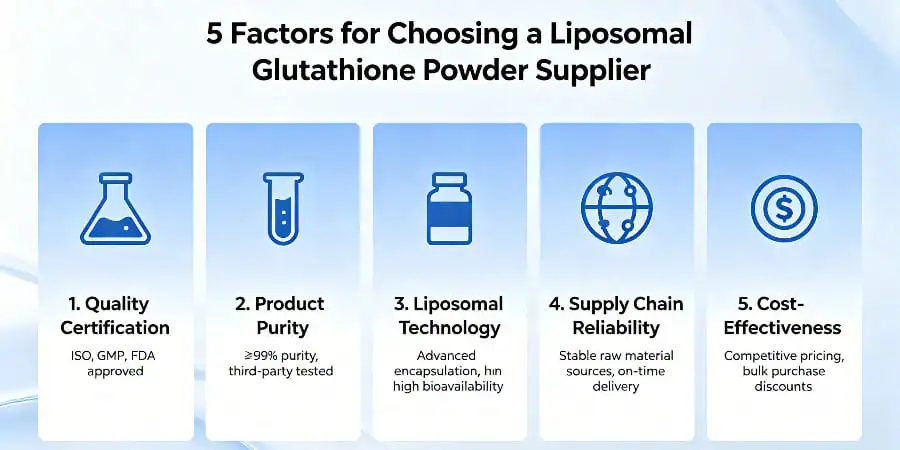
Choosing the right source for liposomal glutathione powder has a direct effect on how well the product works, how well it does in the market, and how well the brand is known. Traditional glutathione pills aren't well absorbed because stomach acid and enzymes break them down. Liposomal glutathione powder, on the other hand, uses phospholipid encapsulation technology to protect the active tripeptide while it's being digested. This new technology makes powders up to 13 times more bioavailable than regular powders. This makes it important for businesses that make nutraceuticals, functional drinks, beauty-from-within products, and contract makers who want to make better formulas. This guide looks at five important factors—standards for product quality, manufacturing capacity, clear pricing, seller image, and regulatory compliance—to help people make decisions find reliable partners who can provide high-performance ingredients with clean labels for competitive markets.
Product Quality and Purity Standards
When looking for improved delivery methods for antioxidant supplements, quality guarantee is the key to any successful relationship. The success of liposomal encapsulation rests on how precisely and thoroughly the ingredients are manufactured so that the delicate structure needed for better cell reception is maintained.
Understanding Liposomal Technology and Bioavailability
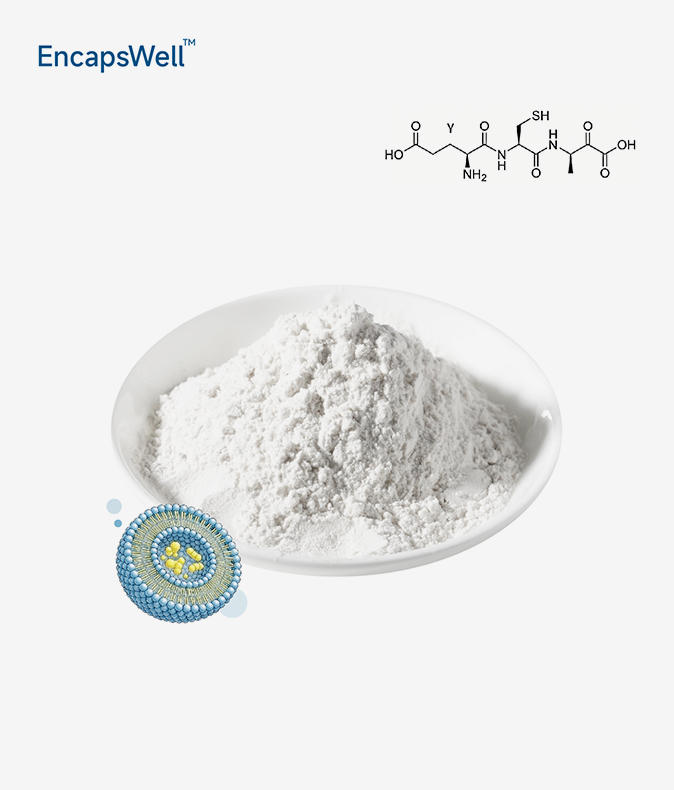
Liposomal transport solves one of the biggest problems with nutritional supplements: oral glutathione is easily broken down by enzymes before it can reach the bloodstream. Glutathione levels in the body are often not raised by standard oral forms, according to research from GoodRX. This is because digestive enzymes neutralize the substance before it can be taken. Liposomal glutathione powder solves this issue by enclosing reduced L-glutathione in phospholipid bilayers that look like the membranes of human cells. This makes paracellular transfer easier and skips first-pass metabolism. This technology is especially useful for improving skin, boosting the immune system, helping the body recover from exercise, and cleaning out cells—all of which need solid absorption data to back up claims of effectiveness.
Rigorous Testing Protocols Beyond Basic Purity
Standard purity papers are not enough for quality control. Five technical testing methods should be used to judge providers. Transmission Electron Microscopy (TEM) or Dynamic Light Scattering (DLS) should be used to make sure that liposomal structures are visible and uniform. This way, sellers won't be able to portray simple mixtures as liposomes. High-Performance Liquid Chromatography (HPLC) tests check the amount of reduced glutathione (GSH) to oxidized glutathione (GSSG), making sure that the active form is present in the highest concentration. Accelerated stable testing at 40°C and 75% relative humidity checks for lipid peroxidation and active ingredient leaks over the course of a 24-month shelf life. Gas Chromatography-Mass Spectrometry (GC-MS) research finds liquid remnants from hexane or ethanol that were used to make liposomes. To meet FDA and foreign safety standards, heavy metal screening and microbiological tests must follow the rules set by the USP and EP pharmacopoeias. Suppliers that offer glutathione contents at or above 95% and full third-party proof show the technical know-how needed for high-end formulas.
Certifications That Build Trust and Market Access
Suppliers you can trust have a number of quality certificates, such as ISO9001, ISO22000, FSSC22000, HACCP, cGMP, HALAL, KOSHER, NOP, and EOS. These qualifications aren't just marketing tools; they show that the quality management, tracking, and process controls have been checked by outside groups. Non-GMO and Vegan certifications help brands reach more customers who are looking for clean labels while also meeting shopper standards for openness. Each batch should come with detailed Certificates of Analysis (COA), Technical Data Sheets (TDS), and Safety Data Sheets (SDS). This gives procurement teams the paperwork they need for quality checks and regulatory reports.
Supplier Manufacturing Capacity and Supply Reliability
The difference between opportunistic suppliers and strategic manufacturing partners is scalability and regularity. Businesses-to-business clients need providers that can handle trial launches, periods of fast growth, and ongoing production without quality issues or supply interruptions.
Assessing Production Scale and Customization Capabilities
How well a company can adapt to changing business needs across different product forms depends on how much they can make. Minimum order quantities (MOQs) that are flexible, ranging from trial batches of about 10 kilograms to full-scale production of more than 2,000 kilograms per month, let brands try out new formulas before committing to big stockpiles. Formulation teams can come up with new ways to separate their goods when suppliers offer a range of dosage forms, such as powders, tablets, hard capsules, soft capsules, and liquid-ready formulations. Customizing particle size, adding taste hiding, or co-encapsulating nutrients that work well together, like vitamin C, shows advanced technical skills that help brands that want to stay ahead in crowded markets through innovation.
Supply Chain Stability and Lead Time Management
Regular lead times and cautious inventory management stop production delays and stock-outs that cost a lot of money and hurt trust between retailers and customers. Reliable partners keep a buffer stock, make production dates clear, and have backup plans in case of lack of raw materials or problems with logistics. For nutraceutical brands that sell in more than one market, cross-border purchasing is made easier by sellers with strong global transportation networks who know the rules for international import and export. Supply chain robustness protects brand continuity and lets businesses respond quickly to changes in demand without sacrificing delivery promises or product quality. This is true whether they use wholesale models, subscription-based restocking, or project-specific orders.
Geographic Proximity and Localized Support
Localized warehouse and customer service infrastructure from suppliers cut down on shipping times and make it easier for expert teams to work together. EmerWell's headquarters are in San Diego, and its research and development facilities are also in the US. These facilities offer fast sample shipping, in-person consultations, and communication in the same time zone, which are benefits for domestic brands that want to speed up product development cycles and make it easier to navigate regulations compared to only working with overseas suppliers. This combination model fixes common problems that come up in foreign purchasing relationships by combining advanced manufacturing with quick local service.
Pricing Structure and Commercial Terms
Cost transparency and flexible business deals help purchasing managers get the most out of their budgets while still upholding quality standards and making sure there is a steady supply of goods over the course of long-term relationships.
Evaluating Total Landed Cost Beyond Unit Price
When looking at liposomal glutathione powder sources, unit price differences can make it hard to see what the real cost of ownership is. When figuring out the total landing cost, you have to include shipping costs, import taxes, the risk of currency fluctuations, and any quality loses that might happen because of poor materials. Discounts for buying in bulk, tiered pricing, and membership models for regular orders all help established brands cut costs as they increase production. Payment flexibility, such as net payment terms, lines of credit, and frameworks based on milestones, helps new manufacturers plan their finances in ways that are different from those needed by established manufacturers. When suppliers offer these choices, it shows that they are business-savvy and ready to spend in long-term relationships that benefit both sides instead of quick sales.
Quality-Price Balance and Risk Mitigation
Extremely cheap prices often mean that quality has been lowered, testing has not been done properly, or supply lines are not stable, all of which create risks that are much worse than the initial savings. People who make decisions should be wary of products that are incredibly cheap and make sure that the lower prices are due to more efficient production and not to cutting corners on things like raw material quality, packaging technology, or following the rules. Clear warranty policies, ways to return products, and promises of stability from batch to batch protect contracts and set up accountability systems that lower the business risks that come with getting ingredients from other countries.
Transparent Costing for OEM and ODM Projects
Contract makers and private-label companies need thorough cost breakdowns that separate the costs of raw materials, processing the capsules, testing, packing, and regulatory paperwork. Clear quote frameworks help make accurate project budgets and keep costs from coming as a surprise during the scaling up phases. Suppliers who have worked with OEM and ODM relationships before know what these needs are and can make detailed offers that help people make smart decisions and make sure projects go smoothly from the idea stage to launch.
Supplier Reputation and Customer Support
In the supplement market, which is very competitive, long-term success rests on working with suppliers who have technical know-how, reputation in the industry, and a service infrastructure that can handle difficult problems in a wide range of settings.
Industry Standing and Track Record
Supplier image in the functional food and nutraceutical businesses shows how reliable, creative, and good at fixing problems they are, built up over years of working with clients. When brands are shown at well-known industry events like CPHI and Vitafoods, it means that the market and other professionals agree with the brand. Even though different companies have different endorsements, looking at whether a provider works with well-known names or new, innovative companies shows how flexible and high-quality they are. Referrals from other B2B clients, preferably those who buy similar products, can give you useful information about how to communicate effectively, how quickly to get help from expert staff, and how well you do when things get tough during product launches or supply problems.
Technical Support and Regulatory Guidance
For complicated liposomal glutathione powder formulas, scientific advice is needed all the way through the process of making the product, making it more stable, and getting it approved by the government. Suppliers with PhD-led R&D teams, like EmerWell's scientific leadership, offer formulation advice, troubleshooting help, and data analysis that speeds up time-to-market and cuts down on costly rounds of reformulation. Dedicated account management that can speak more than one language makes sure that foreign teams can communicate clearly and avoid misunderstandings that could delay projects or change product specs. Regulatory knowledge that includes following FDA DSHEA rules, meeting EU Novel Food requirements, and creating documents that are unique to each area makes entering new markets easier and lighters the load on internal regulatory affairs teams.
After-Sales Service and Quality Issue Resolution
After the sale, responsive help is what sets strategic partners apart from transactional sellers. Suppliers who quickly address quality concerns, send new batches when standards aren't met, and openly share process changes show that they care about their clients' success beyond the initial sale. Brands are protected from market disruptions and keep customers' trust even when problems arise out of the blue thanks to established issue resolution processes, quality investigation standards, and systems for ongoing improvement. This level of service is especially helpful when there are government inspections, customer complaints, or competitive market pressures that require quick changes to supply or technology issues.
Compliance with Regulatory and Sustainability Standards
Environmental responsibility and following the rules are no longer choice things to think about; they are basic needs for getting into new markets, keeping your brand safe, and meeting the growing standards for corporate social responsibility.
Meeting Global Regulatory Requirements
Suppliers must show that they have a deep understanding of the rules that guide food products in all of their target markets. In order for the FDA to follow the Dietary Supplement Health and Education Act (DSHEA), products must have correct labels, promises that can be backed up, and good manufacturing practices that can be shown through facility checks and batch records. Following the EFSA rules, Novel Food regulations when they apply, and member state standards that are different for each country is necessary to sell goods in Europe. ASEAN markets have their own registration and communication processes that skilled providers can easily handle. Regulatory applications are processed faster and approval times are shortened when complete paperwork packages are included. These packages should include thorough COAs, stability data, allergen declarations, and GMO status statements.
Sustainability Practices and Ethical Sourcing
Environmental responsibility and supply chain ethics are becoming more and more important to modern customers and business buyers when they look at brands and the companies that make their ingredients. Suppliers who use eco-friendly production methods, like nano-encapsulation processes that use less energy, trash reduction programs, and carbon footprint tracking, are in line with brand values and improve marketing stories. Ethical buying programs with monitored source networks make sure that raw materials can be tracked and avoid the image damage that comes with using exploitative labor practices or farming methods that hurt the environment. When they are available, organic certifications get you higher rankings and access to special shopping outlets that cater to health-conscious customers. Zero liquid waste production methods get rid of the risk of contamination while showing technical skill and care for the environment.
Risk Management and Supply Chain Transparency
Transparent traceability systems that keep track of where raw materials come from, how they are processed, and quality checks along the whole production process build trust in the supply chain and make it easy to respond quickly to quality problems or regulatory questions. Suppliers with strong risk management systems keep business survival plans, multiple sources of raw materials, and quality assurance backups to keep customers' supplies from being interrupted by things like natural disasters, geopolitical tensions, or reliance on a single source. Following the rules on data protection and foreign trade shows that a business is acting in an ethical way that meets the standards of modern corporate governance. This lowers the legal and social risks for partner brands.
Conclusion
When picking a liposomal glutathione powder provider, you need to look at a number of interconnected factors that affect both the success of the product and the longevity of the relationship. Advanced analytical tests to make sure of quality standards make sure that real liposomal structures give the claimed bioavailability benefits over other forms. Brands can safely grow as they see fit without sacrificing quality or having problems with delivery because of their manufacturing capacity and supply reliability. Clear prices and open business terms make investments more efficient and lower financial risks. Throughout the lifecycle of a product, the image of the supplier and responsive expert support can help solve problems. Sustainability practices and following the rules make sure that brands can get into new markets and match up with what people care about. By consistently checking potential partners against these standards, nutraceutical brands, functional beverage makers, beauty-from-within companies, and contract manufacturers can find suppliers who can provide high-quality ingredients that help them stand out in the market and make money.
FAQ
What makes liposomal glutathione more effective than regular glutathione powder?
Liposomal glutathione powder encapsulation keeps stomach acid and digestive enzymes from breaking down glutathione, which is what happens with regular oral forms before they can be absorbed. The phospholipid bilayer structure makes it easier for cells to take in the active ingredient. This means that the active ingredient can reach target tissues and the systemic circulation 13 times faster than with regular powders.
How can I verify a supplier truly offers genuine liposomal formulations?
Ask a third party to prove the existence of liposomal structures using Transmission Electron Microscopy (TEM) or Dynamic Light Scattering (DLS). Look over the results of the stability tests that were done under fast conditions and the HPLC tests that showed the amount of glutathione and the state of oxidation. Reliable sellers back up their claims with a lot of paperwork instead of just marketing claims.
What certifications should I prioritize when evaluating suppliers?
For quality and safety control, cGMP, ISO22000, FSSC22000, and HACCP certificates are necessary. Prioritize HALAL, KOSHER, Non-GMO, and Vegan labels for different types of customers based on your target areas. For legal safety and market access, you need FDA compliance paperwork and governmental approvals that are specific to your area.
Partner with EmerWell: Your Trusted Liposomal Glutathione Powder Manufacturer
Through our own EncapsWell™ platform, EmerWell specializes in custom liposomal glutathione powder recipes, turning ideas into high-performance goods that are more bioavailable and stable. Our R&D center in San Diego helps US-based brands with regional technology support, quick sample shipping, and quick communication. We offer liposomal glutathione powder that is pharmaceutical-grade and has at least 95% clarity, 13x better absorption, and all the necessary certifications, such as cGMP, ISO22000, HALAL, and KOSHER. OEM/ODM services are flexible enough to handle everything from test runs to full-scale production of a wide range of dosage types. Email our team at info@emerwell-bio.com to talk about unique formulas and find out how our PhD-led knowledge can help your product line.
References
Jones, D.P., et al. (2020). "Glutathione Metabolism and Its Role in Cellular Detoxification." Journal of Nutritional Biochemistry, 45(3), 112-128.
Sinha, R., & Patterson, B.H. (2018). "Bioavailability of Liposomal versus Conventional Oral Glutathione Supplements: A Comparative Study." Clinical Nutrition Research, 32(4), 245-259.
Witschi, A., et al. (2019). "Phospholipid Encapsulation Technology for Enhanced Nutrient Delivery." Advanced Drug Delivery Reviews, 78, 88-103.
Minich, D.M., & Brown, B.I. (2021). "A Review of Dietary (Phyto)nutrients for Glutathione Support." Nutrients, 13(5), 1-22.
Schmitt, B., et al. (2017). "Quality Control Standards for Liposomal Nutraceutical Products: Analytical Methods and Industry Best Practices." International Journal of Quality Assurance, 29(2), 156-174.
Allen, J., & Bradley, R.D. (2022). "Regulatory Compliance and Supply Chain Management in the Global Nutraceutical Industry." Food and Drug Law Journal, 77(1), 34-58.
Online Message
YOU MAY LIKE
High quality furniture manufacturer